
Patal Bhuvaneshwar Cave
Deep beneath the hills of Uttarakhand lies a place where mythology, spirituality and mystery seem to come together, Patal Bhuvaneshwar.
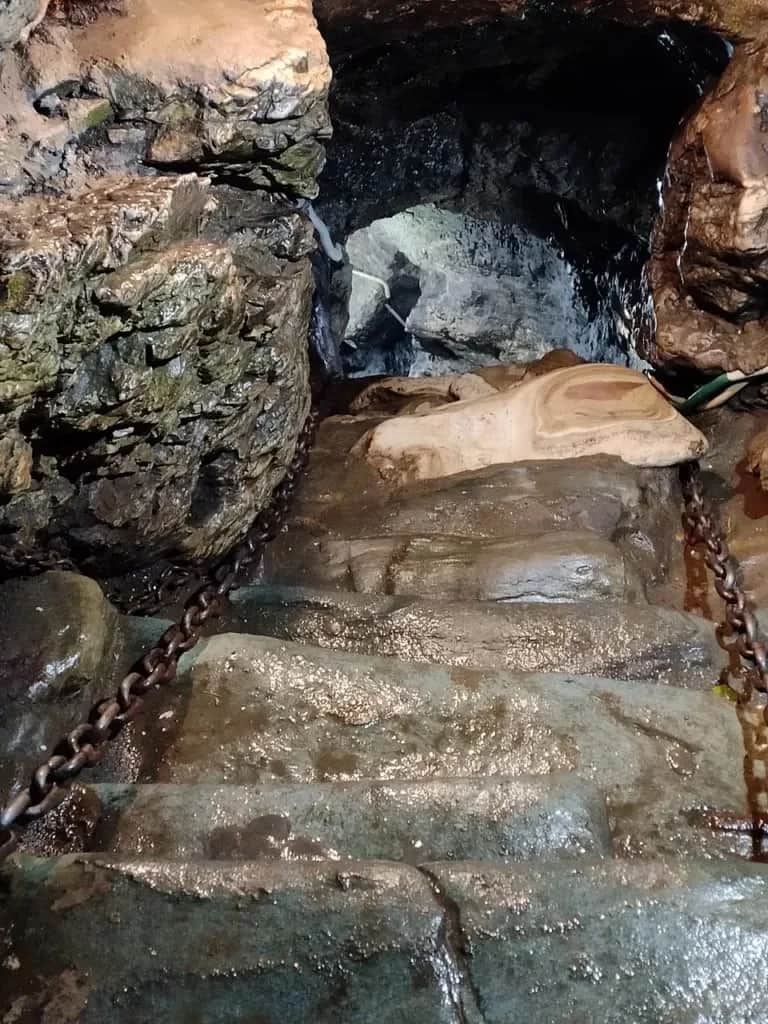
Located near Gangolihat in Pithoragarh district, this is not an ordinary temple. It is a naturally formed limestone cave hidden beneath the earth, where visitors descend through narrow passages into a completely different world.
As you go deeper, sunlight slowly disappears. The passages become narrower, the surroundings quieter and the atmosphere increasingly mysterious. But what makes Patal Bhuvaneshwar truly special is not just the cave itself. It is the extraordinary collection of legends associated with it.
Why Is Patal Bhuvaneshwar Considered So Sacred?
According to Hindu tradition, Patal Bhuvaneshwar is believed to be a sacred abode of Lord Shiva, and the cave is associated with numerous deities and ancient sages.
Traditional accounts connect the cave with the Skanda Purana, particularly its Manas Khanda. Ancient traditions also speak of sages discussing the mysteries of Patal Bhuvaneshwar and trying to understand the world that exists beneath the earth.
One of the fascinating names associated with its ancient traditions is Rishi Vashishtha. In accounts connected with the Patal Bhuvaneshwar legend, Vashishtha describes the mysterious underground realm and its connection with Lord Shiva.
This is one of the reasons devotees don't see Patal Bhuvaneshwar as simply a cave temple. For them, it represents a place that has been connected with rishis, meditation, Shiva worship and ancient spiritual traditions for centuries.
The Legend of King Rituparna
This legend of the Patal Bhuvaneshwar caves is more ancient still. According to popular legend, during the period of the Treta Yuga, King Rituparna of the Solar dynasty came across the caves. The traditional tale tells us how he, in his pursuit of a deer, arrived at the enigmatic cave entrance where he met Sheshnag, who guided him into the depths of the cave. It is here that he saw many wonders of the divine world, which included Lord Shiva and many other deities. This is just one of the many legends that make this cave so significant in the religious tradition of the region.
Link with the Pandavas
Another connection made with the cave is the Pandavas themselves. As per common belief, the Pandavas came to worship Lord Shiva at Patal Bhuvaneshwar in the age of Dvapara Yuga. Thus the cave makes an interesting link with many periods of Hindu mythology, right from the Treta Yuga with King Rituparna through to the Pandavas of Dvapara Yuga and ultimately the Kali Yuga.
Four Stones, Four Yugas
And then comes perhaps the most mysterious legend of Patal Bhuvaneshwar. Inside the cave are formations traditionally associated with the four Yugas:
Satya Yuga
Treta Yuga
Dvapara Yuga
Kali Yuga
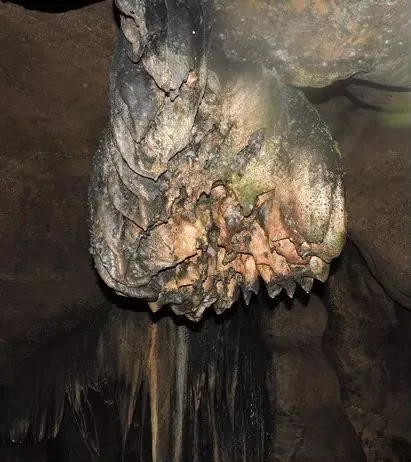
According to the belief, the first three formations remain relatively unchanged, while the formation associated with Kali Yuga is believed to be growing upward.
And the legend says that one day, when it touches the formation above it, Kali Yuga will come to an end and a great destruction or cosmic transformation will follow.
There is no scientific evidence that this formation can predict the end of the world. It is a religious belief and an important part of the mythology surrounding the cave.
But imagine standing inside a cave thousands of feet or rather, deep beneath the surface and being told that a stone in front of you is believed to be connected with the end of an entire Yuga. That is what makes the experience so powerful.
A Cave Filled With Divine Forms
The cave contains numerous natural limestone formations. Water has slowly shaped the rocks over extremely long periods, creating formations that devotees associate with different Hindu deities and mythological figures.
Among the most significant is the naturally formed Shivling, along with formations traditionally identified with figures such as Sheshnag and other divine symbols.
According to religious tradition, the cave is also believed to represent the presence of 33 koti deities. Here, “koti” is traditionally understood in some interpretations as categories or types of deities rather than simply a numerical count of 33 crore. This belief is another major reason why devotees consider the cave exceptionally sacred.
Why Does It Feel So Different Inside?
The journey itself adds to the mystery. You enter through a narrow opening and descend underground. The further you go, the more the outside world disappears.
Because it is an enclosed underground environment, visitors can experience a noticeable change in air, temperature and atmosphere as they move deeper into the cave. However, the claim that oxygen continuously decreases with every step deeper should not be presented as a proven scientific fact, the actual air conditions depend on the cave's ventilation and location. What is undeniable is the psychological effect of the darkness, narrow passages, dripping water and unusual rock formations. It can feel as though you have stepped outside ordinary time.
A Place Where Sages, Gods and Legends Meet
Perhaps the biggest reason people have such deep faith in Patal Bhuvaneshwar is the sheer number of traditions connected with it.
Lord Shiva.
Ancient sages.
Rishi Vashishtha.
King Rituparna.
The Pandavas.
Adi Shankaracharya.
The four Yugas.
And the mysterious underground formations.
Each story adds another layer to the cave.
Traditional accounts say that Adi Shankaracharya rediscovered the cave during the Kali Yuga and helped revive its religious significance. Since then, worship at the cave has continued through generations.
So for devotees, visiting Patal Bhuvaneshwar is not simply about entering a cave. It is about entering a place believed to have witnessed different chapters of Hindu mythology.
Mystery Underneath the Himalayas
Patal Bhuvaneshwar finds itself at an interesting crossroads of science and faith. Science tells us how the caves formed from limestone by natural processes involving water and minerals. Faith helps these geological wonders take on a spiritual meaning. And maybe that is what makes the cave so intriguing. One person might examine a rock and recognize its geological formation. Another individual could look at the same rock and see the form of Lord Shiva. One might read the legend of the four Yugas as a mythical tale. While another might interpret the same legend as a cautionary tale on the cycles of time.
This is the magic of Patal Bhuvaneshwar.
A cave nestled under Uttarakhand, where ancient tales of sages and gods have been told for ages, and four Yugas said to exist in stones, and one mysterious formation said to reveal the secret to the end of Kali Yuga.
Visit Patal Bhuvaneshwar as a pilgrim, visitor or explorer, but whatever your reason for visiting, Patal Bhuvaneshwar leaves you with one message.
There are some places which are not merely made to be seen. They are made to be experienced.
"FacebookPatal Bhuvaneshwar CaveDeep beneath the hills of Uttarakhand lies a place where mythology, spirituality and mystery seem to come tog…"