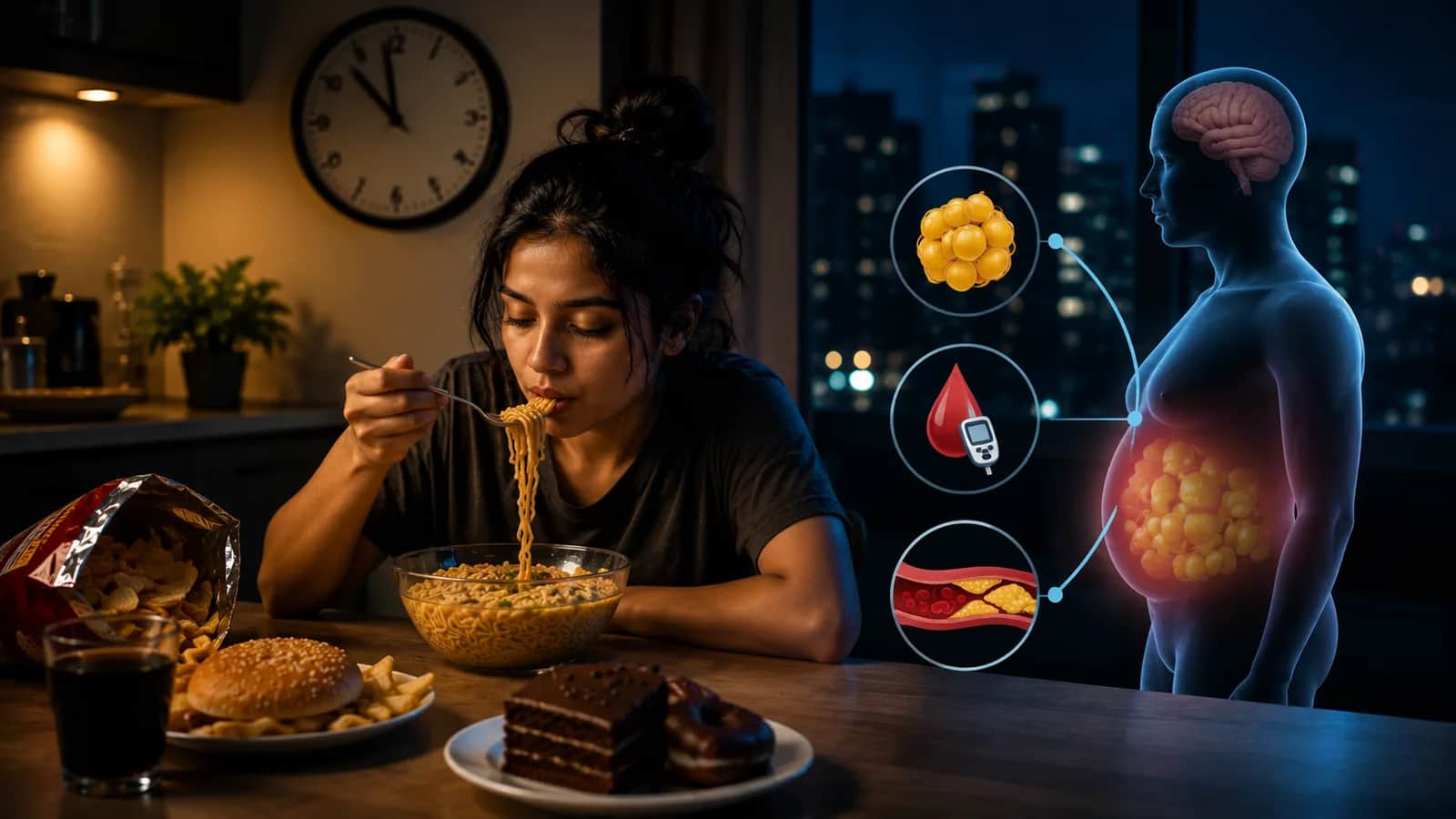
You finish dinner, tell yourself the kitchen is closed for the night, and then, sometime after midnight, find yourself opening the fridge "just to have a look." A slice of leftover pizza, a bowl of instant noodles, a few biscuits or a chocolate bar suddenly seem impossible to resist.
It feels like a small indulgence. But according to a new study, those late-night eating habits could be quietly shaping your health in ways you don't immediately notice.
Researchers found that people who naturally stay awake late often called “night owls”, are more likely to have extra belly fat, higher blood sugar levels and unhealthy cholesterol and lipid profiles than those who prefer mornings.
The surprising part? It's not because they're eating more. In fact, both early risers and late sleepers consume almost the same amount of food throughout the day. The real difference is when that food is eaten.
As the day winds down, our bodies begin slowing down too. Yet for many night owls, that's exactly when cravings kick in. Salty snacks, sugary desserts and carb-heavy comfort foods become hard to resist. Experts say that while these foods may satisfy late-night hunger, the body isn't as efficient at processing them during those hours, making it easier to store excess energy as fat, especially around the abdomen.
Lead researcher Rozanne Kruger from Griffith University says our internal body clock influences much more than our sleep schedule. It affects when we feel hungry, the foods we crave and the way our bodies handle those calories. Of course, enjoying popcorn during a movie night or grabbing a late dinner after a long day isn't something to feel guilty about. Health isn't determined by one snack or one late night.
But if midnight meals become part of your daily routine, your body may slowly begin paying the price, even if the weighing scale doesn't immediately show it. Sometimes, looking after your health isn't about cutting out your favourite foods. It may simply start with switching off a little earlier, eating a little sooner and letting your body work with its natural rhythm instead of against it.
" You finish dinner, tell yourself the kitchen is closed for the night, and then, sometime after midnight, find yourself opening the fridge "…"