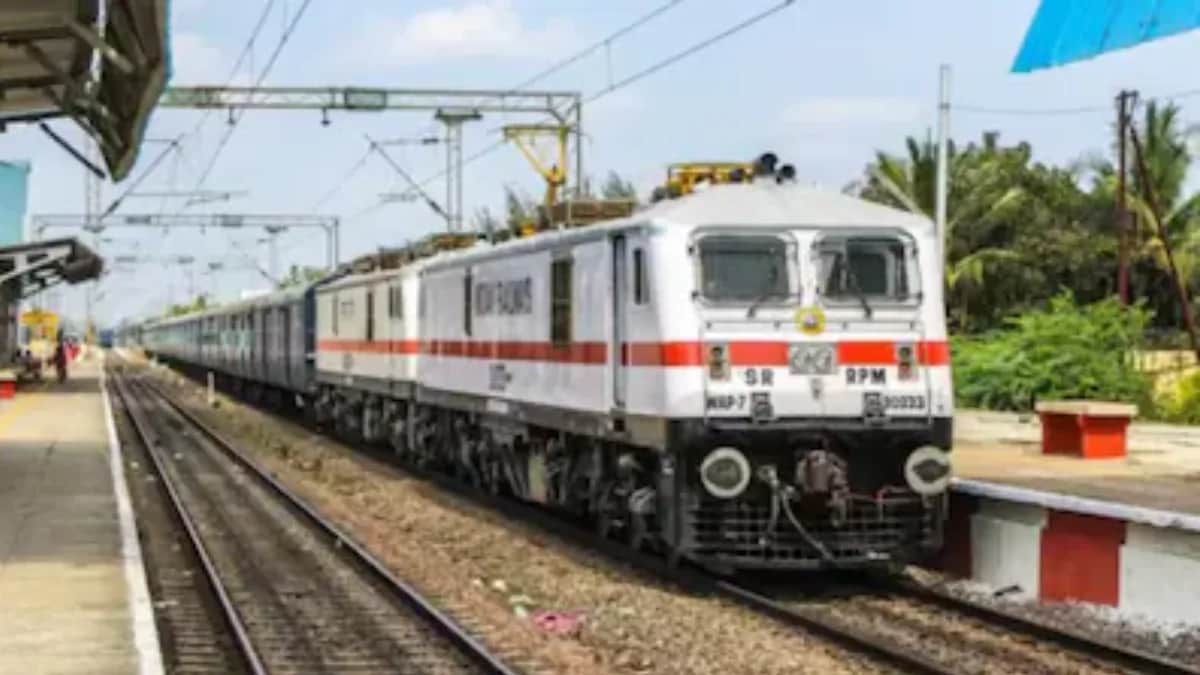
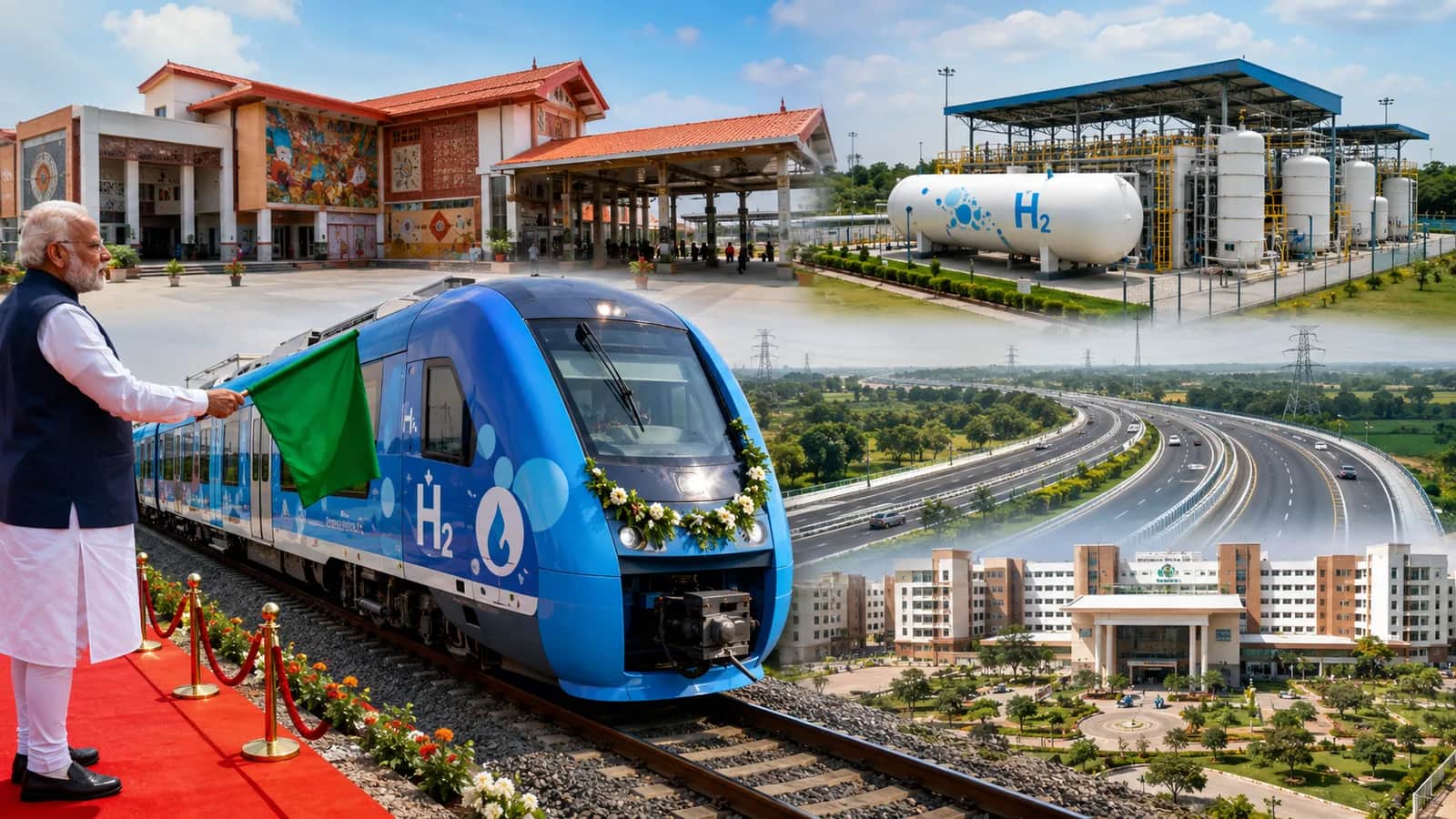
On 17 July 2026, Prime Minister Narendra Modi flagged-off India’s first indigenous hydrogen-powered passenger train from Jind in Haryana. This launchnmarks India's first major step towards using hydrogen as a clean fuel for rail transport, a technology that many countries see as the future of sustainable mobility. As nations around the world work to reduce carbon emissions and move away from fossil fuels, Indian Railways has now entered the global race for cleaner transportation.
As the world tries to reduce carbon emissions, Indian railways is now part of the global effort to make transportation cleaner.
Ahead of the launch, PM Modi posted on X “India has become one of the selected group of nations that have such trains. This will go a long way in ensuring that India adopts clean technology in the railway station”
Indeed the Hydrogen-powered train was the main highlight.. it was not the only one. During his visit, he also inaugurated other projects worth ₹26,800 Crore. These projects include modern railway stations, expressways, hospitals, and cultural institutions.
n technology, while strengthening India's journey towards sustainable development and self-reliance in advanced railway engineering.
The hydrogen-powered train was undoubtedly the biggest highlight of the day, but it wasn't the only one.
India's First Hydrogen Train: A New Beginning for Indian Railways
In many parts of India, trains have been running on diesal. Although Indian Railways has electrified a large section of its network, several routes still rely on diesel engines. Hydrogen-powered trains offer a cleaner alternative, especially for routes where complete electrification may not be practical.
Unlike conventional diesel locomotives, this train generates its own electricity onboard using hydrogen fuel cells. Instead of producing smoke or harmful emissions, it releases only water vapour and heat, making it one of the cleanest forms of rail transport currently available.
With this launch, India joins a select group of countries including Germany, Japan, China and France that have introduced hydrogen-powered trains as part of their efforts to build greener transport systems.
Why Is the Hydrogen Train Important?
The importance of this project goes far beyond introducing a new train. It is India's first real-world experiment with hydrogen-powered railway technology and is expected to provide valuable operational experience for future expansion. The project also supports the National Green Hydrogen Mission, which aims to make India a global leader in the production and use of green hydrogen.
The hydrogen train is expected to:
- Reduce dependence on imported diesel.
- Lower greenhouse gas emissions.
- Improve air quality.
- Promote cleaner public transportation.
- Support India's goal of achieving Net Zero carbon emissions by 2070.
- Encourage indigenous innovation under the Atmanirbhar Bharat and Make in India initiatives.
If the pilot proves successful, similar trains could eventually be introduced on other suitable railway routes across the country.
How Does a Hydrogen Train Work?
Although it looks like a regular passenger train from the outside, the technology inside is completely different.
The train carries hydrogen in specially designed high-pressure cylinders. Inside a Proton Exchange Membrane Fuel Cell (PEMFC), hydrogen reacts with oxygen from the atmosphere to generate electricity. That electricity powers the train's motors.
Unlike diesel engines, there is no combustion involved. As a result, the process produces only water vapour and heat, making hydrogen one of the cleanest fuels currently available for rail transport.
Hydrogen is also highly energy efficient. According to Indian Railways, it contains nearly 120 megajoules of energy per kilogram, compared with around 43 megajoules per kilogram for diesel. This allows the train to generate more energy while significantly reducing emissions.
Designed and Built in India
One of the biggest achievements of the project is that it has been designed and developed within the country.
The train has been built according to technical specifications prepared by the Research Designs and Standards Organisation (RDSO), the research and development wing of Indian Railways. From design and engineering to prototype manufacturing, the project reflects India's growing capabilities in advanced railway technology.
Technical Features of India's First Hydrogen Train
India's first hydrogen-powered passenger train has several notable features:
- Route: Jind–Sonipat section of Northern Railway
- Distance: Around 89 kilometres
- Total coaches: 10
- Hydrogen Driving Power Cars: 2
- Passenger trailer coaches: 8
- Passenger capacity: Around 2,600 passengers
- Hydrogen fuel-cell propulsion system: 1,200 kW
- Maximum operational speed: 75 km/h
- Design speed: 110 km/h
The train will connect Jind Junction, Gohana Junction, and Sonipat, while serving several intermediate stations along the route, making it a fully functional passenger service rather than just a demonstration project.
Months of Testing Before Carrying Passengers
Introducing hydrogen-powered rail technology required far more than simply building a new train. Before receiving approval for passenger operations, Indian Railways conducted months of extensive testing. Engineers evaluated fuel-cell performance, braking systems, acceleration, hydrogen storage, emergency response procedures, leak detection systems and refuelling operations under different operating conditions.
These trials were aimed at ensuring the train could safely and reliably operate in Indian conditions before entering regular service.
Building India's Largest Railway Hydrogen Facility
A hydrogen-powered train cannot operate without specialised infrastructure. To support the project, Indian Railways has established the country's largest railway hydrogen storage and refuelling facility at Jind, Haryana.
The facility can store nearly 3,000 kilograms of hydrogen and includes hydrogen compression systems, dedicated refuelling equipment, standby compressors, specialised storage units and technical support infrastructure.
The facility has received approval from the Petroleum and Explosives Safety Organisation (PESO) and has been developed according to internationally recognised NFPA-2 and ISO 19880 safety standards. It has also undergone an independent safety assessment by TÜV SÜD Germany, one of the world's leading technical inspection and certification agencies.
Safety Comes First
Hydrogen is a highly efficient fuel, but it also requires rigorous safety systems. To ensure safe operations, Indian Railways has equipped both the train and the refuelling facility with multiple layers of protection.
These include:
- Hydrogen leak detection systems.
- Flame detectors.
- Automatic hydrogen shut-off during emergencies.
- Continuous ventilation inside the train.
- Real-time health monitoring systems in the loco pilot's cabin.
- Round-the-clock monitoring of the hydrogen refuelling station.
- Emergency operating mode for safe evacuation if required.
- Trained technical personnel overseeing operations during the train's initial phase.
The maintenance depot at Shakurbasti, Delhi, has also been specially upgraded to support hydrogen-powered train operations.
More Than Just a Hydrogen Train
While the hydrogen-powered train captured national attention, it was only one part of a much larger development agenda announced on 17 July.
75 Amrit Bharat Railway Stations Redeveloped
PM Modi virtually inaugurated 75 redeveloped railway stations across 20 states and Union Territories under the Amrit Bharat Station Scheme.
The modernised stations feature spacious waiting halls, lifts, escalators, digital information systems, improved sanitation, free Wi-Fi, enhanced accessibility for persons with disabilities, better lighting and upgraded passenger amenities. The redevelopment aims to transform railway stations into modern transport hubs while preserving local architecture and culture.
Delhi–Amritsar–Katra Expressway Gets a Boost
The Prime Minister also dedicated an important section of the Delhi–Amritsar–Katra Expressway, one of northern India's most significant road infrastructure projects.
The expressway is expected to reduce travel time, improve freight movement, lower logistics costs and strengthen connectivity between Delhi, Haryana, Punjab and Jammu & Kashmir, while also making travel to the Vaishno Devi shrine easier.
Southern Ludhiana Bypass
To ease congestion in Punjab's industrial capital, PM Modi laid the foundation stone for the 25.2-kilometre, six-lane Southern Ludhiana Bypass.
The bypass will divert heavy commercial vehicles away from the city, reduce traffic congestion, improve road safety and strengthen logistics for Punjab's manufacturing and textile industries.
New Medical Colleges and Hospitals
Healthcare also received a major boost during the visit.
The Prime Minister dedicated the Pandit Neki Ram Sharma Government Medical College in Bhiwani and the Maharishi Chyawan Medical College and Rao Tula Ram Hospital in Narnaul. These institutions are expected to improve access to quality healthcare while expanding medical education in Haryana.
Advanced Healthcare Facilities at PGIMER Chandigarh
At PGIMER Chandigarh, PM Modi inaugurated the Advanced Mother and Child Centre and the Advanced Neurosciences Centre, both equipped to provide specialised treatment for patients from across northern India.
He also laid the foundation stone for a 150-bed Critical Care Block under the PM Ayushman Bharat Health Infrastructure Mission, which will strengthen emergency and intensive care services.
Sikh Museum at Kurukshetra
The day's programme also included the foundation stone for a Sikh Museum in Kurukshetra.
The museum will preserve the history, teachings and legacy of the Sikh Gurus while showcasing the Sikh community's contributions to India's freedom struggle, armed forces and nation-building through interactive exhibits and digital displays.
What's Next?
India's first hydrogen-powered train is more than a technological milestone, it is a glimpse into the future of Indian transportation. The project gives Indian Railways an opportunity to test one of the world's most promising clean-energy technologies under real operating conditions while building the expertise needed for wider adoption in the years ahead.
Combined with modern railway stations, better highways, expanded healthcare facilities and cultural infrastructure, the projects announced on 17 July 2026 represent an investment of nearly ₹26,800 crore. Together, they reflect a broader vision of building an India that is cleaner, better connected, healthier and ready for the future.
"On 17 July 2026, Prime Minister Narendra Modi flagged-off India’s first indigenous hydrogen-powered passenger train from Jind in Haryana. Th…"