
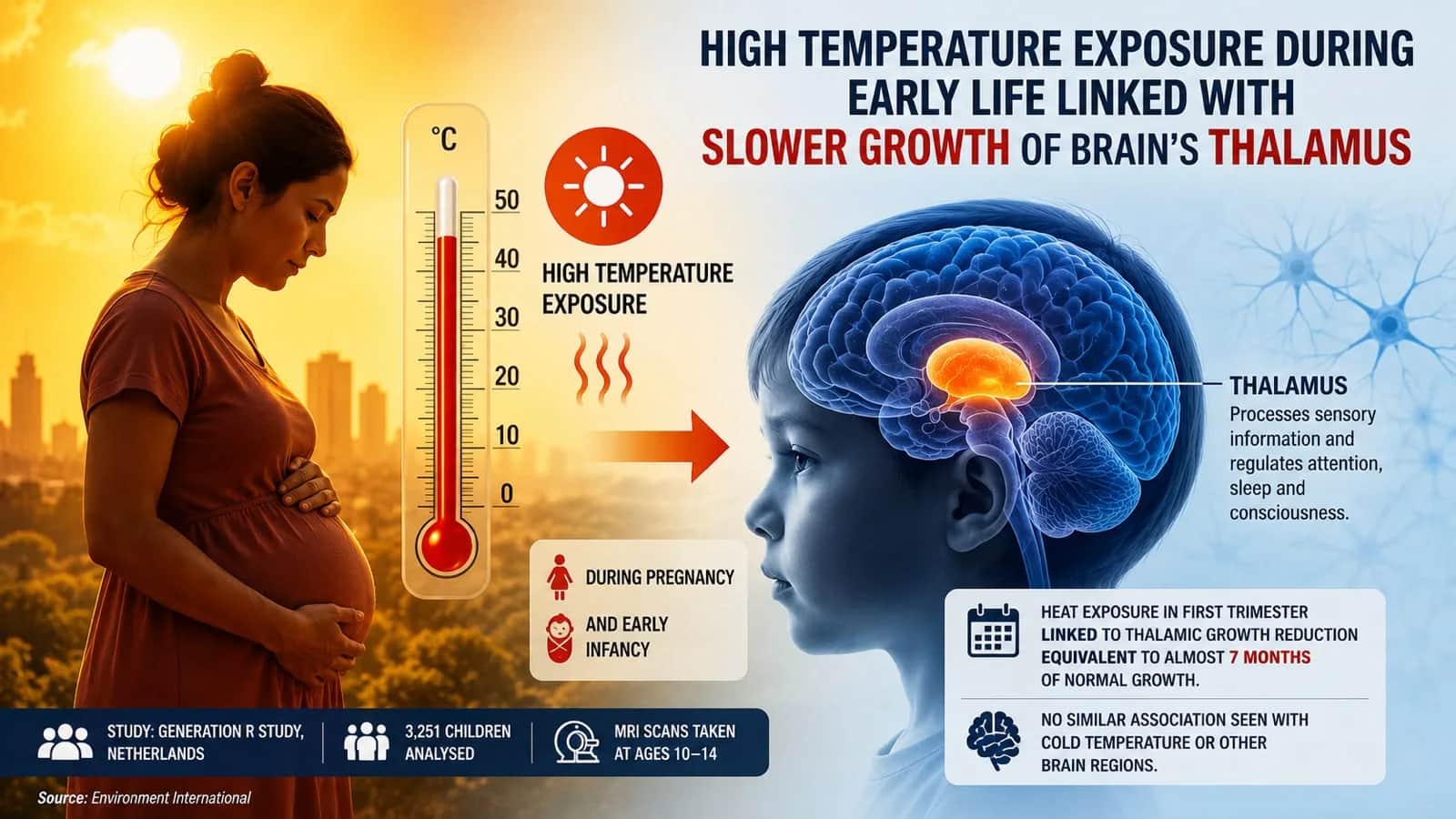
Exposure to high temperatures during pregnancy and the first few months of life may have long-term effects on a child's brain development, according to a recent study published in the journal Environment International. The findings add to a growing body of evidence suggesting that climate change may impact not only children's physical health but also their brain development.
Researchers analysed data from 3,251 children enrolled in the Generation R Study in the Netherlands. Using high-resolution climate models, they estimated the monthly outdoor temperatures the participants were exposed to from pregnancy until the age of 8.5 years. These estimates were then compared with MRI (magnetic resonance imaging)brain scans conducted when the children were between 10 and 14 years old.
The study found that exposure to a monthly average temperature of 20.5°C during pregnancy and early infancy was associated with slower growth of the thalamus, a crucial brain region responsible for processing sensory information and regulating attention, sleep, and consciousness. Researchers estimated that heat exposure during the first trimester of pregnancy was linked to a reduction in thalamic growth equivalent to nearly seven months of normal brain development.
No similar association was observed with exposure to colder temperatures or in any other brain region. Scientists believe the thalamus may be particularly vulnerable because it develops early in pregnancy and depends heavily on healthy placental function and adequate blood flow. They are also investigating possible biological mechanisms, including heat-induced stress, inflammation, and hormonal changes.
Although the study identifies an association rather than proving a direct cause-and-effect relationship, the researchers say the findings highlight the growing need to protect pregnant women and young children from extreme heat as global temperatures continue to rise.
"Exposure to high temperatures during pregnancy and the first few months of life may have long-term effects on a child's brain development, a…"