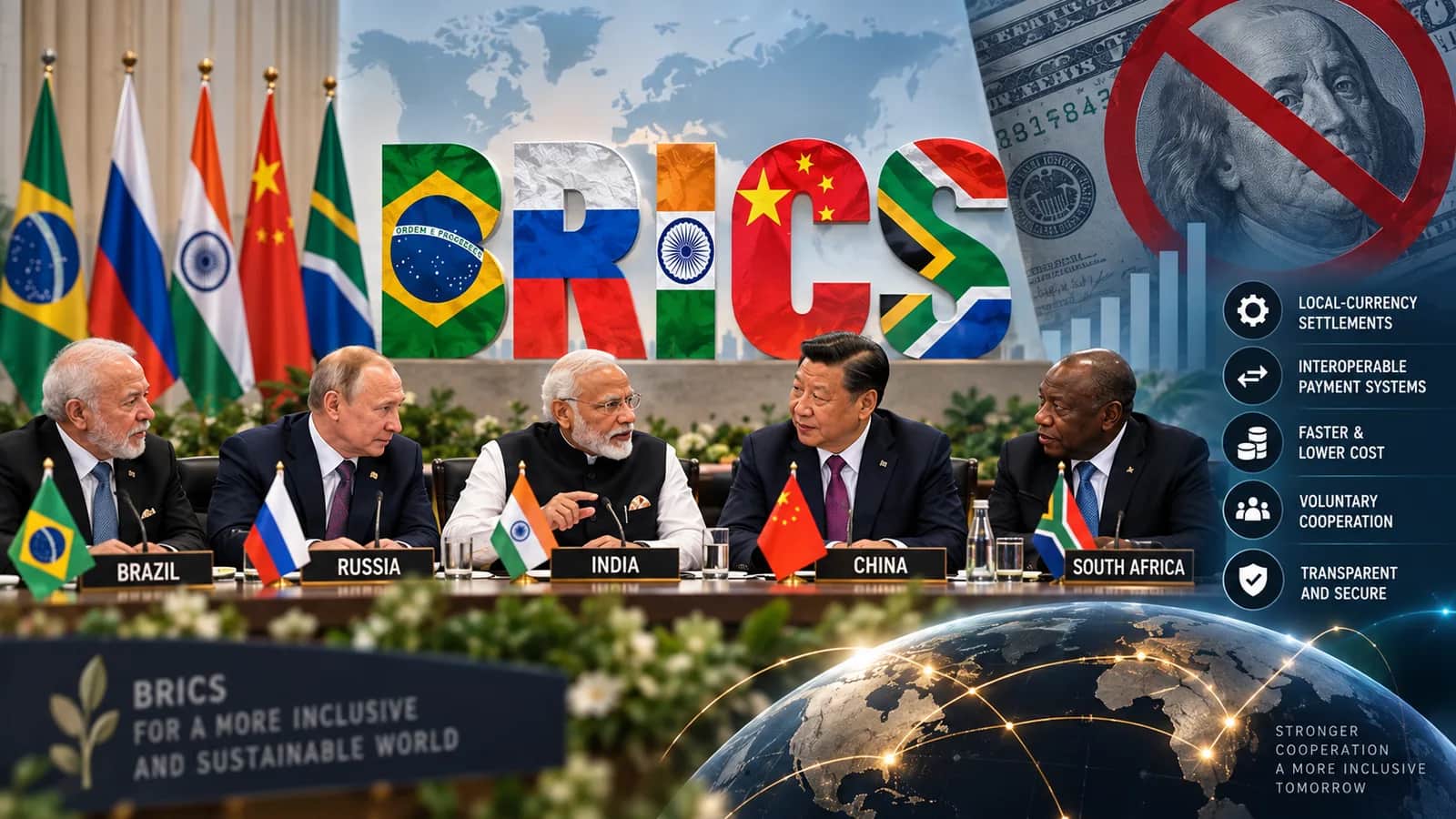
The organization has shown caution with respect to efforts aimed at cutting down its dependence on the US dollar by avoiding calls for a common currency and shying away from calls for the elimination of the dollar as an international currency.
These sentiments were contained in a joint statement following a conference between BRICS finance ministers and governors of the central banks. Although some BRICS members have been vocal in their efforts at challenging the supremacy of the US dollar, the latest statement is centered on practical steps toward making payments across borders more convenient.
According to the statement, the BPTF is continuing with its efforts aimed at finding ways of improving the payment mechanisms between the members. BRICS called on the BRICS Payment Task Force to pursue further discussion on cross-border payments that are fast, low cost, accessible, efficient, transparent, and secure.
Instead of implementing the idea of establishing a unified currency, the group has focused on local currency settlement systems as well as interoperable payment methods. This will enable the countries to engage in business dealings using their own currencies, thereby minimizing the use of the US dollar.
It also stressed that the process of cooperation among BRICS nations is voluntary in nature, with the national interests of each country being given importance. The tone of caution used reveals the difficulties of coming up with a single currency for such a diverse set of countries.
In any case, what seems clear for the moment is that BRICS countries are opting for a step-by-step approach where they bolster their alternative payment systems and increase their use of local currencies without necessarily making any immediate attempt to threaten the dollar's status as world currency.
This move is quite important given that BRICS continues to make gains in terms of influence both economically and geopolitically.
"The organization has shown caution with respect to efforts aimed at cutting down its dependence on the US dollar by avoiding calls for a com…"