
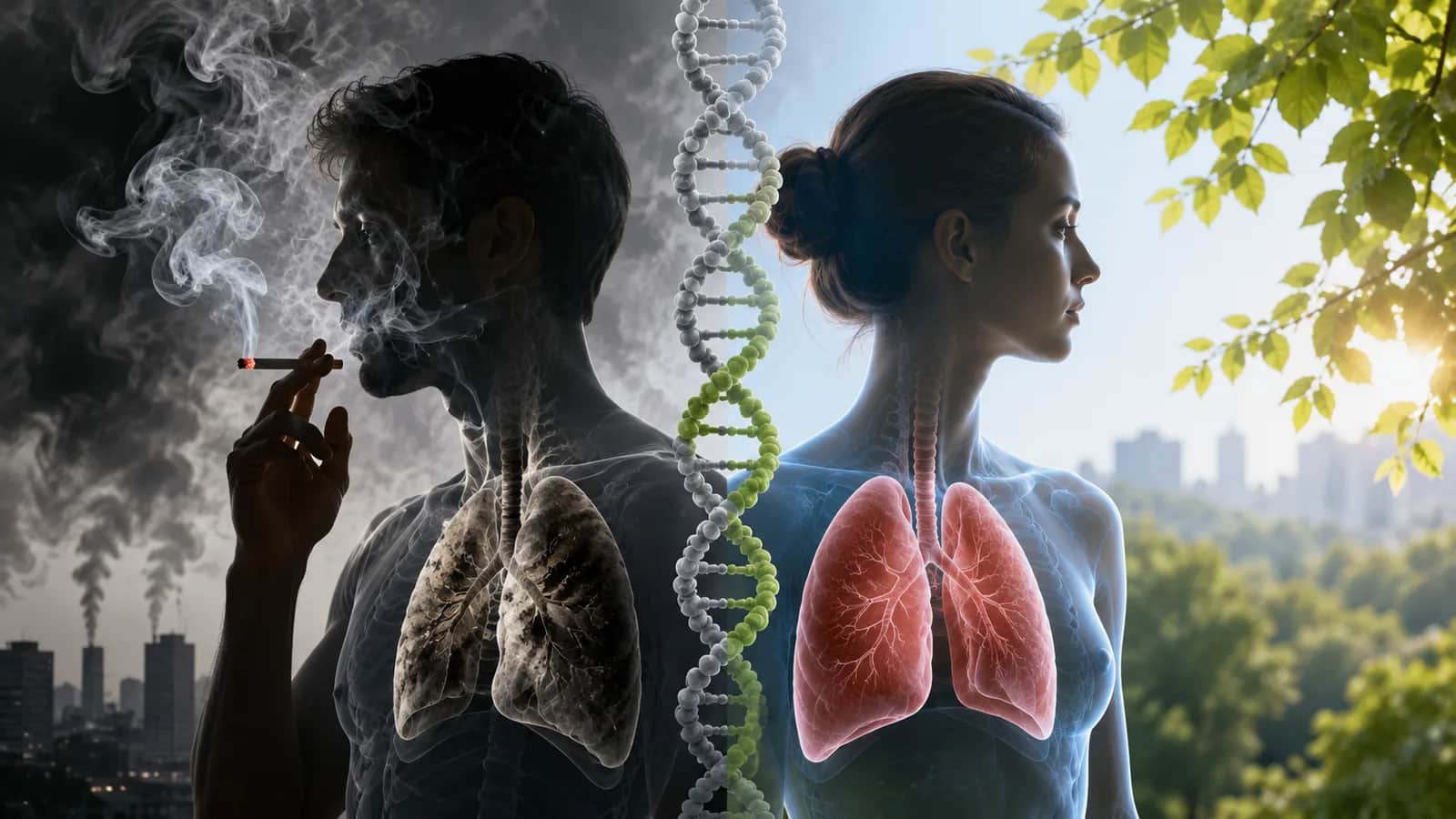
You might have noticed that some people smoke a pack of cigarettes every day for decades and never develops lung cancer. Meanwhile, others might have not touched a cigarette is suddenly diagnosed with the disease. It often leaves people wondering- If smoking is the biggest risk factor, why doesn't it affect everyone the same way?
A new study published in the journal Nature suggests the answer may lie in something we inherit long before we make any lifestyle choices i.e. our genes.
Researchers from the University of Cambridge have found the first direct evidence that our genetic makeup influences how our bodies deal with DNA damage caused by things like cigarette smoke, sunlight and other environmental exposures. In simple terms, while everyone experiences damage to their DNA over time, not everyone's body repairs that damage in the same way.
Think of DNA as an instruction manual for the body. Every day, that manual is exposed to wear and tear. Normally, our cells repair most of the damage before it becomes a problem. But according to the study, some people are naturally better at making those repairs because of the genes they inherit. Others may have a repair system that isn't as efficient, allowing harmful mutations to build up over the years.
That could help explain why two people with completely different lifestyles can sometimes end up with unexpected outcomes.
However, the researchers are quick to point out that this doesn't change what we already know about smoking. Cigarette smoking remains the leading cause of lung cancer and dramatically increases the risk of developing the disease. The findings should not be taken as a reason to believe that smoking is somehow "safe" for certain people.
Instead, the study paints a more complete picture of how cancer develops. It's rarely the result of just one factor. Genetics, environmental exposure and personal habits all work together, influencing an individual's overall risk.
Scientists believe these findings could eventually lead to more personalised healthcare. In the future, genetic testing may help identify people who are naturally more vulnerable to certain cancers, allowing doctors to recommend earlier screening, closer monitoring and preventive care before the disease has a chance to develop.
While many questions remain, the research offers an important reminder- when it comes to cancer, the story is often more complicated than it appears. Our choices matter, but so does the biology we are born with.
"You might have noticed that some people smoke a pack of cigarettes every day for decades and never develops lung cancer. Meanwhile, others m…"