
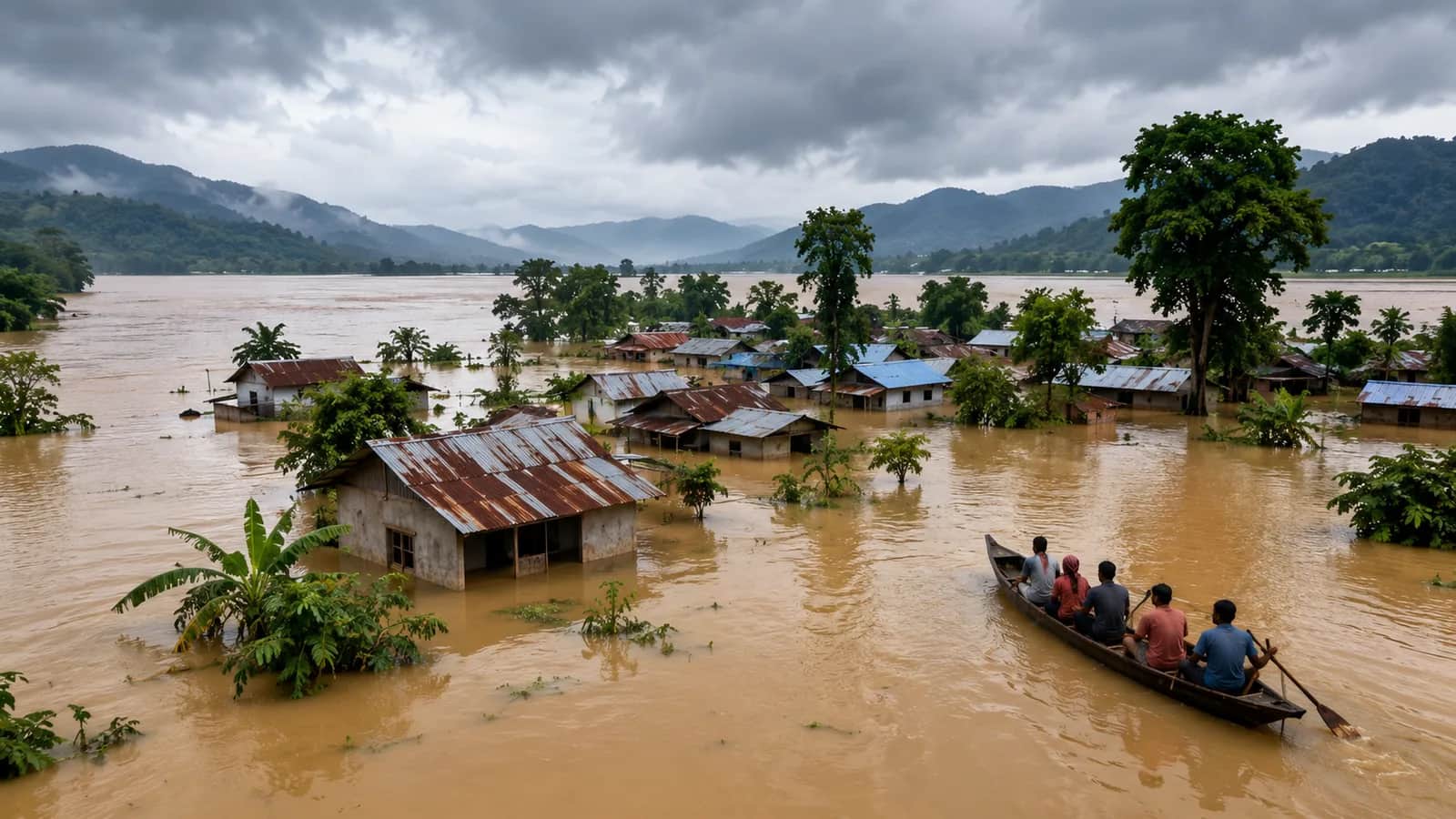
For the people of Assam, floods are nothing new. Every monsoon brings rising rivers, damaged homes and disrupted lives. But this year feels different. Villages that had never experienced severe flooding are now under water, roads have disappeared, crops have been destroyed and thousands of families have been forced to leave everything behind.
At first, many believed the disaster was caused by a cloudburst in neighbouring Nagaland. However, weather experts say it was actually a spell of extremely heavy rainfall that continued for several hours. The rain sent huge volumes of water rushing into the Brahmaputra and its tributaries, many of which were already flowing close to or above the danger mark. But experts insist that rain alone cannot explain the scale of the flooding.
According to researchers, years of unchecked human activity have made the Brahmaputra far more vulnerable. Satellite images show large-scale excavation and mining along river valleys. During heavy rains, the loosened soil is washed into the river and settles as silt. As this layer of silt builds up over time, the riverbed rises, leaving less space for water to flow. So when intense rainfall occurs, the river overflows much more easily.
Deforestation has added to the problem. Forests naturally absorb rainwater and hold the soil together. When trees are cut down, rainwater rushes downhill at a much faster pace, carrying even more mud into rivers. At the same time, natural drainage channels have been blocked or narrowed by construction and encroachment, giving floodwater fewer routes to escape.
Climate change is making matters worse. Scientists say extreme rainfall events are becoming more frequent across Northeast India, increasing the risk of floods and landslides. However, they also point out that the disaster is no longer just about changing weather. Poor land-use planning, shrinking forests, unregulated mining and growing pressure on river systems have all contributed to the crisis.
The floods in Assam are a reminder that disasters are rarely caused by a single factor. While heavy rainfall may trigger the flood, the extent of the damage often depends on how well rivers, forests and natural drainage systems have been protected. Without long-term measures such as regulating mining, restoring forest cover and preserving natural waterways, Assam is likely to face even more severe floods in the years to come.
"For the people of Assam, floods are nothing new. Every monsoon brings rising rivers, damaged homes and disrupted lives. But this year feels …"