
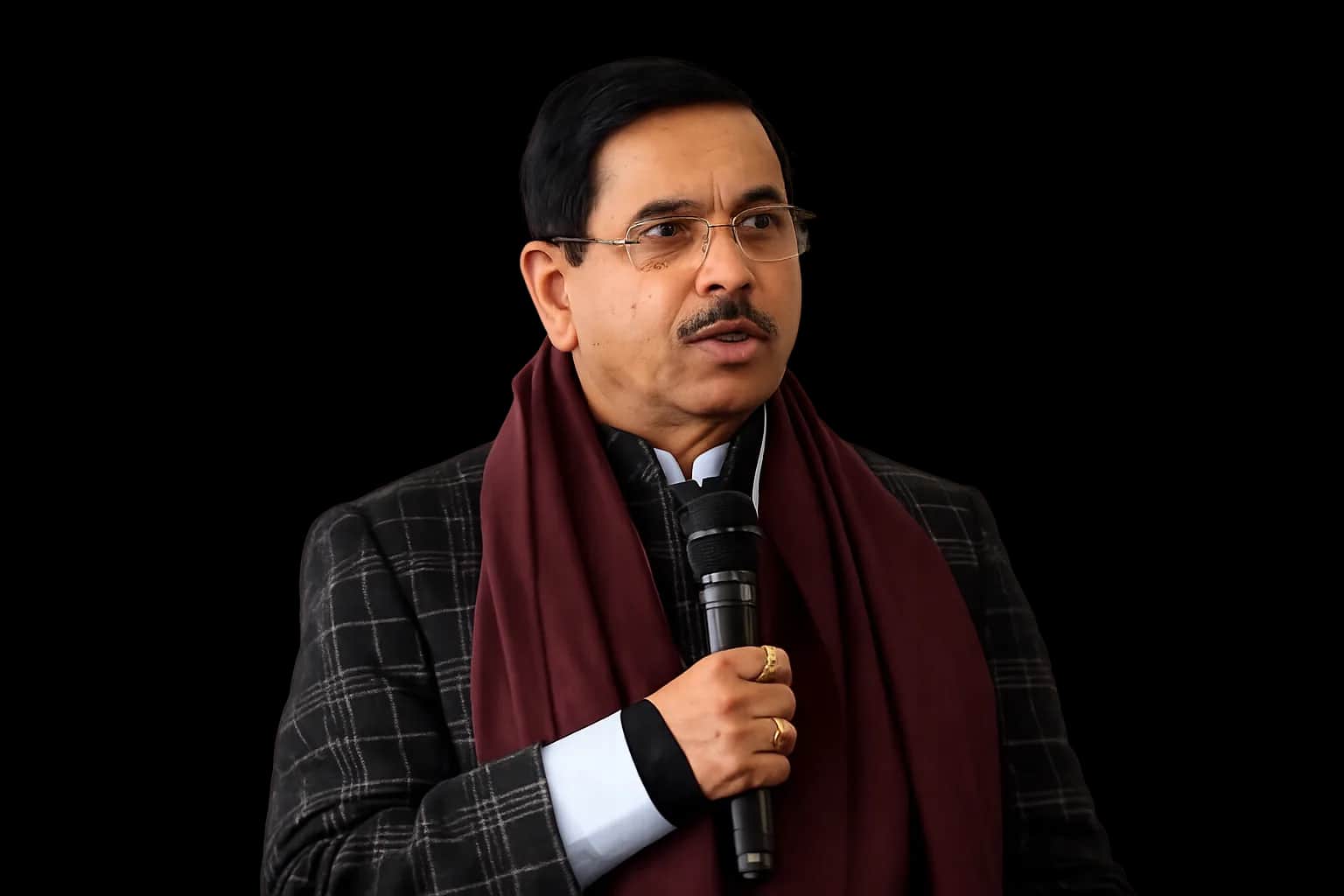
Soon after Dharmendra Pradhan stepped down over the NEET controversy, Prime Minister Narendra Modi turned to Prahlad Joshi, a senior BJP leader who has built his political career away from the limelight but close to the party's decision making.
For millions of students, the change is about far more than a Cabinet reshuffle. The alleged paper leak surrounding NEET shook confidence in one of India's most important entrance examinations. Students questioned whether years of preparation had been rendered meaningless, parents demanded accountability and the Opposition accused the government of failing to protect the integrity of the examination system.
At such a moment, the government opted against experimenting with a new face. Instead, it handed the responsibility to one of its most experienced ministers.
A politician from Karnataka who rose quietly through the ranks
Prahlad Joshi's story did not begin in Delhi. Born on November 27, 1962, in Vijayapura (then Bijapur), Karnataka, he grew up in Hubballi, where he completed his education and took his first steps into public life.
He graduated from K.S. Arts College, Hubballi, but politics soon became his calling. Like many BJP leaders of his generation, Joshi's early years were shaped by the Rashtriya Swayamsevak Sangh (RSS). He worked as an organisational worker long before he became an elected representative, spending years building the party's network across north Karnataka.
Unlike leaders who burst onto the national stage through dramatic campaigns or fiery speeches, Joshi's rise was slow and methodical. He earned a reputation as someone who preferred organisation over publicity.
The man Dharwad kept electing
In 2004, the BJP fielded Joshi from the Dharwad Lok Sabha constituency. He won. Twenty-two years later, he has never lost that seat. Winning five consecutive Lok Sabha elections is no small achievement in Indian politics, where anti-incumbency often works against sitting MPs. Joshi's repeated victories have made him one of the BJP's most dependable leaders in Karnataka.
Within the party, he is often described as a troubleshooter rather than a headline-grabber, a politician trusted to manage difficult situations without seeking attention.
A minister trusted with sensitive portfolios
Long before taking charge of the Education Ministry, Joshi had already handled some of the Centre's most demanding departments. As Parliamentary Affairs Minister, he was responsible for navigating heated debates, negotiating with Opposition parties and ensuring that the government's legislative agenda moved forward. He also headed the Coal and Mines Ministry, overseeing sectors that play a key role in India's economy.
Following the 2024 general election, Prime Minister Modi retained his confidence in Joshi by assigning him the Consumer Affairs, Food and Public Distribution Ministry along with the New and Renewable Energy Ministry.
While none of these ministries dealt with education, they required the same qualities, administrative discipline, political coordination and the ability to manage pressure without creating unnecessary controversy.
Why Prahlad Joshi?
The government has not officially explained why Joshi was chosen. But the answer may lie in the timing. The Education Ministry is facing one of the biggest credibility crises in recent years. Questions are being raised about examination security, the functioning of the National Testing Agency (NTA) and the safeguards needed to prevent future paper leaks.
This is no longer just an education issue, it is a political issue.
The government needed someone who understands Parliament, can respond to criticism, coordinate with multiple ministries and oversee reforms without allowing the crisis to deepen. Joshi fits that description. Rather than bringing in a new minister who would need time to settle in, the BJP appears to have relied on a senior leader who already enjoys the confidence of the party leadership.
His toughest assignment begins now
For years, Prahlad Joshi's work revolved around Parliament, energy, mining and food security. Education is different. Every examination affects the lives of lakhs of students. Every delay, every controversy and every administrative lapse directly impacts families across the country.
His first challenge will be restoring trust in the examination system after the NEET controversy. Alongside that, he will oversee the implementation of the National Education Policy (NEP) 2020, higher education reforms and coordination with states on school education.
Whether he succeeds will not be measured by parliamentary speeches or Cabinet meetings. It will be judged by something far simpler. Whether the next generation of students believes that competitive examinations are once again fair. That is the responsibility Prahlad Joshi now carries, and perhaps the biggest test of his political career.
"Soon after Dharmendra Pradhan stepped down over the NEET controversy, Prime Minister Narendra Modi turned to Prahlad Joshi, a senior BJP lea…"