
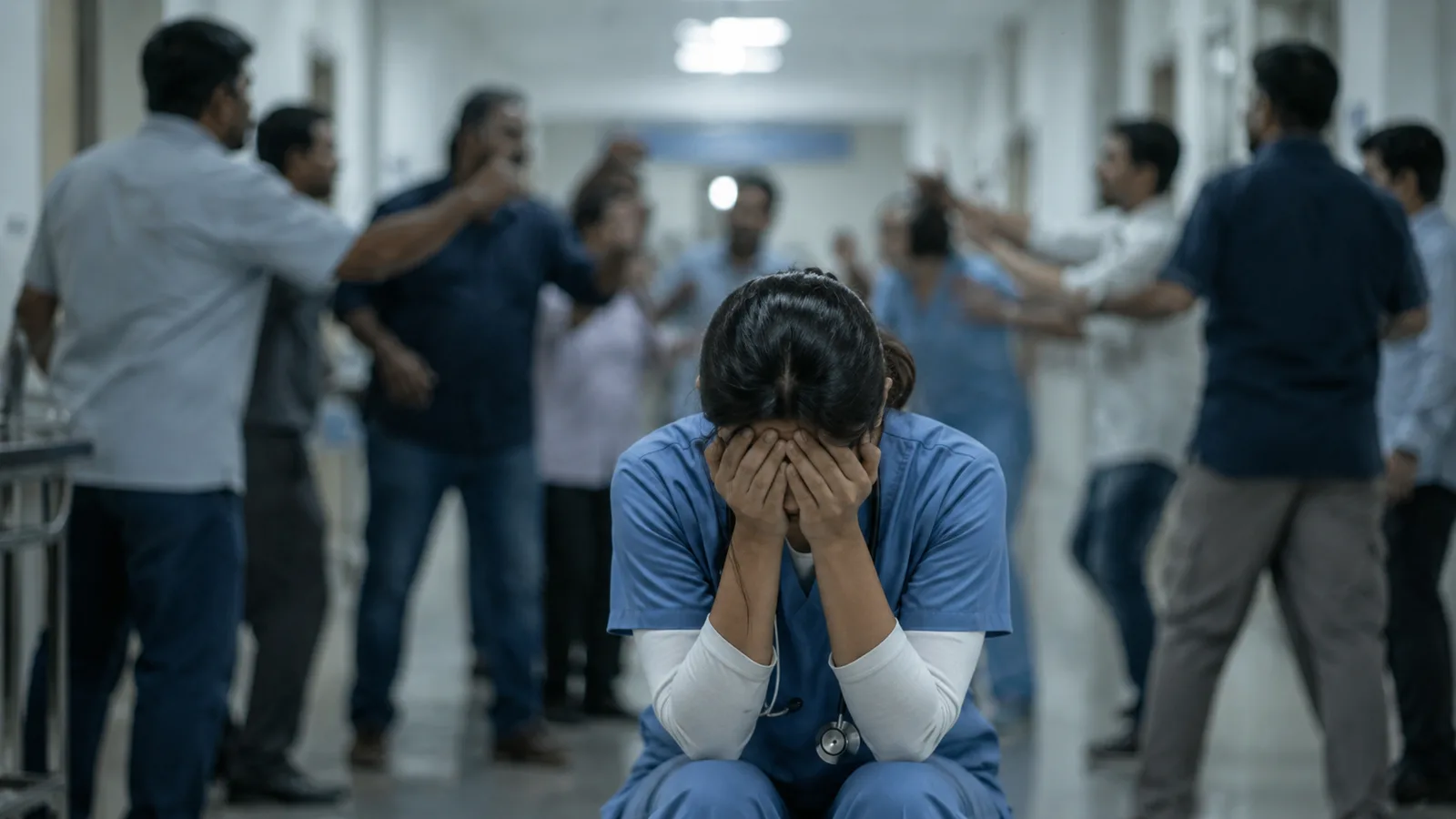
The alleged assault on doctors and hospital staff at Dombivli's Shastri Nagar Municipal Hospital has once again put the spotlight on a question that many healthcare workers have been asking for years: Are hospitals becoming unsafe for the people who work in them?
The incident has renewed calls for stronger protection for medical professionals. In response, the Indian Medical Association (IMA) has launched an interactive digital map that documents nearly 100 reported attacks on doctorsacross the country. The idea is simple, to show that these incidents are not isolated flashpoints but part of a much larger problem.
For people outside the medical profession, a hospital visit is often a once in a while experience. For doctors and nurses, it's their everyday reality. Every shift begins with a waiting room full of anxious faces. Ambulances keep arriving. Emergency cases don't stop because another patient has been waiting for hours. Doctors move from one bed to the next, making difficult decisions with limited time and, in many public hospitals, limited resources. Not every patient can be seen immediately. Not every treatment works. And despite every effort, not every life can be saved.
When emotions boil over, the people standing closest are often the doctors, nurses and hospital staff. According to the World Health Organization (WHO), four out of every 10 healthcare workers experience physical violence during their careers. If verbal abuse, threats and intimidation are included, nearly 62% have faced some form of violence at work. A recent international review also found India among the countries reporting a high prevalence of attacks on healthcare workers.
Ask doctors what stays with them after such incidents, and many won't talk about the injuries first. They'll talk about the hesitation that follows.The hesitation before telling a family that a patient couldn't be saved. The hesitation before entering a crowded emergency ward alone. The hesitation that wasn't there when they first chose this profession.
Many say they now think twice before taking emergency or night duties. Some leave government hospitals altogether. Others quietly move away from high-pressure departments, not because they don't want to treat patients, but because they no longer feel safe.
When experienced healthcare workers leave, everyone pays the price. The workload on those who remain increases, waiting times get longer and patients find it harder to access timely care.
Several countries, including Spain, Singapore, the United Kingdom and parts of the United States, have strengthened laws to protect healthcare workers. The WHO says legal safeguards are important, but they must be backed by better hospital security, adequate staffing, improved communication with patients' families and greater public awareness.
At the end of the day, every doctor, nurse and hospital worker walks into work with the same purpose, to care for someone else's loved one. They deserve to do that without fearing that they could become the next victim of violence.
"The alleged assault on doctors and hospital staff at Dombivli's Shastri Nagar Municipal Hospital has once again put the spotlight on a quest…"