
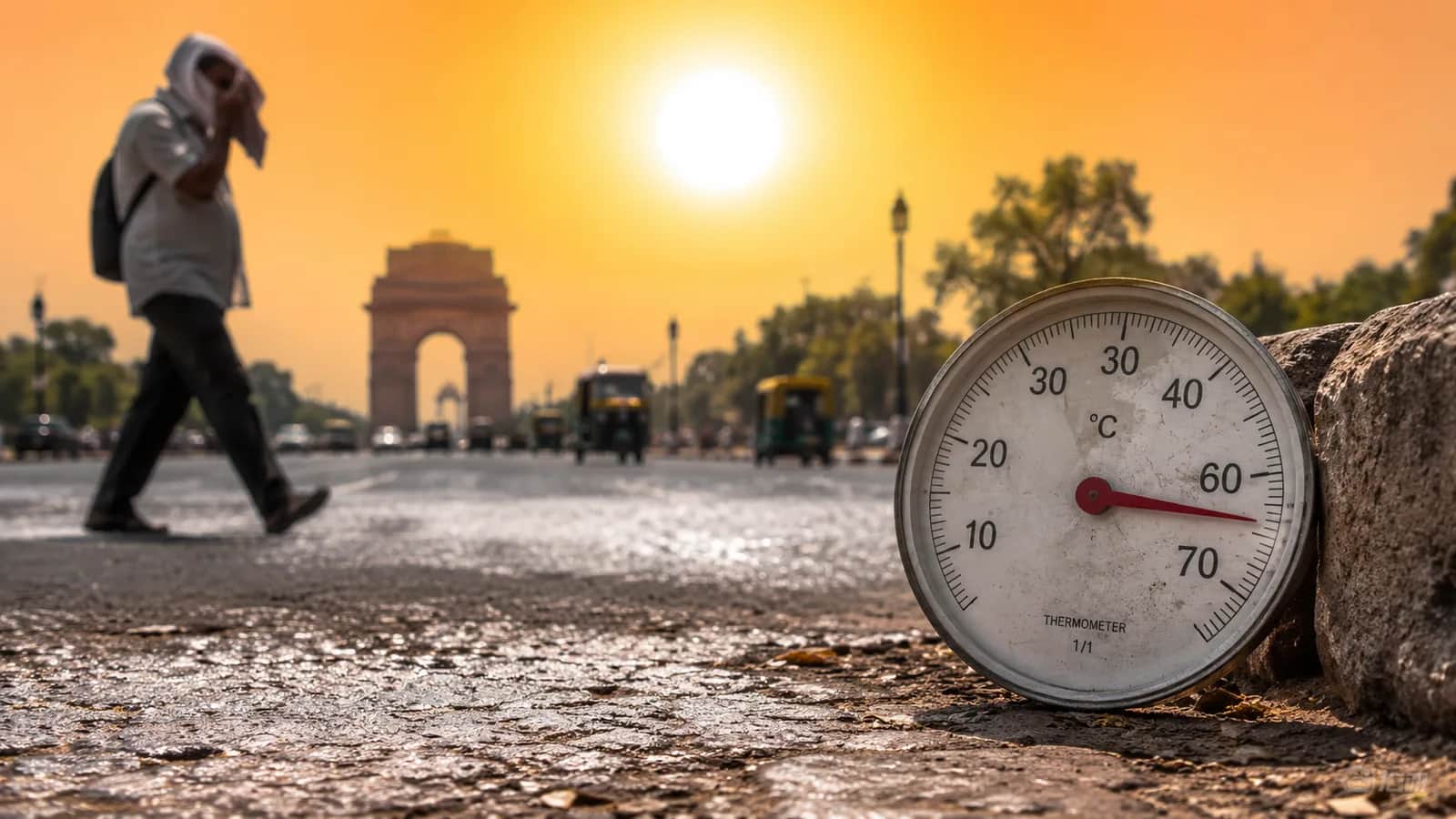
The Indian capital Delhi is facing intense heat this year, and the situation has gone far beyond normal because for weeks, the weather has touched over 40 degrees. According to reports, people have shared their concerns about this issue on social media and have also asked for clarification from the IMD.
High Surface Temperatures Compared to Official Measurements
Recently, the IMD recorded a temperature of 43.5°C, which caused concern among the public and officials. However, the main twist here is Greenpeace's thermal camera study, which found that temperatures on roads, footpaths and concrete surfaces can rise above 60°C. This means that 43°C is only the official temperature, while people may experience much more intense heat due to these extremely hot surfaces.
Reality on the Ground in Delhi's Hotspots
According to reports, temperatures around bikers at the IIT Flyover reached 64°C, while areas under trees recorded around 40°C. In the Red Fort area, surface temperatures near street vendors crossed 56°C, and in Sundar Nagri, the evening temperature was recorded at 51°C. This data shows that not only is the air hot, but roads, footpaths and other concrete surfaces are even hotter.
Nibedita Saha, a researcher for Greenpeace India, shows off how she utilizes the thermal imaging camera.
Consistent exposure to such high temperatures can cause major health issues, Nibedita explains, adding that sometimes it helps to move a few steps to a cooler place. We were immediately relieved. That is the impact that a single tree may have.
Health Risks Explained by Experts
According to pulmonologist Dr. A. Fathahudeen,
Prolonged exposure to extreme heat can raise the body's core temperature, which is 37°C. When it exceeds 40°C, the body ceases to work normally.
Heat exhaustion is the most prevalent symptom. He added that in more severe situations, people may have confusion, dizziness, and even seizures. People become extremely sweaty, and experience headaches and fatigue.
If not treated urgently, they can have multiple organ failures, leading to death, he stated.
Dr. Fathahudeen advises individuals to use an umbrella, wear loose, light-colored clothing, and continue drinking water even when they are not thirsty in order to stay safe during a heatwave.
The results also emphasize how important trees and spaces with shade are for lowering heat exposure. While some open spaces had temperatures above 60°C, sections under trees had far lower temperatures.
Poor communities, street vendors, and daily wage workers who work long hours outside with little access to cooling facilities are the groups most affected by extreme heat.
As a result, rising temperatures are affecting thousands of people in Delhi, becoming a major public health and livelihood concern.
"The Indian capital Delhi is facing intense heat this year, and the situation has gone far beyond normal because for weeks, the weather has t…"