
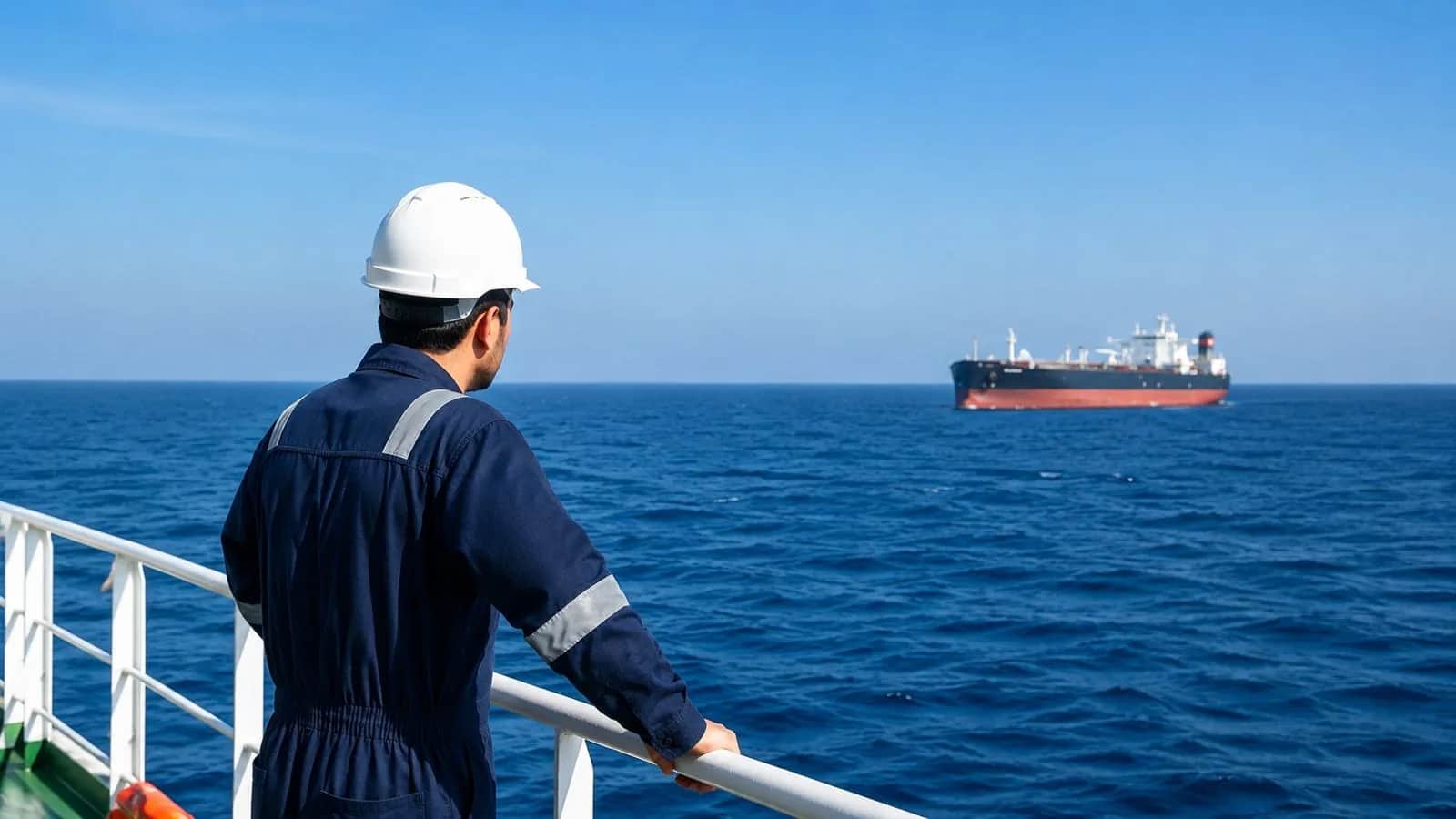
Missiles, diplomacy, and the geopolitical ramifications of the Iran-US war have dominated global attention for months. However, a different story concerning around 11,000 stranded seafarers stuck aboard hundreds of vessels in and around the Strait of Hormuz is concealed by headlines about war and ceasefires. The International Maritime Organization (IMO) of the United Nations has initiated a massive evacuation plan to transport them to safety in response to the recent ceasefire accord.
There is more to the business than just logistics. It serves as a reminder of how people whose names seldom appear in the news are essential to international trade. When one of the most important maritime routes in the world turned into a combat zone, these sailors kept ships operating. The Strait of Hormuz is essential to international trade because it transports a large portion of the world's energy. Thousands of crew members were left in limbo, vessels became stuck, and supply systems were disrupted when the river became dangerous.
The fact that the trapped sailors were neither combatants nor political players is what made this catastrophe so startling. They were civilian laborers trapped in the middle of conflicting states. At least 14 seafarers died during the conflict, according to the IMO, underscoring the human cost of disruptions that are frequently only quantified in terms of oil costs and shipping delays.
Coordinated by Iran, Oman, the US, and other regional players, the evacuation effort shows that humanitarian cooperation is still achievable despite severe political differences.
The globe should keep in mind a straightforward fact when the ships gradually start to sail once more: cargo is not the only factor driving global trade. People power it, and their safety should never be neglected.
Many of these mariners experienced mental weariness in addition to physical confinement during their journey. The frequently disregarded human cost of geopolitical wars and maritime interruptions was highlighted by weeks of uncertainty, loneliness, and terror.
"Missiles, diplomacy, and the geopolitical ramifications of the Iran-US war have dominated global attention for months. However, a different …"