
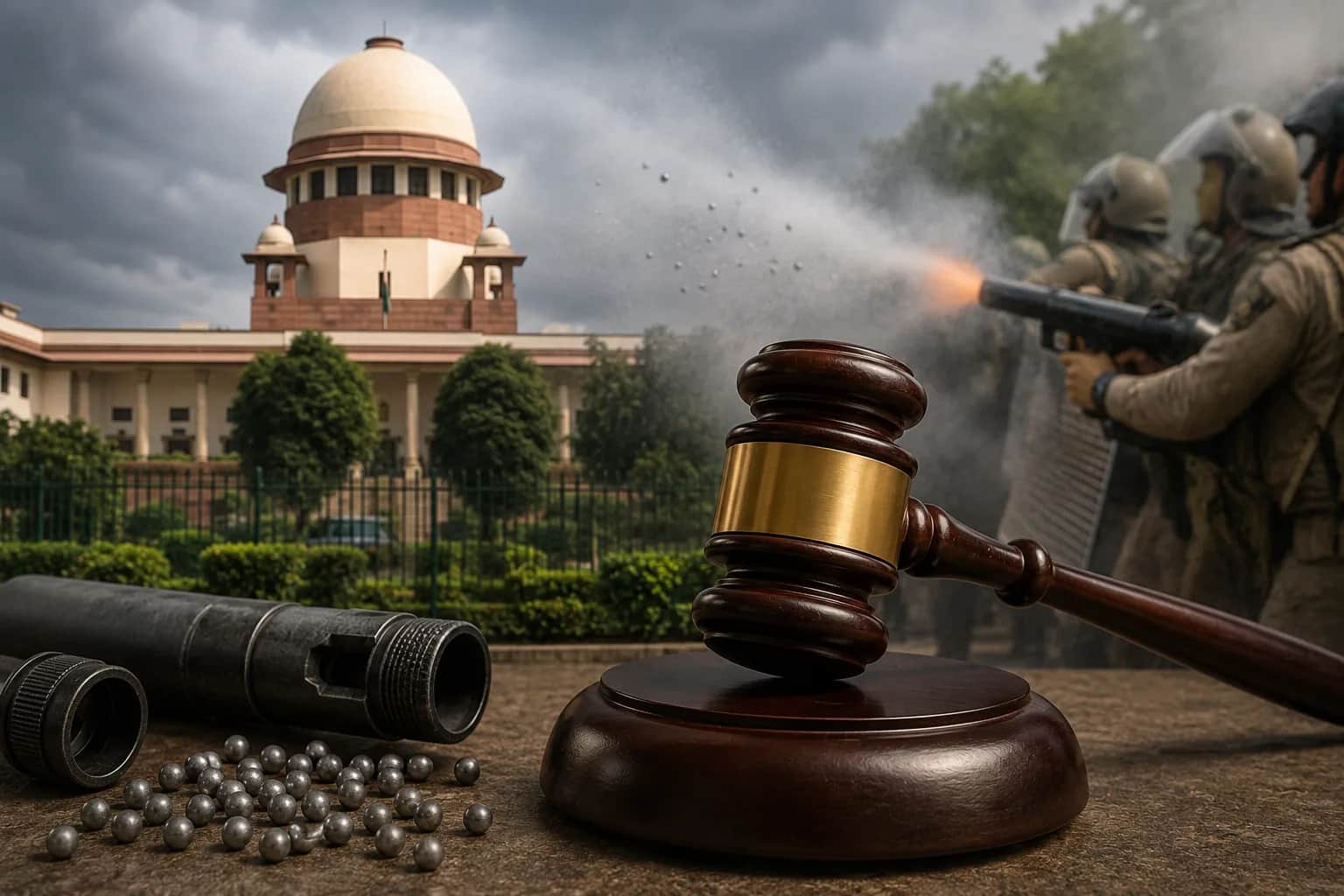
The Supreme Court has shown reluctance towards imposing an absolute ban on the use of pellet guns by security personnel in order to manage the violent mobs. In hearing a plea concerning the use of pellet guns in the 'Parliament Chalo' protest in Delhi on July 20, the Supreme Court noted that although a peaceful protest is part of democracy, it may at times turn violent, necessitating a proper response from law enforcement agencies.
Court Finds Absolute Ban Impossible
The Bench led by Chief Justice Surya Kant and comprising Justice Joymalya Bagchi and Justice V. Mohan said that the demand for imposing an absolute ban was "impractical." The court has observed that security and police personnel often have to take a graduated approach based on the situation. Justice Bagchi also said that peaceful protests may also at times turn violent.
Petitioners Want to Ban Metal Pellets
In a petition filed in the Supreme Court, former IPS officer Yashovardhan Azad and fellow activists Prashant Kumar Singh and Sheikh Irshad Mansoori said they were injured due to metal pellets on the July 20 protest. Senior advocate Vrinda Grover, appearing on behalf of the petitioners, requested the court to ban the use of metal pellets since they led to serious injuries which required surgery. She also expressed worries over the treatment given to the injured protester by the doctor.
Centre to File Rules Before Court
As per the directions of the Supreme Court, the petitioners were told to amend their petition for clarity while the Central Government was asked to file the existing rules regarding the use of pellet guns. Log books recording use of force during the July 20 protest were also asked to be preserved by the court. According to the court, the SOP for actions of the police during the protests will contain details of the use of pellet guns.
"The Supreme Court has shown reluctance towards imposing an absolute ban on the use of pellet guns by security personnel in order to manage t…"