
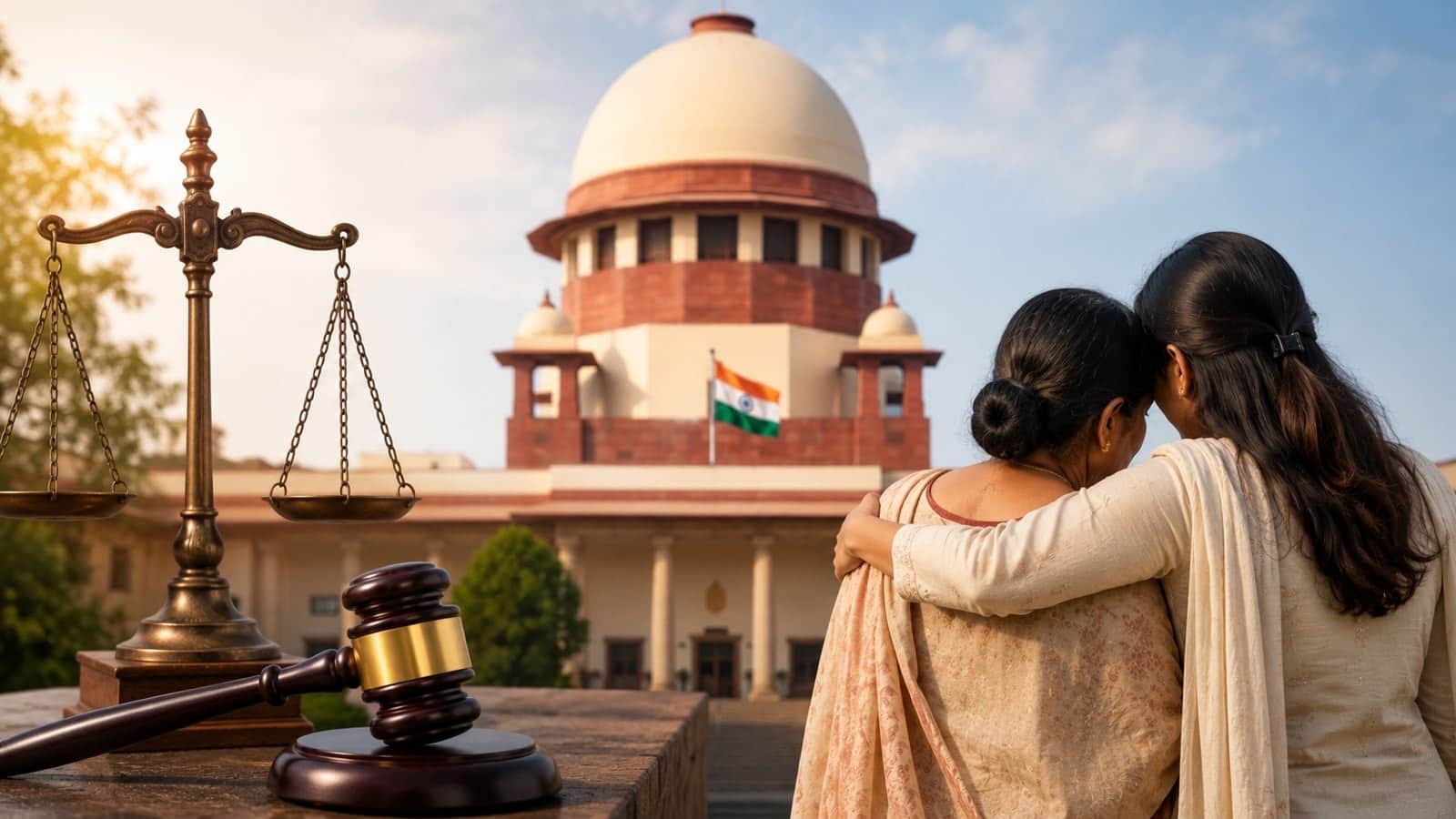
In a landmark ruling with far-reaching implications for gender equality, the Supreme Court has held in Kulsum Nisha v. State of Uttar Pradesh that married daughters cannot be denied compassionate appointments or similar welfare benefits solely because of their marital status. The judgment, delivered by a bench comprising Justice P.S. Narasimha and Justice Alok Aradhe, struck down a provision in an Uttar Pradesh government policy that excluded married daughters from the definition of "family" while continuing to treat married sons as eligible beneficiaries.
The Court observed that marriage does not automatically sever a daughter's relationship with her parental family and that dependency cannot be determined solely on the basis of marital status. Calling such exclusions discriminatory and rooted in outdated social assumptions, the bench held that they violate the constitutional principles of equality and non-discrimination.
What Was the Case About?
The case, Kulsum Nisha v. State of Uttar Pradesh, arose from a challenge to an Uttar Pradesh government order governing compassionate appointments and the allotment of fair-price shops under dependent-family quotas. Under the policy, unmarried, widowed and legally separated daughters were included in the definition of family, but married daughters were excluded from consideration.
Compassionate appointments are intended to provide immediate financial relief to the family of a government employee who dies while in service. The objective is to help dependents overcome sudden financial hardship and maintain economic stability after losing a primary breadwinner.
The petitioner argued that excluding married daughters solely because they are married ignores the reality that many women continue to depend on or support their parents even after marriage.
What Did the Supreme Court Say?
The Supreme Court agreed with that argument and made several significant observations. The bench noted that dependency is a question of fact and cannot be presumed merely from a person's marital status.
The judges emphasized that while married daughters were being excluded under the policy, married sons continued to remain part of the family for the purpose of receiving benefits. Such a distinction, the Court said, had no rational basis and amounted to unconstitutional discrimination.
Importantly, the Court rejected the traditional assumption that a daughter becomes part of another family after marriage and therefore loses all ties with her parental household. According to the bench, such thinking is inconsistent with both constitutional values and contemporary social realities.
Recognizing Changing Social Realities
In its judgment, the Court acknowledged the changing role of women in Indian society. Many married daughters today continue to provide financial support to aging parents, act as primary caregivers, or remain dependent on their parental families under certain circumstances.
The bench observed that family structures have evolved significantly over time and welfare policies must reflect these realities rather than rely on outdated gender stereotypes. The Court stressed that constitutional rights cannot be restricted on the basis of assumptions rooted in traditional social norms.
Why the Verdict Matters
Legal experts believe the judgment could have implications beyond compassionate appointments. Several states continue to have policies where married daughters face restrictions in accessing family-based welfare benefits. The ruling may prompt governments to review and revise such provisions to ensure compliance with constitutional principles.
Women's rights advocates have welcomed the verdict as a major step towards substantive gender equality. They argue that the decision reinforces the idea that a woman's identity, rights and family relationships do not disappear after marriage.
A Significant Step Towards Equality
The Supreme Court's ruling sends a clear message that welfare schemes must be guided by actual dependency and financial need, not by assumptions about gender roles. By recognizing that a married daughter remains an integral part of her family, the Court has delivered a judgment that reflects modern realities and strengthens the constitutional promise of equality.
As governments and policymakers examine the implications of the verdict, the judgment adds to a growing body of jurisprudence aimed at eliminating gender-based discrimination in welfare policies.
" In a landmark ruling with far-reaching implications for gender equality, the Supreme Court has held in Kulsum Nisha v. State of Uttar Prade…"