
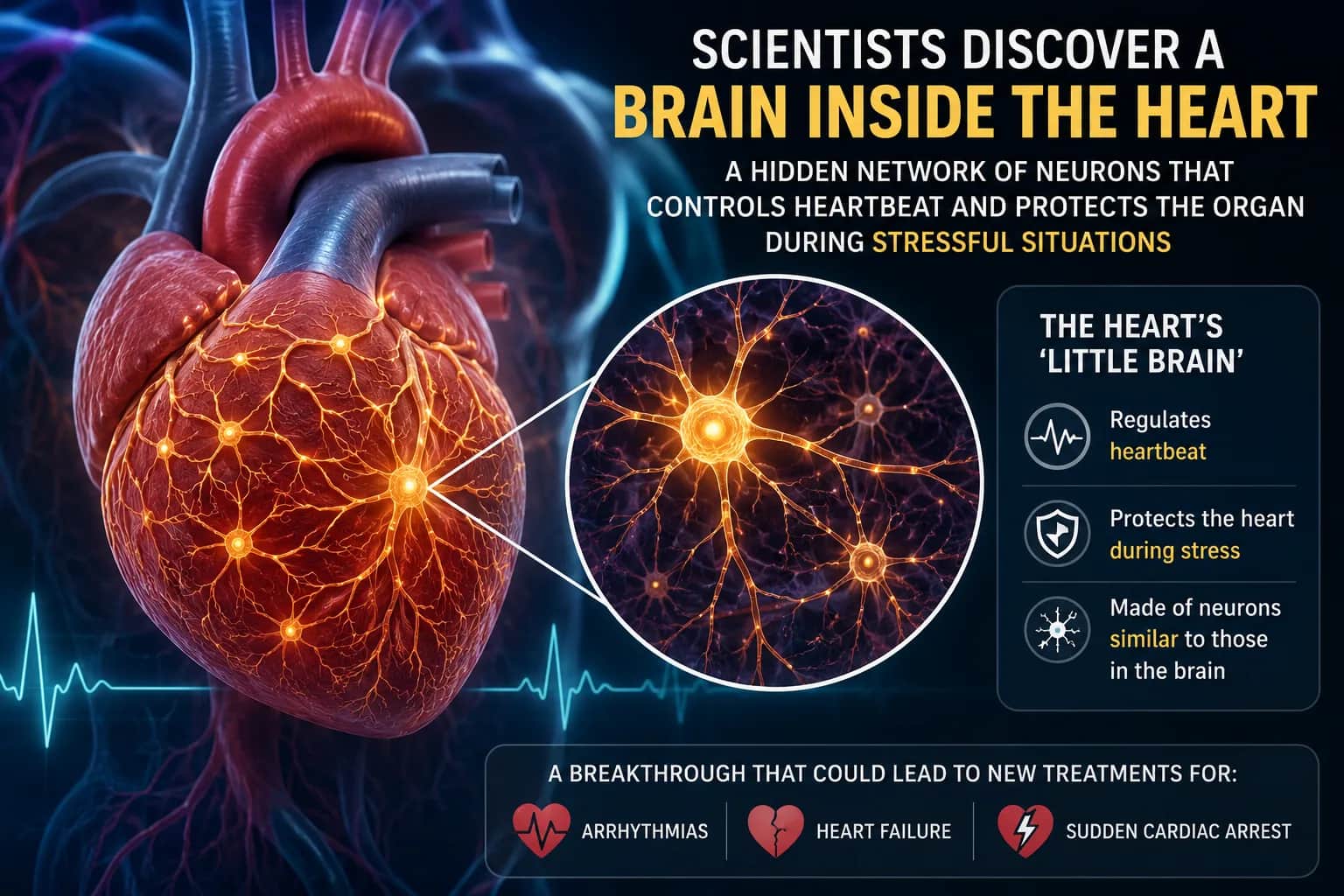
A team of scientists from Yale University has discovered an amazing network of neurons inside the heart that works as a mini-brain, proving wrong the previously accepted idea that the brain is the sole controller of heart functioning. Published in the scientific journal Cell, the study showed that this mini-neuron network not only controls heartbeats but also protects the heart from the effects of stress.
This micro network of neurons is named the intrinsic cardiac nervous system (ICNS). Although its existence is known for a long time, the real functions of it were a mystery since these neurons comprise a tiny part of the heart tissue. The scientists managed to discover two different types of neurons and their functions using genetic mapping and imaging in mice.
The first type, Npy+ neurons, regulates the heart rate. If this type of neuron is removed, the animals face severe heart failure and thus its important function becomes clear. In addition, another type of neurons named Ddah1+ neurons serves as a protective mechanism against the stress conditions. Mice without these neurons faced much higher chances of dying of heart rhythm disturbances under the stress conditions.
This research may change the perspective on the diseases of the heart such as arrhythmias, heart failure, and sudden death from heart-related causes. Although the experiment was performed on mice, there have been identified some similar genetic patterns in human hearts, which can make future treatment possible by addressing this "little brain," thus preventing various heart disorders.
These results support the concept that the heart is not just a mechanical machine; it has its own neuronal control system that is coordinated with the brain in order to maintain life especially when one is under stress.
"A team of scientists from Yale University has discovered an amazing network of neurons inside the heart that works as a mini-brain, proving …"