
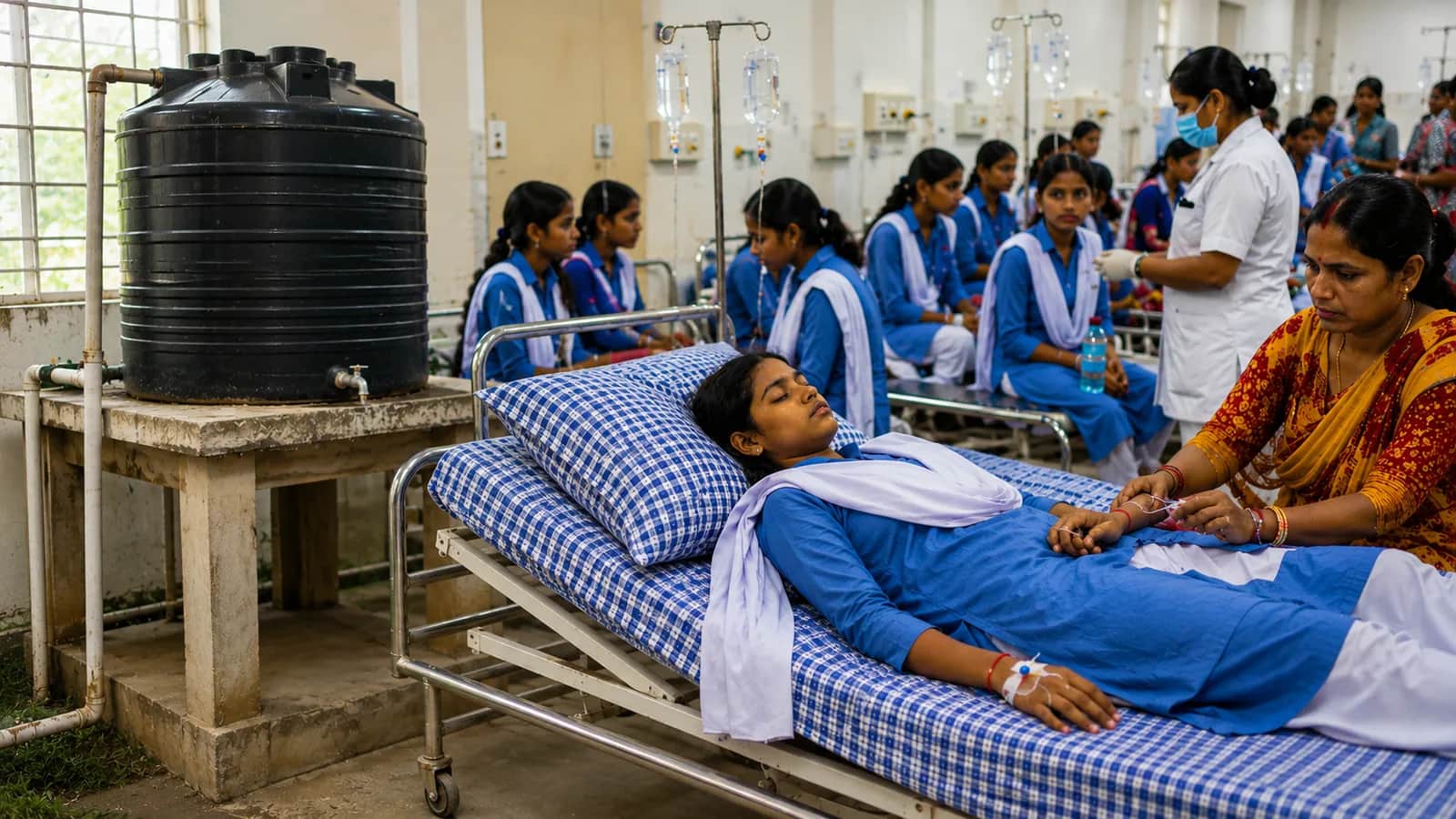
More than 100 schoolgirls at a government residential school in Jharkhand's Garhwa district at Kharaundhi block were hospitalised after allegedly drinking contaminated water stored in a plastic tank. The incident, which occurred on June 28, triggered panic among students, parents and local authorities. Following the incident, the state government suspended the school's teacher-in-charge and hostel warden, while ordering an investigation into the matter.
According to officials, the girls, who study at Kasturba Gandhi Balika Vidyalaya (KGBV) in Chakulia block, started complaining of severe stomach pain, vomiting, nausea and dizziness shortly after consuming drinking water available on the school premises. As the number of affected students continued to rise, they were rushed to nearby community health centres and hospitals. Fortunately, officials said most students are now stable and are receiving treatment.
Preliminary reports suggest that the drinking water stored in a plastic tank may have become contaminated, leading to the sudden outbreak of illness. However, authorities have clarified that laboratory tests of the water samples are still underway, and the exact cause will only be confirmed after the investigation is completed.
Soon after the incident came to light, senior district officials, health department teams and food safety authorities reached the school to inspect the premises. Water samples, along with samples of food served to students, have been collected for testing to determine whether the illness was caused by contaminated drinking water or another source.
The Jharkhand government acted swiftly by suspending the teacher-in-charge and hostel warden for alleged negligence. Officials said accountability would be fixed if lapses in maintaining hygiene and drinking water safety are established. The district administration has also ordered a detailed inquiry into the school's water storage system, sanitation facilities and overall hostel management.
The incident has once again highlighted concerns over the quality of drinking water and basic infrastructure in government residential schools across India. Schools that accommodate hundreds of students are expected to maintain strict standards of hygiene, regular cleaning of water storage tanks and periodic water quality testing. Experts believe that failure to clean plastic water tanks regularly can result in bacterial growth and contamination, especially during the summer and monsoon seasons.
Parents of the affected students expressed concern over the school's safety standards and demanded strict action against those responsible. Many questioned how such a large number of children could fall ill before authorities noticed the problem. Local residents have also urged the government to strengthen monitoring mechanisms in residential schools to prevent similar incidents in the future.
While the immediate priority remains the recovery of the affected students, the incident has sparked a larger debate about the condition of public education infrastructure and student welfare in government-run hostels. It also underscores the need for regular health inspections, better maintenance of drinking water facilities and greater accountability among school authorities.
The investigation is ongoing, and officials have assured that appropriate action will be taken once the laboratory reports are received. Until then, the incident serves as a reminder that access to safe drinking water is not just a basic necessity but a fundamental responsibility in every educational institution.
"More than 100 schoolgirls at a government residential school in Jharkhand's Garhwa district at Kharaundhi block were hospitalised after all…"