
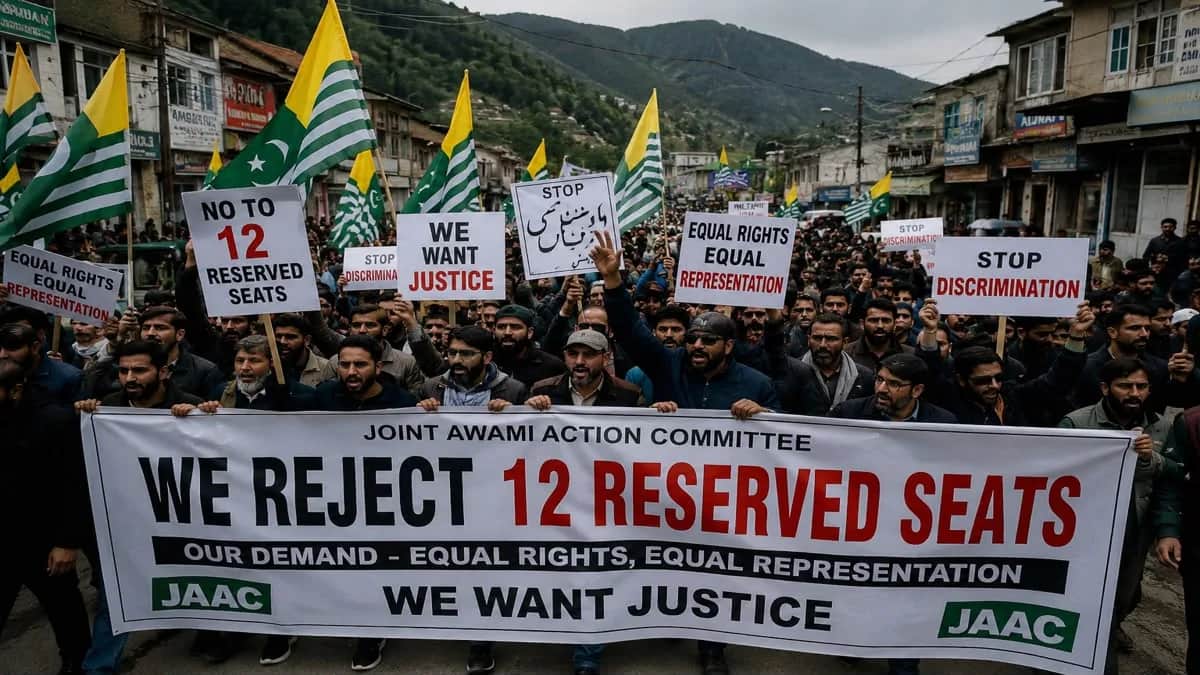
Pakistan-Occupied Kashmir (PoK) is once again in the headlines as large-scale protests continue despite curfews, internet shutdowns and a heavy security presence. The latest unrest has reportedly claimed around 30 lives, while hundreds of people have been injured or detained. Demonstrators have flooded the streets of Muzaffarabad, Mirpur, Kotli and other major towns, demanding the abolition of 12 reserved seats in the region’s Legislative Assembly.
What began as a political dispute has now evolved into one of the biggest public movements witnessed in PoK in recent years, exposing deep frustrations among local residents.
The 12 Reserved Seats Controversy
At the heart of the protests is the issue of 12 reserved assembly seats allocated to Kashmiri refugees settled in different parts of Pakistan. Protesters argue that these seats allow Islamabad to exercise greater influence over PoK’s political system while reducing the representation of people actually living in the region.
The controversy intensified after legal and political developments suggested that the seats would remain protected under the current constitutional framework. This triggered a strong reaction from civil society groups and political activists, who accused authorities of ignoring local voices.
More Than Just a Political Issue
While the reserved seats issue sparked the latest demonstrations, many observers believe the protests are being fueled by years of accumulated anger.
Residents have repeatedly complained about rising inflation, unemployment, increasing electricity tariffs and what they describe as limited political autonomy. Similar protests were witnessed in 2024 when thousands took to the streets against soaring utility prices and taxation policies. Although authorities announced some relief measures at the time, many locals believe the core problems were never resolved.
As a result, the current movement has become a symbol of broader dissatisfaction rather than a single-issue protest.
Crackdown Fails to Stop Demonstrations
In an attempt to restore order, authorities imposed curfews, suspended internet services and deployed additional security personnel across sensitive areas. Several protest leaders were reportedly detained, while cases were registered against prominent activists.
However, these measures have failed to stop the movement. Long marches, public rallies and shutdowns continue across multiple districts. In many places, businesses remain closed and public transport services have been disrupted as protesters maintain pressure on the administration.
The persistence of the demonstrations suggests that public anger has reached a level where restrictions alone may no longer be enough to contain it.
A Major Challenge for Islamabad
The unrest has created a difficult situation for Pakistan’s government. On one hand, officials are trying to maintain law and order; on the other, the scale of the protests indicates a growing trust deficit between the administration and local communities.
Human rights organisations have also raised concerns about the use of force against demonstrators. Meanwhile, political analysts argue that a long-term solution will require meaningful dialogue and reforms rather than relying solely on security measures.
What Happens Next?
As PoK moves closer to future political milestones, the ongoing protests could significantly influence the region’s political landscape. The crisis is no longer just about 12 reserved seats- it has become a debate over representation, governance and the relationship between Islamabad and the people of PoK.
For now, one thing is clear: despite curfews, internet blackouts and a security crackdown, the voices on the streets of PoK are refusing to be silenced. The coming weeks will determine whether the crisis moves toward dialogue or deeper confrontation.
"Pakistan-Occupied Kashmir (PoK) is once again in the headlines as large-scale protests continue despite curfews, internet shutdowns and a he…"