
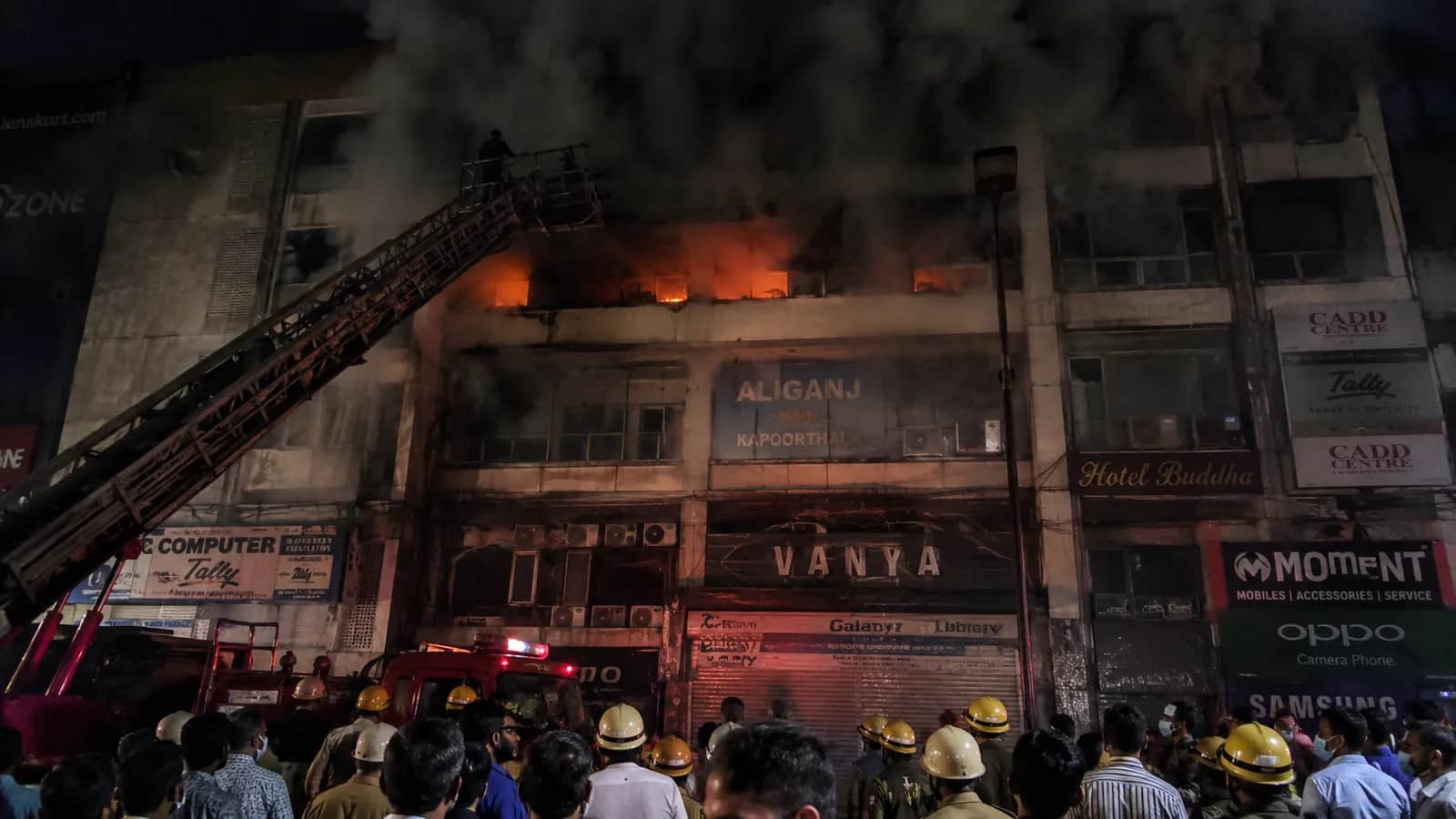
After the horrific scenes of the Malviya Nagar fire in Delhi, similar scenes began emerging in Lucknow. The reason appears to be negligence from top to bottom. Now the question arises, who should be blamed and whose shortcomings should be pointed out?
Lucknow fire leaves 15 families devastated
Once again, fire has snatched the joys of many families in Lucknow. A few days ago, a massive slum fire took away people's homes, and now this tragic fire in Aliganj has devastated the lives of 15 families. After every tragedy, investigations are conducted, promises are made, and action is discussed, but the question remains, when will lessons be learned?
The mother, who lost her son, alleged:
“If the same urgency had been shown to save the children as the entire administration and machinery showed upon the Chief Minister's arrival, perhaps many lives could have been saved.”
This is not just the statement of a mother, but the pain of all those families who lost their loved ones in this accident.
Cause of the fire
According to sources, the fire started due to a short circuit in the AC system. But is that the whole truth? Probably not, because the building, which was approved for residential use only in 2014, was converted into an illegal commercial building by the landlords, after which demolition orders were issued in 2016.
However, due to corruption and administrative negligence, the building remained standing for years. The subsequent accident in this building took away the happiness of 15 families.
Safety failures turned deadly
The building had a biometric entry system. As soon as the fire broke out and the power went out, the gates automatically locked, blocking the exit for those trapped inside. Surprisingly, the building had no emergency exits.
To save their lives, people hid in bathrooms and rooms, but most of them died due to poisonous smoke and suffocation rather than the fire.
The biggest question is, when action against this illegal construction was ordered in 2016, how did the building continue to operate for 10 years? And if action had been taken in time, could 15 lives have been saved today?
Systemic corruption and its cost
The bitter truth is that the price of corruption is often paid by the common and innocent people who have nothing to do with it.
After all, is the short circuit alone responsible for these 15 deaths, or is it also the system that ignored the danger despite knowing it?
"After the horrific scenes of the Malviya Nagar fire in Delhi, similar scenes began emerging in Lucknow. The reason appears to be negligence …"