
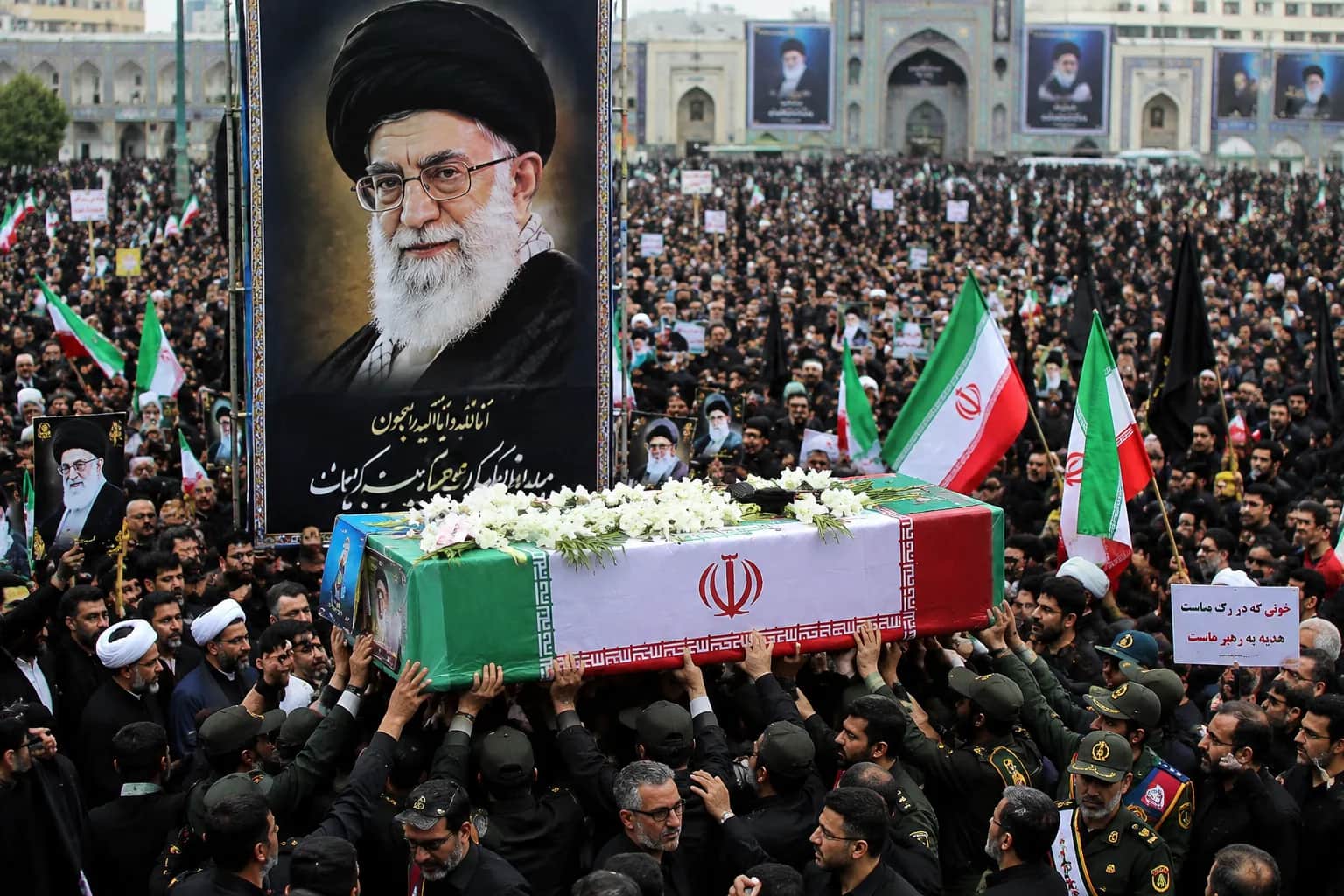
Tens of thousands of mourners flocked to Tehran to pay their last respects to Ayatollah Ali Khamenei, the late Supreme Leader of Iran, causing an outpouring of grief. Held months after his death during the Iran-Israel conflict, the state funeral signaled the start of a week-long sequence of events that will culminate in his burial in his birthplace of Mashhad.
State Funeral Ceremony Begins
The funeral procession began at the Imam Khomeini Grand Mosalla in Tehran, where Khamenei's casket was laid for public recognition and covered in the Iranian national flag. The location was packed with thousands of black-clad mourners who sang religious and patriotic slogans and showed support for the nation's leaders.
The ceremony was attended by religious experts, military leaders, senior government officials, and representatives of Iran's allies. Millions of people across joined the grieving as the ceremony was aired live on state television.
Week long funerall processions planned
Prior to Khamenei's final burial in Mashhad, Iranian authorities have planned funeral processions in a number of places, including the holy city of Qom. Millions of people are anticipated to attend the celebrations, which are among the biggest public events in the nation's recent history, according to state media.
In an effort to guarantee that the ceremonies take place amicably in the face of increased regional tensions, security has been dramatically increased throughout key cities.
Death Marks a Historic Turning Point
According to Iranian authorities, Khamenei, who was Iran's Supreme Leader for almost forty years, passed away after the latest Iran-Israel crisis. One of the most important turning points in contemporary Iranian history, his passing has ushered in a new era in the nation's political leadership.
Critics outside have characterized the burial as a meticulously planned demonstration of official power, despite the Iranian government's portrayal of it as a symbol of perseverance and national togetherness.
Funeral Carries Political Significance
Beyond being a religious event, the funeral has emerged as a powerful political statement. It reflects Iran's efforts to project unity at a time of regional uncertainty and continuing tensions in the Middle East.
As millions continue to participate in the mourning ceremonies, the funeral of Ali Khamenei is expected to remain a defining moment in Iran's contemporary political history.
"Tens of thousands of mourners flocked to Tehran to pay their last respects to Ayatollah Ali Khamenei, the late Supreme Leader of Iran, causi…"