
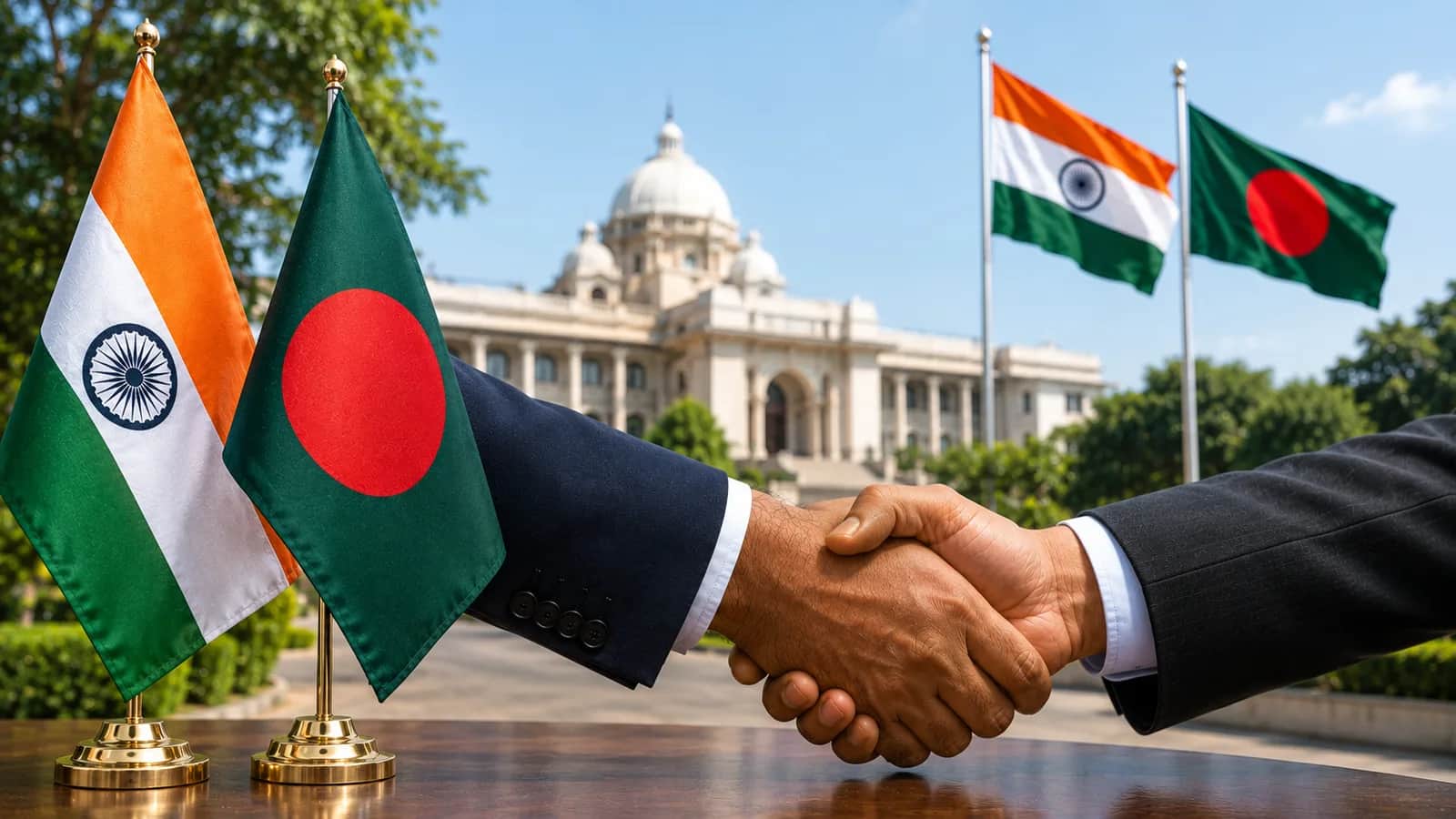
India has taken an unusual diplomatic step that is being seen as a clear message to Bangladesh, New Delhi wants to strengthen its relationship with one of its closest neighbours.
The Centre has elevated India's High Commissioner to Bangladesh, Dinesh Trivedi, to a status equivalent to that of a Union Cabinet Minister under the official Table of Precedence. While the move is ceremonial and does not give him ministerial powers, it places him higher in the government's protocol hierarchy during official events.
Diplomats believe the decision reflects the importance India now places on its engagement with Dhaka, especially at a time when regional politics and bilateral relations are undergoing significant changes.
The move comes just months after Trivedi, a former Union Railway Minister and senior politician, was appointed as India's High Commissioner to Bangladesh. Unlike most Indian envoys, who are career diplomats from the Indian Foreign Service, Trivedi comes from a political background. His appointment itself was viewed as a sign that New Delhi wanted a more direct political channel to engage with Bangladesh.
The timing of this decision is equally significant.
Relations between India and Bangladesh have witnessed a challenging phase following the political developments in Dhaka last year. The change in Bangladesh's leadership, discussions surrounding former Prime Minister Sheikh Hasina's stay in India, and concerns over border management and migration have occasionally created diplomatic friction.
Despite these challenges, both countries have continued to cooperate on several fronts. Trade between the two neighbours has continued to grow, while connectivity projects, energy cooperation, security coordination and infrastructure development remain central to the partnership.
The relationship between India and Bangladesh has deep historical roots. India played a crucial role in Bangladesh's Liberation War in 1971 and was among the first countries to recognise the newly independent nation. Over the past five decades, the two countries have expanded cooperation in trade, defence, transport, culture and regional connectivity, making Bangladesh one of India's most important neighbours.
Against this backdrop, the decision to accord Cabinet-rank protocol to India's High Commissioner is being viewed as more than just a ceremonial gesture. It signals New Delhi's intent to keep Bangladesh high on its diplomatic agenda and to deepen political engagement at a time when stability and cooperation in South Asia have become increasingly important.
While the move may not change policies overnight, it sends a strong diplomatic message: India sees its relationship with Bangladesh as one of its top foreign policy priorities.
"India has taken an unusual diplomatic step that is being seen as a clear message to Bangladesh, New Delhi wants to strengthen its relationsh…"