
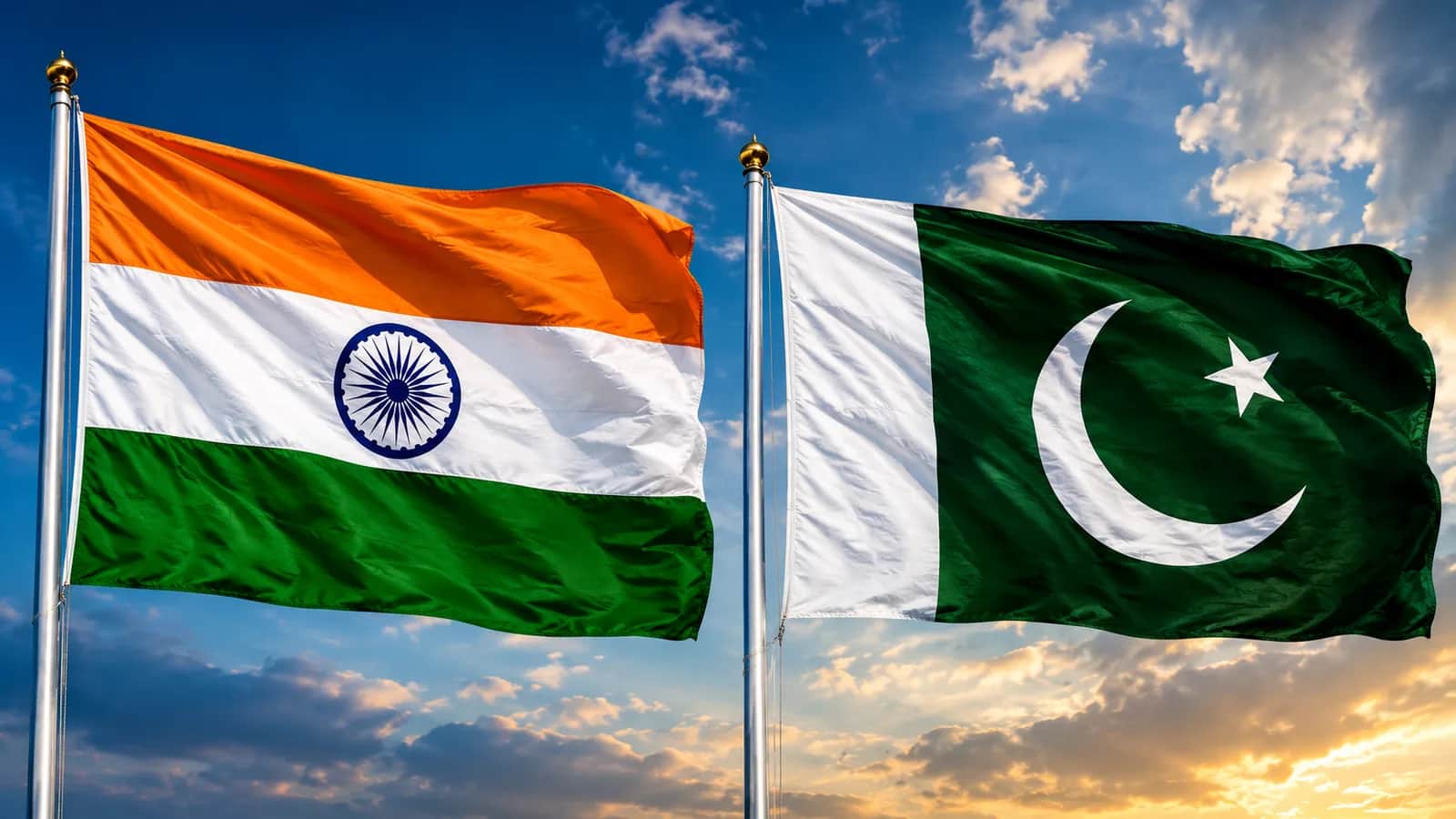
India launched a sharp attack on Pakistan at the United Nations on June 18, accusing Islamabad of supporting terrorism and describing it as a "Frankenstein state" that is now suffering from the very extremism it helped create.
Speaking at the UN Human Rights Council after Pakistan and the Organisation of Islamic Cooperation (OIC) raised the issue of Jammu and Kashmir, India's First Secretary to the UN, Anupama Singh, rejected what she called "baseless and malicious allegations" against India. She reiterated that Jammu and Kashmir "was, is, and will always remain an integral part of India" and asserted that the only unresolved issue is Pakistan's illegal occupation of territories claimed by India.
Singh further accused Pakistan of "hosting, training and deploying terrorists as state policy" and questioned how a country that allegedly nurtures terror groups can simultaneously portray itself as a victim of terrorism. Referring to Pakistan as a "Frankenstein state," she said Islamabad appeared shocked when the very forces it once supported turned against it.
India also defended its decision to suspend the Indus Waters Treaty following the April 2025 Pahalgam terror attack, in which 26 civilians were killed. Calling the 1960 treaty outdated, India argued that no international agreement can remain frozen in time while geopolitical realities continue to evolve.
The Long History of India-Pakistan Tensions
India has repeatedly accused Pakistan-based terrorist groups of carrying out attacks on Indian soil. While Pakistan has consistently denied direct involvement, several major attacks have been linked by Indian authorities to groups operating from Pakistani territory.
Major Terror Attacks Linked to Pakistan-Based Groups
2001 Parliament Attack
On December 13, 2001, terrorists attacked the Indian Parliament in New Delhi, killing security personnel and bringing India and Pakistan to the brink of war. India blamed Jaish-e-Mohammed and Lashkar-e-Taiba.
2008 Mumbai Terror Attacks (26/11)
Ten Lashkar-e-Taiba terrorists carried out coordinated attacks across Mumbai, targeting hotels, a railway station, a Jewish center, and public spaces. More than 160 people were killed, making it one of the deadliest terror attacks in India's history.
2016 Pathankot Air Base Attack
Armed terrorists attacked the Pathankot Air Force Station in Punjab, killing security personnel. India blamed Pakistan-based Jaish-e-Mohammed.
2016 Uri Attack
Nineteen Indian soldiers were killed when terrorists attacked an Army camp in Uri, Jammu and Kashmir. The attack led India to conduct cross-border "surgical strikes" on terrorist launch pads across the Line of Control.
2019 Pulwama Attack
A suicide bomber rammed an explosive-laden vehicle into a CRPF convoy in Pulwama, killing 40 security personnel. Jaish-e-Mohammed claimed responsibility. India responded with airstrikes on Balakot in Pakistan.
2025 Pahalgam Terror Attack
Twenty-six civilians were killed in one of the deadliest attacks on civilians in recent years. The attack further escalated tensions between India and Pakistan and led to India's decision to suspend participation in the Indus Waters Treaty.
A Diplomatic Battle Beyond the Battlefield
India's latest remarks at the UN reflect the continuing diplomatic and security tensions between the two nuclear-armed neighbours. While Pakistan maintains that it is also a victim of terrorism and rejects India's allegations, New Delhi argues that lasting peace in the region cannot be achieved unless cross-border terrorism is decisively addressed.
As both countries continue to spar on international platforms, the issue of terrorism remains at the center of one of South Asia's longest-running and most complex geopolitical rivalries.
"India launched a sharp attack on Pakistan at the United Nations on June 18, accusing Islamabad of supporting terrorism and describing it as …"