
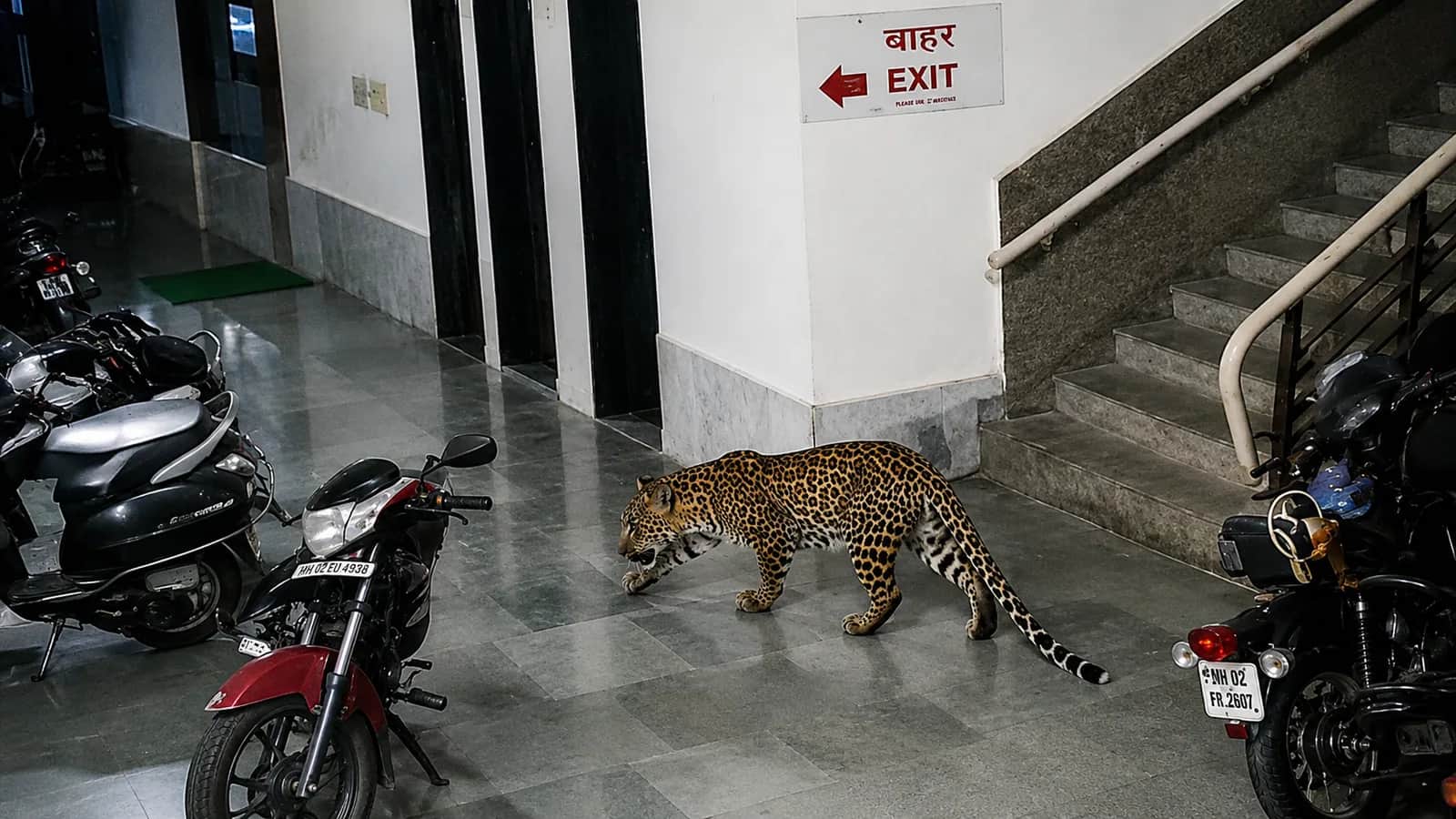
For thousands of students across India, getting into IIT Bombay is a dream. Every year, some of the country's brightest minds arrive at the campus hoping to build the future through science, technology, and innovation. But this week, conversations in classrooms and hostels were not about exams, placements, or research projects. Instead, they were about an unexpected visitor, a leopard.
CCTV footage from IIT Bombay's Powai campus showed a leopard entering the institute premises during the early hours and attacking a stray dog. The video quickly went viral, leaving many students shocked. While forest officials have assured that the situation is being monitored, the incident has once again highlighted the unique relationship between one of India's top educational institutions and the wilderness surrounding it.
IIT Bombay: A Dream Destination for Students
The timing of the incident is noteworthy. IIT Bombay continues to be recognized among India's leading educational institutions and remains one of the country's highest-ranked engineering institutes. In recent global rankings, it has consistently featured among the world's top universities for engineering and technology.
For many students, securing admission here represents years of hard work, sacrifice, and determination. Parents send their children to the campus believing it is one of the safest and most prestigious places to study in the country.
A World-Class Institute Surrounded by Nature
Yet IIT Bombay is unlike many urban universities. Spread across more than 500 acres in Mumbai's Powai area, the campus is surrounded by greenery and lies close to the Sanjay Gandhi National Park. Students often wake up to birdsong instead of traffic noise.
The campus is also a biodiversity hotspot. It is home to more than 200 species of birds, along with peacocks, deer, monkeys, butterflies, and numerous other forms of wildlife. For many students, nature is simply part of everyday campus life.
Why Do Leopards Enter the Campus?
That is why the leopard's appearance, while startling, is not entirely unprecedented. Over the years, leopard sightings have occasionally been reported in and around the campus.
Wildlife experts say these animals often move through forest corridors in search of food and territory. Stray dogs, which are commonly found in urban and semi-urban areas, can attract leopards closer to human settlements. As cities continue to expand and natural habitats shrink, encounters between humans and wildlife are becoming increasingly common.
Fear, Curiosity and Conversations
For many students, the incident was a reminder that life at IIT Bombay is not just about lectures and laboratories. It is also about sharing space with nature.
Imagine preparing for an exam late at night and waking up the next morning to news that a leopard had been spotted near your hostel. For students living away from home, such incidents can be both fascinating and unsettling. While some expressed concern for safety, others viewed the sighting as a reflection of the campus's unique ecological environment.
More Than a Wildlife Sighting
Beyond the viral video, this is ultimately a story about coexistence. The leopard did not enter the campus because it wanted to be there; it entered because the boundaries between urban spaces and wildlife habitats are becoming increasingly blurred.
Mumbai is one of the few major cities in the world where a national park exists within the metropolitan region. As development continues around forested areas, interactions between humans and wildlife are likely to become more frequent.
A Lesson Beyond the Classroom
As students return to their routines, the leopard has left behind more than just a headline. It has reminded one of India's finest institutions that even in an age of artificial intelligence, space exploration, and cutting-edge research, nature still has a way of making its presence felt.
The incident serves as a powerful reminder that protecting wildlife habitats is not just an environmental issue, it is also essential for ensuring safe and sustainable coexistence between humans and animals in rapidly growing cities.
"For thousands of students across India, getting into IIT Bombay is a dream. Every year, some of the country's brightest minds arrive at the …"