
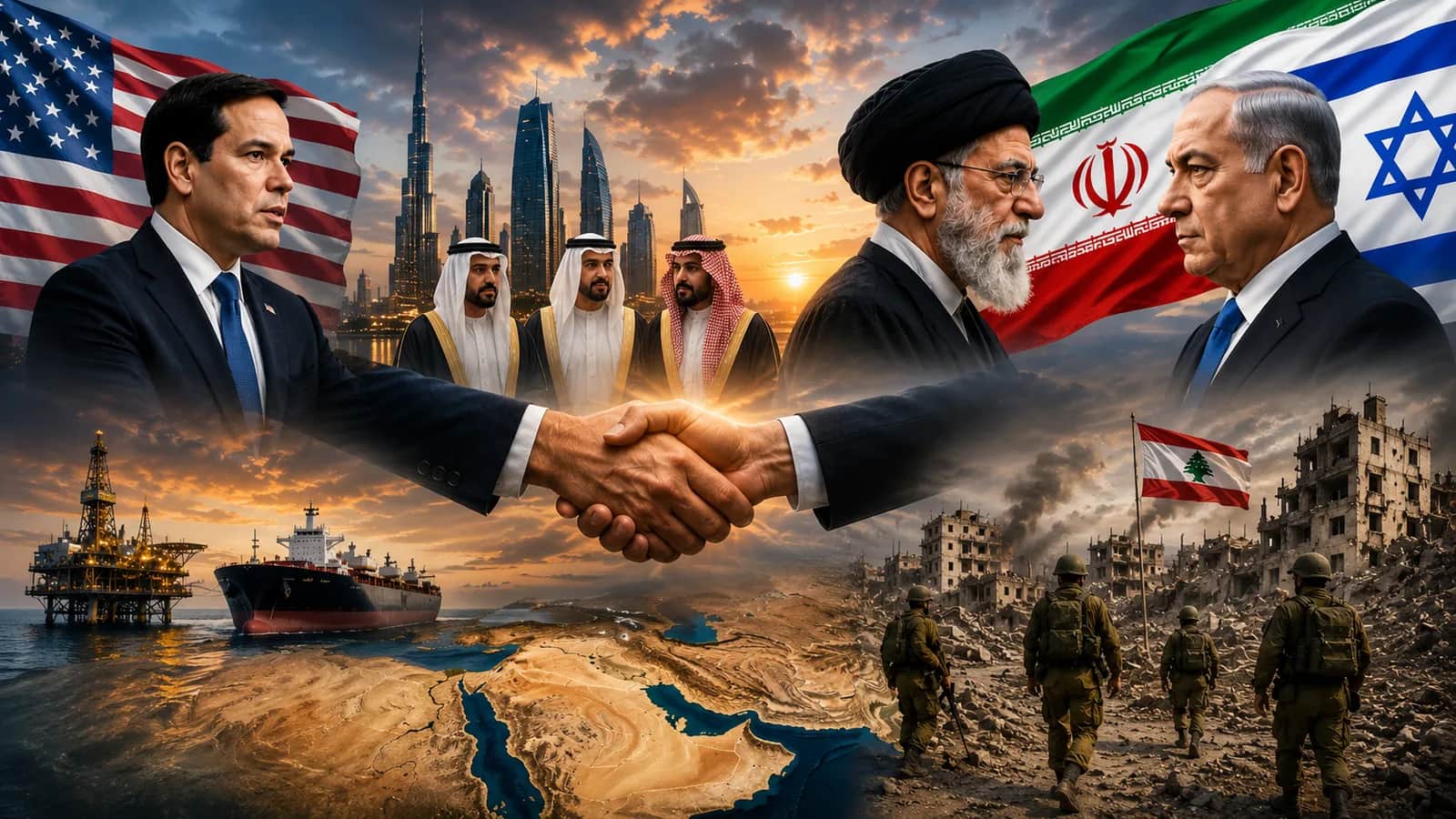
After months of conflict that rattled the Middle East and sent shockwaves through global energy markets, the United States is trying to build support for a new peace framework with Iran. But while Washington is presenting the agreement as a step toward regional stability, not everyone is convinced.
US Secretary of State Marco Rubio is currently touring Gulf nations, including the United Arab Emirates, Kuwait and Bahrain, to reassure long-time American allies that the proposed deal with Iran will not come at the cost of their security. His visit follows a preliminary US-Iran agreement aimed at reducing tensions and preventing further military escalation in the region.
Speaking in Kuwait, Rubio said the United States remains fully committed to the security of its Gulf partners. He stressed that the agreement is intended to reduce conflict rather than shift the balance of power in Iran's favour. However, he acknowledged that concerns among regional allies are understandable.
Those concerns are significant.
Several Gulf countries fear that easing sanctions on Iran could strengthen Tehran economically and allow it to expand its military capabilities. They have also questioned why the current framework does not directly address Iran's ballistic missile programme, which many countries in the region consider a major security threat.
At the same time, Israel has taken a firm stance against any move it believes could weaken its security. Israeli Defence Minister Israel Katz has reiterated that Israeli troops will remain in southern Lebanon, despite discussions surrounding a broader regional peace effort. According to Israeli officials, the military presence is essential to prevent attacks by Hezbollah and to protect communities near the border.
Iran has strongly criticised Israel's position, arguing that peace in Lebanon is inseparable from peace across the wider region. Iranian leaders have warned that continued military operations in southern Lebanon could undermine ongoing diplomatic efforts.
Another key issue remains Iran's nuclear programme.
The International Atomic Energy Agency (IAEA) has expressed its readiness to resume inspections of Iranian nuclear facilities once conditions allow. However, Tehran maintains that inspections of sensitive nuclear sites should only take place after a final agreement is reached, highlighting the deep mistrust that still exists between both sides.
While diplomats continue negotiations, the world is watching closely because the stakes extend far beyond the Middle East.
The recent conflict disrupted shipping through the Strait of Hormuz, one of the world's busiest oil transit routes, causing crude oil prices to rise and raising concerns over global energy supplies. Although oil prices have eased following the ceasefire and the gradual reopening of shipping routes, analysts warn that any collapse of the peace process could quickly trigger fresh market instability.
For millions of people living in the region, diplomacy is more than a political exercise. It represents the hope of returning to normal life after months of uncertainty, conflict and economic hardship.
Whether this fragile peace effort succeeds will depend not only on Washington and Tehran but also on the willingness of regional powers to bridge long-standing differences. For now, optimism exists but so do deep divisions that continue to test the path toward lasting peace.
"After months of conflict that rattled the Middle East and sent shockwaves through global energy markets, the United States is trying to buil…"