
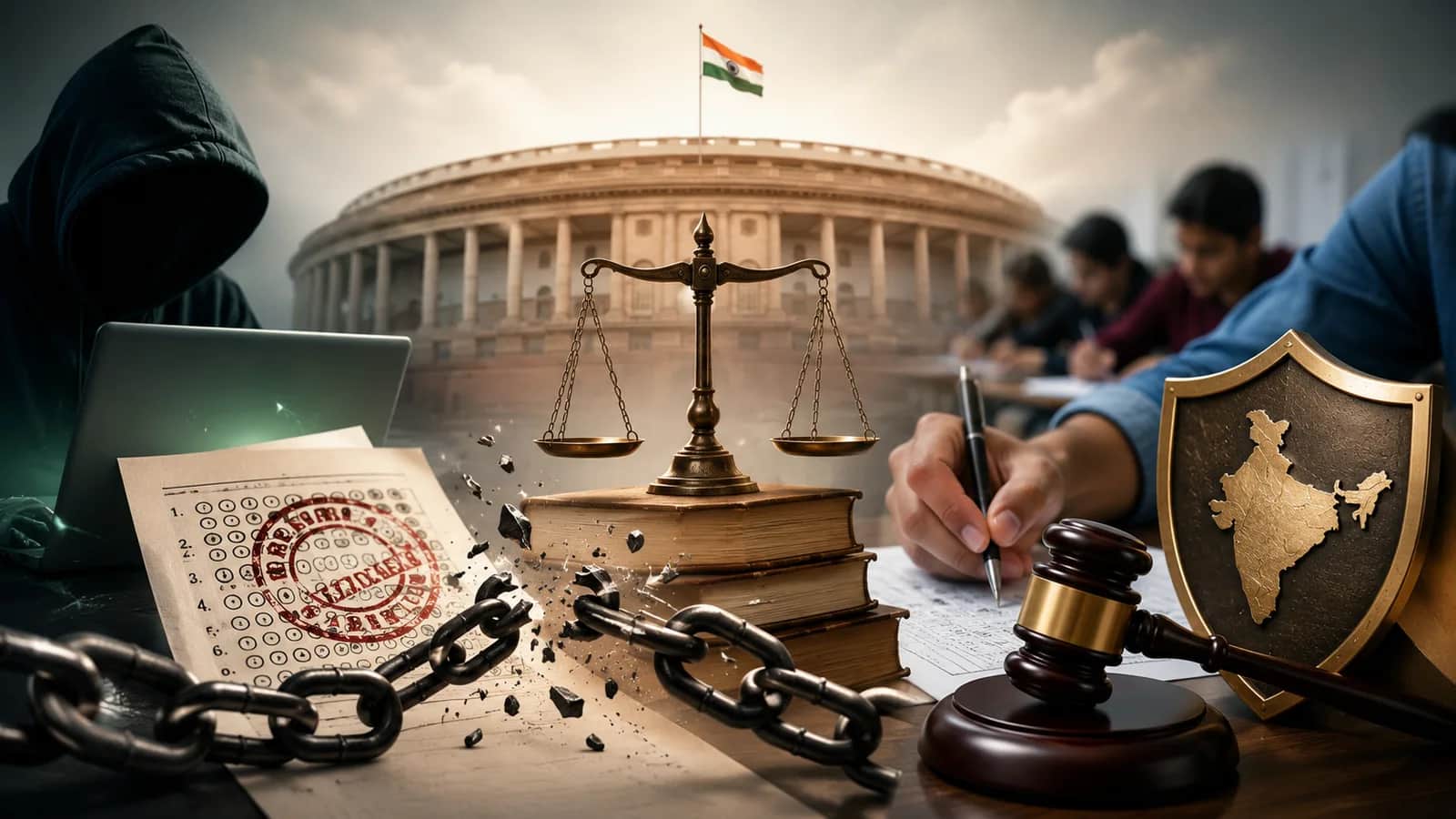
For lakhs of students, a competitive exam isn't just another test, it's a shot at a dream. Some spend years preparing for government jobs. Others put everything else on hold to secure a medical or engineering seat. Families save money for coaching classes, students sacrifice weekends and festivals, and every day revolves around one goal.i.e.clearing the exam.
Now imagine finding out that the question paper had already been leaked before you even entered the examination hall. That's exactly what many students have faced in recent years. From NEET and UGC-NET to recruitment exams for teachers and police personnel, paper leak allegations have repeatedly made headlines. Every time it happens, the consequences are the same, exams get cancelled, recruitment is delayed, and students are left wondering whether hard work is enough anymore.
Against this backdrop, the Centre has introduced the Public Examinations (Prevention of Unfair Means) Amendment Bill, 2026, saying it wants to take tougher action against those behind organised paper leak rackets. The question now is whether this law can restore confidence in India's examination system.
Why the Government Felt a New Law Was Necessary
Paper leaks don't just affect a single examination. When an exam is cancelled, students often have to prepare for months all over again. Recruitment drives get pushed back, admissions are delayed, and uncertainty becomes part of the process.
For many candidates, especially those appearing for age-sensitive government recruitment exams, every delay matters. The government argues that although action has been taken in previous cases, the existing legal framework hasn't been strong enough to deter organised groups that treat paper leaks as a business. The new Bill is meant to change that by targeting not only individuals but the entire network involved.
What Does the Bill Propose?
The proposed amendment focuses on public examinations conducted by government bodies and notified authorities. Its primary aim is to prevent organised cheating, particularly the leaking and sale of question papers before examinations.
Instead of looking only at the person who shares the paper, the Bill seeks to hold everyone involved from those who steal the question papers to those who distribute or profit from them legally accountable.
Stricter Punishment for Organised Paper Leak Networks
One of the most talked-about provisions in the Bill is the punishment it proposes.cAnyone found guilty of leaking question papers or participating in organised examination fraud could face five to ten years in prison.
The Bill also proposes financial penalties ranging from ₹1 crore to ₹10 crore, reflecting the government's view that paper leak rackets have become organised criminal enterprises operating for huge profits. The intention is clear, make the consequences severe enough to discourage such crimes.
Examination Agencies Could Also Be Held Responsible
The proposed law doesn't place the entire burden on criminals alone. If an examination conducting agency or a private service provider is found to have played a role in the leak or failed to maintain adequate security it can also face action.
The Bill proposes a penalty of up to ₹5 crore against such agencies. Authorities may also recover the cost of conducting the examination and prevent the agency from handling future exams if serious lapses are established.cThis provision is aimed at ensuring that organisations responsible for conducting examinations strengthen their security systems.
Speeding Up Investigations
One criticism that often follows paper leak cases is how long they take to reach a conclusion. By the time investigations are completed and court proceedings move forward, students have already appeared for fresh examinations, while the legal process continues. The government says it wants to reduce these delays.
Under the proposed framework, investigations are expected to be completed within two months, and trials are intended to conclude within three months, with the help of Fast Track Courts dedicated to such cases. Whether these timelines can consistently be achieved in practice remains to be seen.
What About Students?
This has become one of the biggest concerns since the Bill was announced. The government has clarified that the law is primarily aimed at organised paper leak syndicates, brokers, corrupt officials and those who knowingly run these networks. However, if a student knowingly purchases a leaked paper or actively participates in the crime, legal action may also follow.
At the same time, the Bill does not automatically treat ordinary cheating inside an examination hall as the same offence as organised paper leak operations. The punishment will depend on the nature of the individual's involvement.
Will Tougher Punishment Be Enough?
A stronger law is one part of the solution, but many education experts believe it cannot solve the problem on its own. They argue that examination systems also need better technology, stronger cybersecurity, encrypted handling of question papers, regular audits and greater accountability at every stage of the process. Without these structural improvements, there is always a risk that organised groups will look for new ways to exploit loopholes.
What This Means for Aspirants
For students, the biggest takeaway is not the length of the prison sentence or the size of the fine. What matters most is whether examinations become fair again.
Every cancelled exam means another few months of uncertainty. Every paper leak chips away at trust. If the proposed law is implemented effectively and backed by stronger safeguards, it could reassure candidates that their performance not someone else's illegal access to a question paper will decide the outcome.
The Bottom Line
India's competitive examination system is built on the idea that every candidate gets an equal chance. Paper leaks undermine that principle and leave genuine aspirants paying the price for someone else's wrongdoing. The Public Examinations (Prevention of Unfair Means) Amendment Bill, 2026 is the government's latest attempt to address that challenge. With stricter penalties, greater accountability and a push for faster investigations, it aims to make organised examination fraud far more difficult and costly. Whether it succeeds will depend less on the wording of the law and more on how consistently and effectively it is enforced. For millions of students preparing for their next examination, that is the outcome that truly matters.
"For lakhs of students, a competitive exam isn't just another test, it's a shot at a dream. Some spend years preparing for government jobs. O…"