
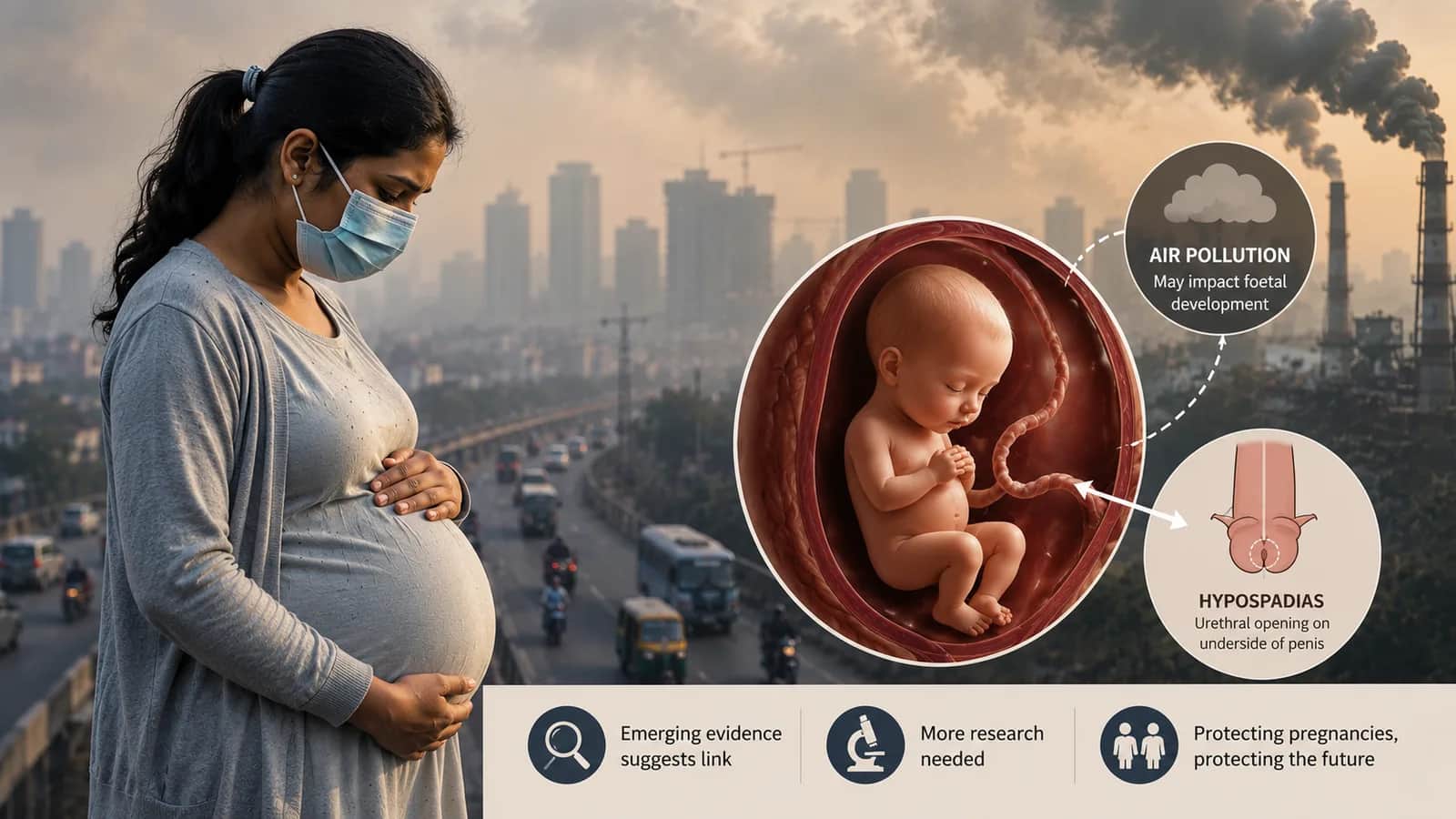
Air pollution is already known to harm our lungs and heart. But doctors and researchers are now looking into another possible concern, whether breathing polluted air during pregnancy could affect the development of an unborn baby, especially baby boys.
According to experts, some pollutants may interfere with hormones that are essential for a baby's growth in the womb. This has raised questions about whether long-term exposure to polluted air could increase the risk of conditions such as hypospadias, a birth defect in which the opening of the urethra develops on the underside of the penis instead of at the tip.
While scientists have found growing evidence of a possible link, they stress that there is still no conclusive proof that air pollution directly causes the condition. More research is needed to better understand the connection.
In the meantime, doctors advise pregnant women to limit exposure to heavily polluted environments wherever possible. They say reducing pollution exposure is a simple precaution that may help support a healthier pregnancy while scientists continue to study its long-term effects.Can Air Pollution Affect an Unborn Baby's Development? Experts Say More Research Is Needed
Air pollution is already known to harm our lungs and heart. But doctors and researchers are now looking into another possible concern whether breathing polluted air during pregnancy could affect the development of an unborn baby, especially baby boys.
According to experts, some pollutants may interfere with hormones that are essential for a baby's growth in the womb. This has raised questions about whether long-term exposure to polluted air could increase the risk of conditions such hypospadias, a birth defect in which the opening of the urethra develops on the underside of the penis instead of at the tip.
While scientists have found growing evidence of a possible link, they stress that there is still no conclusive proof that air pollution directly causes the condition. More research is needed to better understand the connection.
In the meantime, doctors advise pregnant women to limit exposure to heavily polluted environments wherever possible. They say reducing pollution exposure is a simple precaution that may help support a healthier pregnancy while scientists continue to study its long-term effects.
"Air pollution is already known to harm our lungs and heart. But doctors and researchers are now looking into another possible concern, wheth…"