
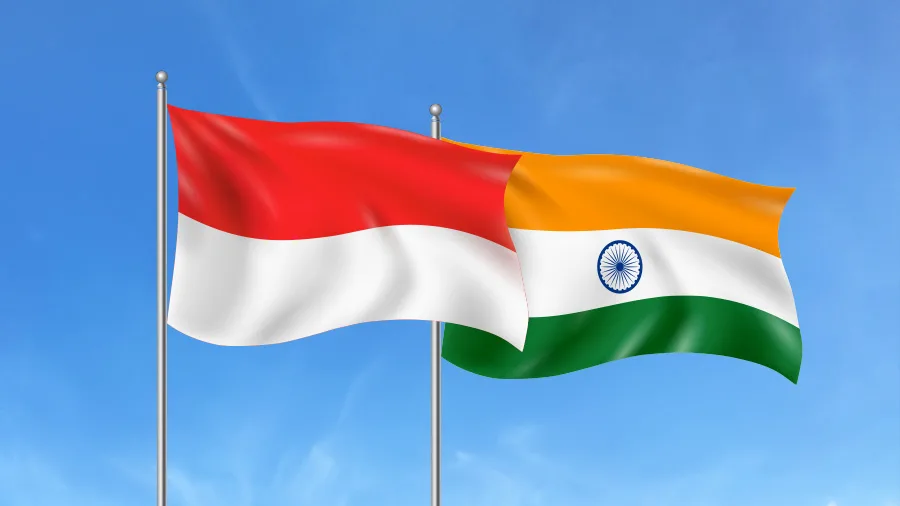
Prime Minister Narendra Modi’s two day state visit to Indonesia has emerged as one of India’s most significant diplomatic engagements in Southeast Asia in recent years. Beyond high-level meetings and ceremonial engagements, the visit resulted in 20 major outcomes., including six important announcements and 14 Memorandums of Understanding (MoUs) covering defense, maritime security, essential minerals, ports, education, healthcare, agriculture, artificial intelligence, and cultural collaboration. Together, these accords highlight India's growing influence in the Indo-Pacific and usher in a new phase of the India-Indonesia Comprehensive Strategic Partnership.
Brahmos Deal: A Major Boost to India’s Defence Exports
The recent visit marked a significant strengthening of defence ties between India and Indonesia. The two countries agreed to deepen cooperation on the BrahMos supersonic cruise missile system and the indigenous Astra air-to-air missile.The broader missile package, involving BrahMos and Astra systems, has been estimated at around $630 million, although the final financial and delivery details should be attributed to official announcements or contractual disclosures.
The agreements also encompass military training, maintenance support, technology cooperation, and long-term defence collaboration. This move highlights India’s growing ambition to establish itself as a reliable hub for defence manufacturing and exports.
Protecting the Seas: The Significance of Maritime Collaboration
Another key tenet of the collaboration is maritime security. The two nations decided to boost coordination in the Indian Ocean, increase marine domain knowledge, and fortify coast guard cooperation. Due to Indonesia's proximity to the Strait of Malacca, one of the busiest shipping lanes in the world that handles around 25% of all international maritime traffic, this is very important. Trade, energy supply, and regional security all depend on safe navigation in this area.
Sabang Port: India’s Strategic Gateway Near the Malacca Strait
- Sabang Port is located near the western entrance of the Strait of Malacca, a crucial maritime route.
- India and Indonesia aim to enhance cooperation in port infrastructure, maritime trade, and the blue economy.
Improved connectivity between Sabang and India’s Andaman and Nicobar Islands could boost- shipping and logistics, ship repair, tourism and offshore energy cooperation. Strategically, Sabang Port strengthens India’s maritime presence in the Indo-Pacific region.
Critical Minerals: Powering the Future Economy
The partnership emphasizes critical minerals essential for- Electric vehicles, Batteries, Semiconductors, Renewable energy technologies and the advanced defense equipment. Indonesia is also a major producer of nickel, bauxite, copper, and tin.
Both countries will collaborate on:
- Mineral processing
- Resilient supply chains
- Steel technology
- Rare earth magnets
This collaboration aims to reduce dependence on limited global suppliers and enhance economic and industrial security.
Collaboration Outside of Defense
The agreements went far beyond trade and security. Cooperation in digital technology, agriculture, healthcare, education, and cultural preservation was declared by both countries. Among the noteworthy projects are:
- IIM Bangalore is opening its first overseas campus in the Singhasari Special Economic Zone in Malang, Indonesia.
- Working together on pharmaceuticals and medical supplies
- Cooperation on wireless, quantum, and artificial intelligence technologies Cooperation in space
- Preservation of Yogyakarta's famous Prambanan Temple, which emphasizes the long-standing cultural connections between Indonesia and India.
A Message of Diplomacy to the Indo-Pacific
Prime Minister Modi reiterated India's aim for a free, open, and inclusive Indo-Pacific while speaking to the Indonesian Parliament. In light of China's expanding influence in the area, his statement that "India follows the path of development, not expansionism" was generally taken as a subliminal message. Additionally, Modi reaffirmed India's support for ASEAN centrality, stressing that communication, international law, and freedom of navigation are the foundations of regional stability.
The Significance of This Visit
In addition to signing agreements, PM Modi's visit to Indonesia aimed to influence the Indo-Pacific region's future. From Sabang Port and marine security to BrahMos missiles and vital minerals, the two nations have established the groundwork for a more robust strategic alliance. These accords boost India's defense exports, safeguard crucial maritime lanes, diversify important mineral supply chains, and solidify New Delhi's standing as a reliable partner in Southeast Asia at a time when geopolitical rivalry is escalating. The visit marks the beginning of a new era in India-Indonesia relations, one characterized by shared regional interests, economic resilience, and strategic partnership.
"Prime Minister Narendra Modi’s two day state visit to Indonesia has emerged as one of India’s most significant diplomatic engagements in Sou…"