
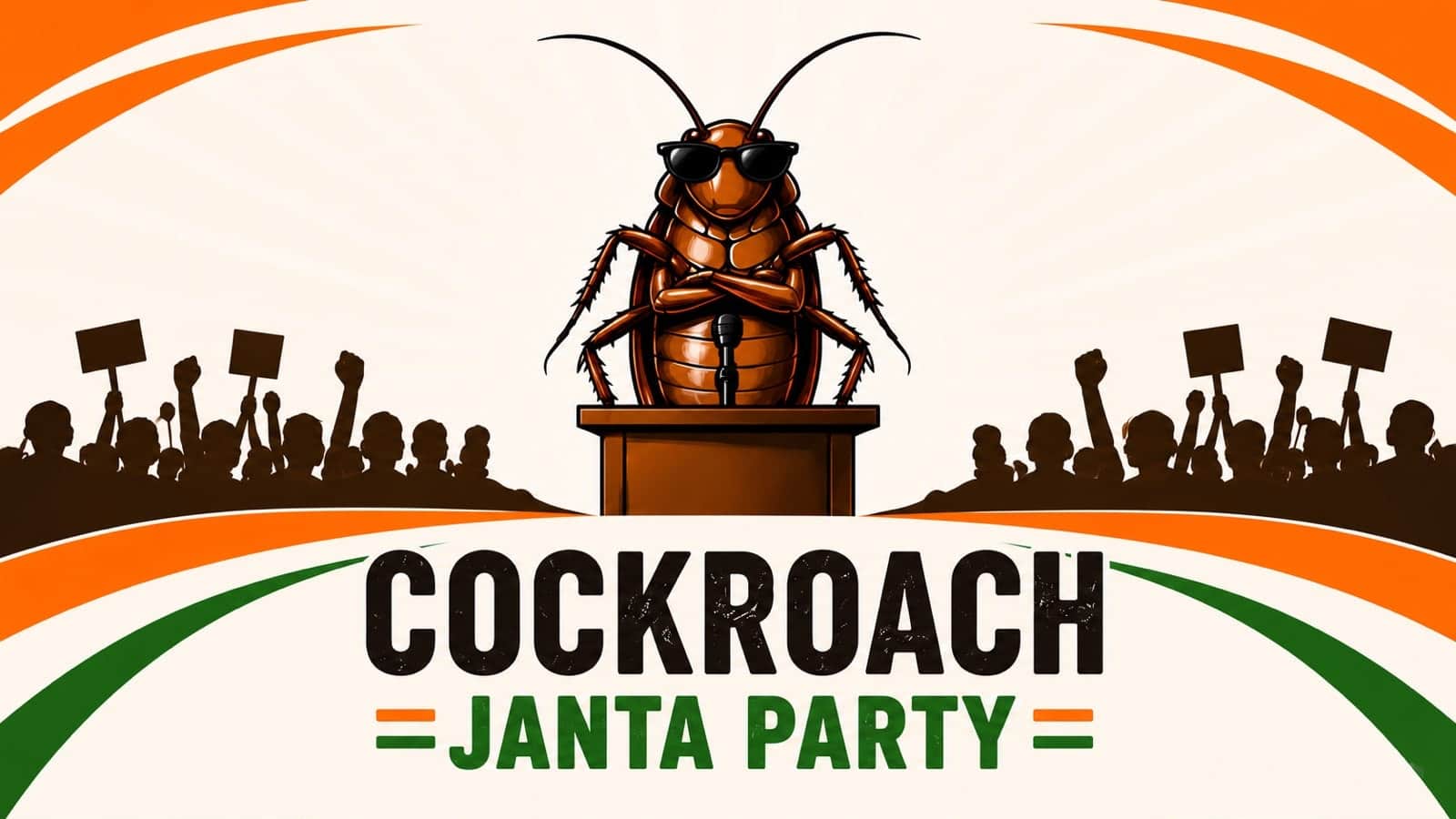
India’s viral Cockroach Janta Party (CJP) has entered a new phase after education reform advocate Sonam Wangchuk announced his support for the movement and said he would join a planned protest in Delhi on June 6 if action is not taken on students’ concerns. Led by US-based Indian activist Abhijeet Dipke, the movement is demanding greater accountability in the education sector and has called for the resignation of Union Education Minister Dharmendra Pradhan over controversies surrounding examinations such as NEET, CUET and CBSE. What began as a social media campaign has now evolved into one of the country’s most closely watched youth-led movements.
The development has sparked a wider political debate. While supporters of the movement argue that repeated examination controversies have eroded public trust and require accountability at the highest level, the government has maintained that it is committed to strengthening the education system. The Centre has pointed to measures such as the Public Examinations (Prevention of Unfair Means) Act, stricter anti-paper leak provisions, technology-driven monitoring and ongoing investigations into examination irregularities. However, student groups and activists say these measures have not fully addressed concerns over transparency and trust.
From an Online Joke to a Youth-Led Movement
The roots of the movement lie in a controversial remark in which unemployed youth were allegedly compared to "cockroaches." Instead of rejecting the label, many young Indians embraced it and transformed it into a symbol of resistance. What began as satire soon evolved into a platform where students discussed issues ranging from exam irregularities and job opportunities to inflation and governance.
Today, CJP's social media reach runs into millions, making it one of the fastest-growing youth-led digital movements in the country. Its popularity reflects a wider feeling among young Indians that education and employment concerns are not receiving enough attention in public discourse.
June 6 Protest and the Demand for Accountability
The movement has now shifted from online activism to ground mobilization. Abhijeet Dipke has announced that he will return to India on June 6 to lead a protest at Delhi's Jantar Mantar. The primary demand is the resignation of Education Minister Dharmendra Pradhan and a broader discussion on reforms in the education system.
Dipke has claimed that he could face legal action or even arrest upon arrival but says he will still participate in the protest. The planned demonstration is expected to draw students and supporters from different parts of the country.
Sonam Wangchuk's Support Gives the Movement New Momentum
The biggest development this week came when education reform advocate and climate activist Sonam Wangchuk publicly backed the movement.
In a video message, Wangchuk said he had spoken directly with Dipke and was convinced that the movement genuinely reflected the concerns of Indian youth. He announced that if there is no action or resignation by June 5, he will join the June 6 protest in Delhi. Wangchuk argued that the issue goes beyond NEET or any single examination and reflects deeper problems in the country's education system.
He also stated that in a healthy democracy, accountability is essential and ministers should take responsibility when serious failures occur. His endorsement has significantly increased the visibility and credibility of the movement.
What Does This Mean for India's Gen Z?
The rise of the Cockroach Janta Party is about more than one protest or one minister. It reflects the concerns of a generation facing intense competition for education and jobs. India's Gen Z is entering adulthood at a time when academic pressure is high, employment opportunities remain fiercely competitive, and the cost of living continues to rise.
Political observers believe the movement's biggest impact may be its ability to push youth issues back into the national conversation. Even if the resignation demand is not met, the campaign has already succeeded in drawing attention to examination reforms, transparency and student welfare. For many young Indians, it has become a platform to express concerns that they believe have been ignored for too long.
Whether the Cockroach Janta Party eventually becomes a formal political force remains uncertain. But one thing is clear: it has tapped into the frustrations and aspirations of a generation that is increasingly willing to organize, speak out and demand accountability from those in power. The June 6 protest may well determine whether the movement remains an online phenomenon or evolves into a lasting force in India's public life.
" India’s viral Cockroach Janta Party (CJP) has entered a new phase after education reform advocate Sonam Wangchuk announced his support for …"