
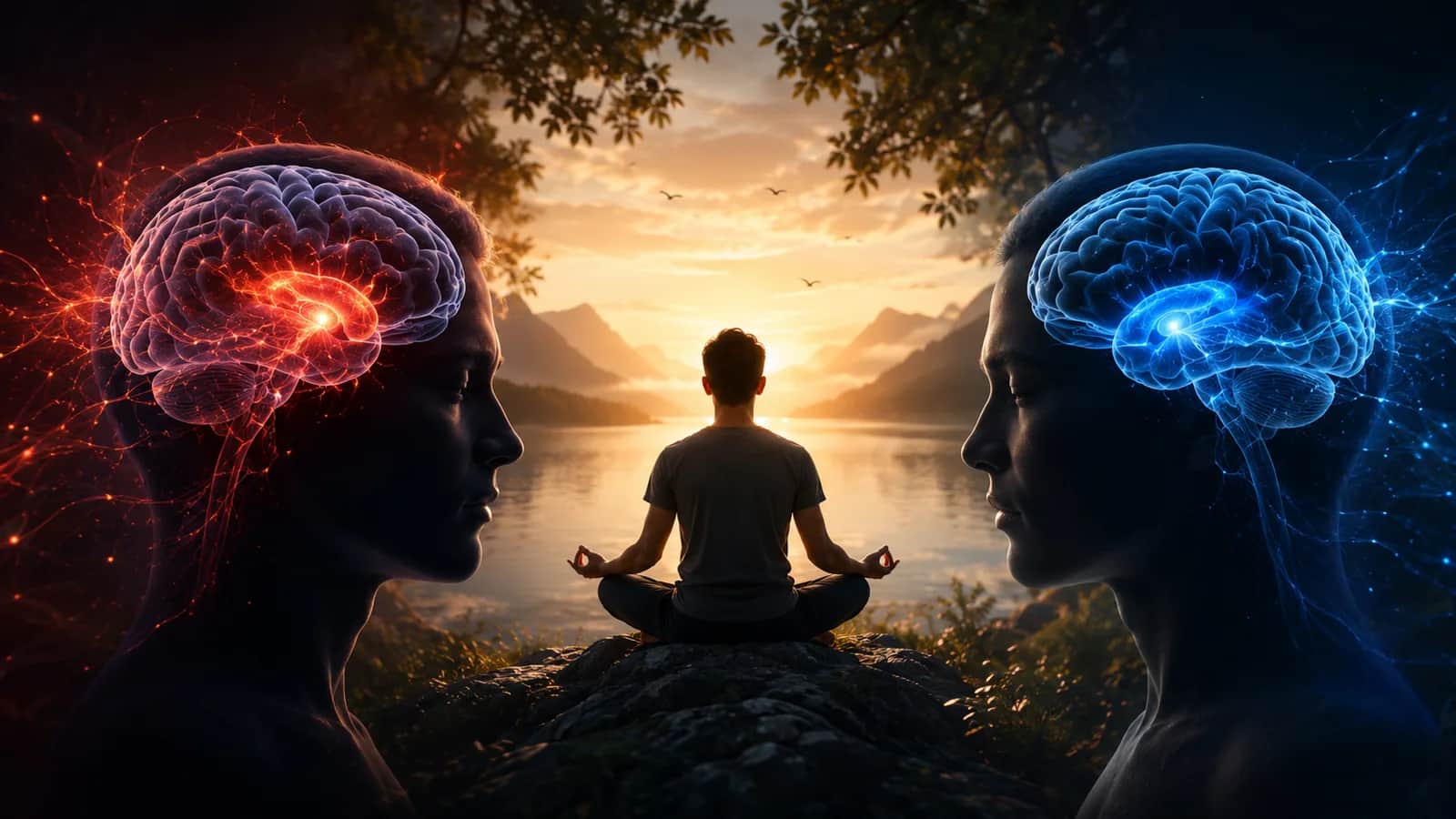
Imagine walking into a stressful meeting, getting stuck in traffic, or receiving bad news and instead of panicking, your brain stays calm. Sounds impossible? Scientists say it may not be.
For thousands of years, Indian sages and Buddhist monks believed that meditation could quiet the mind and reduce fear. For a long time, these ideas were seen as spiritual wisdom rather than science. But today, MRI scans are telling a fascinating story.
Deep inside your brain is a tiny almond-shaped structure called the amygdala. Think of it as your brain's internal alarm system. It constantly scans for danger and decides when it's time to fight, flee, or freeze. While this response keeps us safe, a constantly overactive amygdala can leave us feeling anxious, stressed, and emotionally exhausted. So, what happens when you meditate regularly?
A landmark Harvard-affiliated study found that people who practiced mindfulness meditation for just eight weeks showed measurable changes in their brains. Participants who experienced the biggest drop in stress also showed reduced gray matter density in the amygdala, a sign that the brain's stress-response system may have become less intense.
Since then, several studies have reported similar findings. Rather than making the amygdala disappear, meditation appears to make it less reactive, helping people respond to stressful situations with greater calm instead of immediate panic.
Scientists also found that meditation strengthens communication between the amygdala and the prefrontal cortex, the part of the brain responsible for decision-making, self-control, and emotional regulation. In simple terms, your brain becomes better at pausing before reacting.
Of course, meditation isn't a magic cure, and researchers are careful not to overstate the findings. Not every study has observed structural shrinkage, but the overall evidence strongly suggests that regular mindfulness can improve the way the brain processes stress.
Perhaps the ancient sages didn't have MRI machines but they understood something modern neuroscience is only beginning to explain: when you train your mind, your brain changes too.
"Imagine walking into a stressful meeting, getting stuck in traffic, or receiving bad news and instead of panicking, your brain stays calm. S…"