
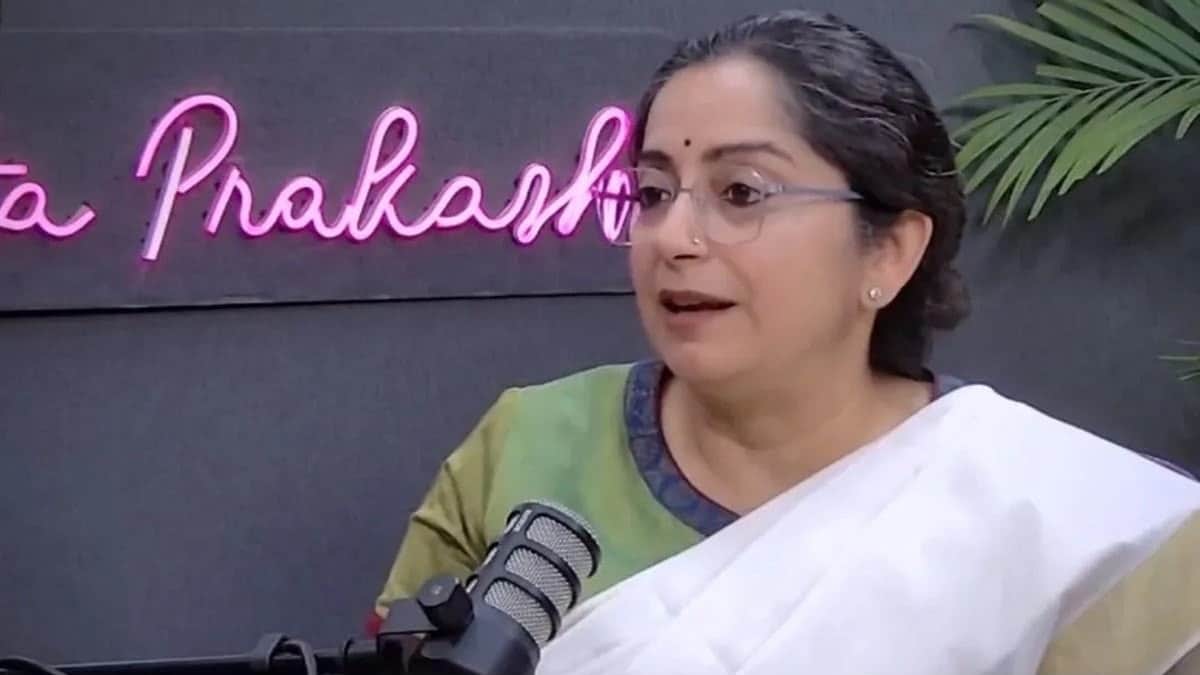
A single sentence from a recent podcast has sparked a nationwide debate on the state of the Indian Economy.
Dr. Shamika Ravi, a member of the Prime Minister’s Economic Advisory Council (EAC-PM), came under scrutiny after a clip from her appearance on entrepreneur Samita Prakash’s podcast went viral on social media. In the clip, Ravi appeared to dismiss concerns about the rupee potentially touching the 100-per-dollar mark, saying, “So What if the rupee hits 100? It’s just a number.”
The remark quickly triggered reactions from economists , opposition leaders and social media users, many of them argued that a weakening currency cannot be brushed aside so easily. As criticism mounted online, attention shifted from the viral quote itself to a larger question: how should a country measure economic success?
Why the timing of the remark matters?
The controversy comes amid growing concerns over the rupee’s trajectory against the US dollar.
Global crude oil prices have remained volatile due to geopolitical tensions in the Middle East. At the same time, a strong dollar, global economic uncertainty and shifting investment flows have put pressure on several emerging- market currencies, including the Indian rupee.
For India, which imports a large share of its energy requirements, a weaker currency can increase import bills and create inflationary pressure.This is one reason why discussions around the rupee often generate strong public reactions.
What Shamika Ravi actually meant?
While the viral clip captured attention, it represented only a small part of much longer conversation. Throughout the podcast, Ravi argued that the strength of an economy should not be judged solely through a single indicator such as the exchange rate. Instead, she emphasised broader measures like productivity, investment, innovation, infrastructure development and long-term growth potential.
Her argument was that a psychologically significant number such as 100 rupee per dollar may dominate headlines, but it does not automatically determine whether an economy is fundamentally strong or weak.
According to Ravi, the more important questions are whether businesses are investing, jobs are being created and productivity is improving.
The critics have a different view
Not everyone agrees with that assessment.
Critics argue that exchange rates have real-world consequences that directly affect ordinary citizens. A weaker rupee can make imported goods more expensive, increase fuel prices and raise costs for students studying abroad or businesses dependent on imported materials.
For many households, economic health is not measured by GDP growth or investment figures but by whether everyday expenses are becoming harder to manage.
This is why the remark resonated far beyond economic circles and quickly became a political talking point.
The Bigger Message on India's Growth Story
Beyond the controversy, Ravi used the podcast to present an optimistic view of India's economic future.
She described India as one of the world's fastest-growing major economies and highlighted the country's demographic advantage, expanding digital infrastructure and growing consumer market.
According to her, these factors provide India with long-term growth opportunities that cannot be captured by a single statistic or exchange-rate figure.
She argued that India's economic story should be viewed through a broader lens rather than through short-term market fluctuations.
AI, Innovation and Foreign Investment
The discussion also covered subjects that received far less attention than the rupee remark.
Ravi spoke extensively about artificial intelligence, arguing that India is well-positioned to benefit from the technology because of its large digital ecosystem and public digital infrastructure.
She also emphasized the importance of foreign investment in driving economic growth. India, she argued, remains an attractive destination for investors because of its large market, technological capabilities and growing consumer demand.
These factors, she suggested, will play a crucial role in determining India's economic trajectory over the next decade.
A Debate Bigger Than the Rupee
The reaction to Ravi's comments reflects a deeper debate about how economic success should be measured.
One perspective focuses on long-term fundamentals such as productivity, innovation, investment and growth. The other stresses the everyday realities faced by citizens, including inflation, purchasing power and the cost of living.
Neither side completely rejects the other. Instead, the controversy highlights the tension between macroeconomic optimism and the economic experiences of ordinary people.
The Bottom Line
What began as a viral podcast clip has evolved into a broader conversation about India's economy.
Whether one agrees with Shamika Ravi's assessment or not, the debate has raised important questions about how economic progress is defined and who ultimately benefits from it.
The controversy surrounding the "Rupee at 100" remark shows that in today's India, discussions about growth are no longer confined to economists and policymakers. They are increasingly becoming part of a larger public conversation about inflation, jobs, living standards and the future direction of the country's economy.
" A single sentence from a recent podcast has sparked a nationwide debate on the state of the Indian Economy.Dr. Shamika Ravi, a member of th…"