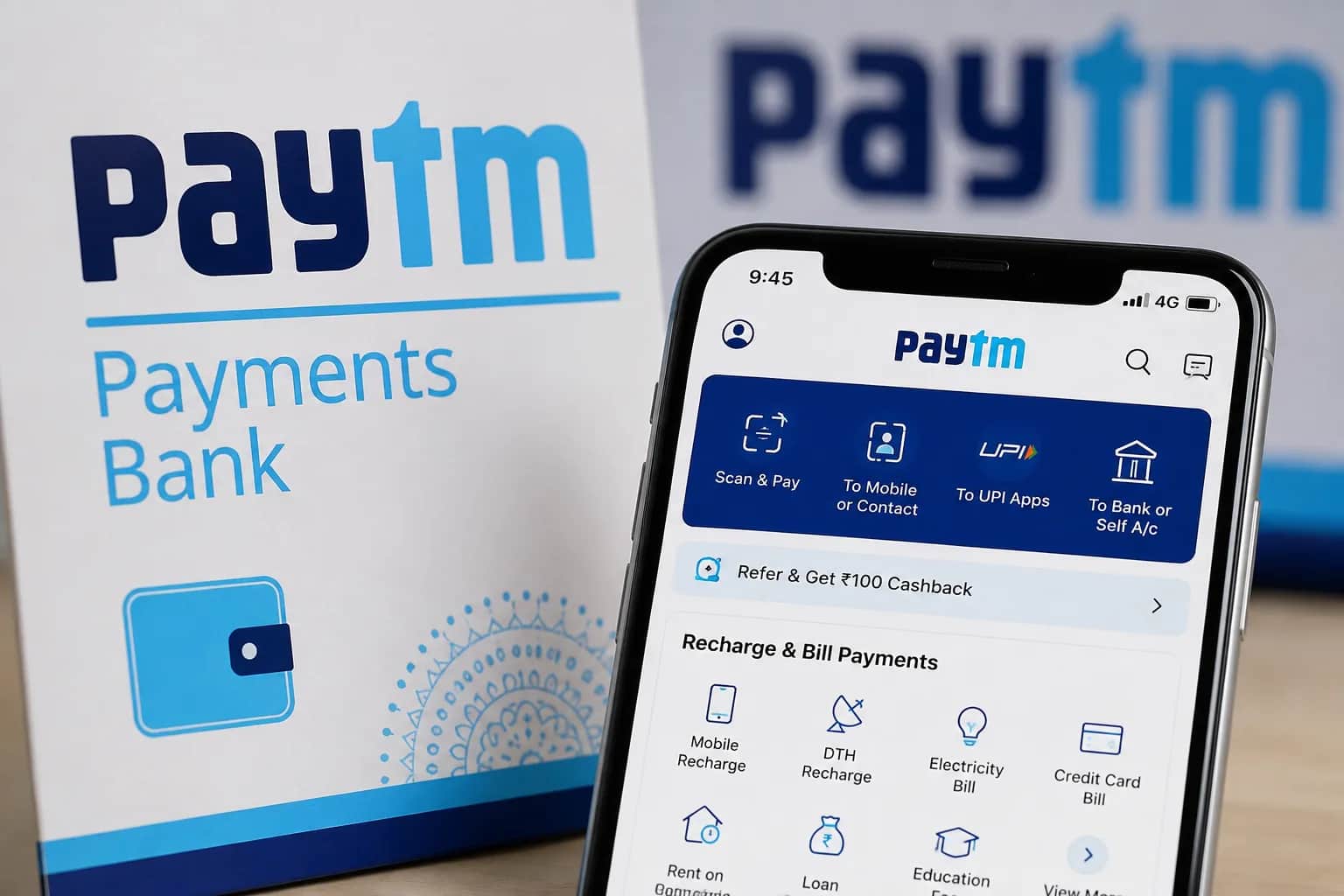
Paytm was launched in 2010 by One97 Communications as a mobile recharge platform. Its popularity skyrocketed after India's demonetization on November 8, 2016, when digital payments became the preferred mode of transactions.
QR code-based payments spread rapidly across the country, making Paytm one of India's largest digital payment platforms within a few years.
Building on this success, the company entered the banking sector through Paytm Payments Bank, which officially launched operations in 2017, offering savings accounts, digital wallets, FASTag services, and other banking products.
The First Regulatory Warning Came in 2018
Contrary to popular belief, Paytm Payments Bank's regulatory troubles did not begin in 2024.
In 2018, an RBI inspection identified deficiencies related to Know Your Customer (KYC) compliance and regulatory processes. As a result, the bank was temporarily barred from onboarding new customers.
Although the restrictions were later lifted after certain corrective measures, the bank remained under heightened regulatory scrutiny.
Another Ban in 2022
On March 11, 2022, the RBI once again prohibited Paytm Payments Bank from adding new customers.
The regulator also ordered a comprehensive IT audit, which reportedly highlighted significant concerns regarding the bank's systems and compliance framework.
One PAN Linked to Thousands of Accounts
According to reports associated with the investigation, some cases revealed that a single Permanent Account Number (PAN) had been linked to more than a thousand accounts.
The findings raised serious questions about the bank's KYC controls and monitoring systems.
However, the RBI did not state in its public orders that all such accounts were fraudulent. Instead, the regulator treated the issue as a significant compliance concern requiring corrective action.
Why Did RBI Take Strict Action?
According to the RBI, Paytm Payments Bank continued to exhibit serious regulatory shortcomings despite repeated supervisory interventions.
The central bank cited deficiencies in:
- KYC compliance
- Customer verification processes
- Corporate governance
- Technology controls
- Risk management systems
- Regulatory compliance
The RBI stated that the bank's continued operations were not in the best interests of depositors and the public.
January 31, 2024: The Turning Point
On January 31, 2024, the RBI imposed its most significant restrictions on Paytm Payments Bank.
The regulator directed the bank to stop accepting:
- Fresh deposits
- Wallet top-ups
- FASTag recharges
- Several other banking services
The announcement created widespread confusion across the country, with many customers believing that Paytm itself had been shut down.
In reality, the regulatory action applied only to Paytm Payments Bank, not to the Paytm app or its broader digital payment ecosystem.
Impact on Customers
The RBI's action affected several services provided through Paytm Payments Bank.
- FASTag users had to obtain new FASTags from other authorized banks.
- Wallet users could no longer add fresh balances.
- Many merchants shifted their settlement accounts to partner banks.
However, Paytm continued offering UPI payments, QR code transactions, Soundbox services, and merchant payment solutions through partnerships with other banks.
As a result, the majority of regular UPI users experienced little disruption.
Banking License Revoked
On April 24, 2026, the RBI officially cancelled the banking license of Paytm Payments Bank.
The central bank stated that the institution had consistently failed to comply with regulatory requirements and that its continued operation was not in the interest of depositors.
Following the cancellation, the RBI approached the Delhi High Court to initiate the bank's closure.
Delhi High Court Orders Winding Up
In July 2026, the Delhi High Court ordered the winding up of Paytm Payments Bank.
The court appointed Giri kumar M. Nair, a former State Bank of India (SBI) executive, as the Official Liquidator to oversee the liquidation process.
This marked the formal beginning of the bank's dissolution.
Is Paytm Gone?
No.
Paytm Payments Bank and One97 Communications, the parent company behind the Paytm app, are separate legal entities.
Although the bank's license has been cancelled, the Paytm app, UPI services, QR code payments, Soundbox devices, and merchant payment solutions continue to operate through partner banks.
For most consumers, Paytm's payment ecosystem remains functional despite the closure of its banking subsidiary.
Key Takeaway
Paytm Payments Bank played a transformative role in India's digital payments revolution, helping millions embrace cashless transactions. However, rapid growth could not compensate for persistent regulatory and compliance shortcomings.
Its journey from fintech pioneer to regulatory shutdown serves as a reminder that in banking, innovation must always be accompanied by strong governance, robust compliance, and effective risk management.
"Paytm was launched in 2010 by One97 Communications as a mobile recharge platform. Its popularity skyrocketed after India's demonetization on…"