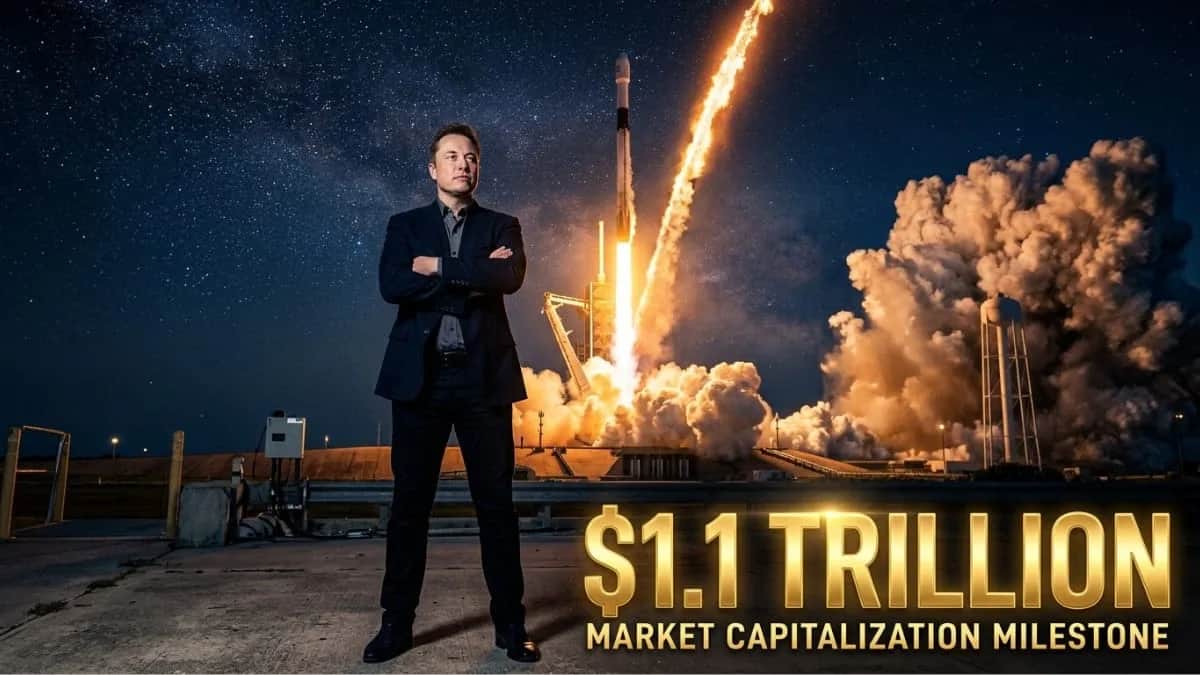
Elon Musk has officially become the world’s first trillionaire after SpaceX’s blockbuster initial public offering (IPO) sent the value of his holdings soaring past the unprecedented milestone. The much-anticipated offering raised roughly $75 billion by selling 555.6 million shares at $135 apiece, valuing SpaceX at about $1.77 trillion and vaulting Musk’s overall net worth to an estimated $1.1 trillion.
Regulatory filings show Musk controls roughly 50% of SpaceX’s economic interest, which places the value of his stake at about $752 billion on paper. He also holds super-voting shares that give him more than 85% of shareholder voting power, ensuring continued control even as SpaceX takes on outside capital. Some of Musk’s newly listed shares remain subject to transfer restrictions until the company reaches specified operational milestones, according to the filings.
SpaceX’s IPO is the largest in U.S. history and is being watched closely as a bellwether for other massive tech listings. Industry attention is already turning to major artificial intelligence companies, including OpenAI and Anthropic, which are preparing public offerings and could follow with multibillion-dollar valuations of their own.
Strong Revenue Growth Masks Heavy Losses
In its prospectus, SpaceX reported revenue of $4.69 billion for the most recent quarter, a 15% increase from $4.07 billion a year earlier. Yet the company also posted a significant net loss of $4.28 billion for the same period, reflecting heavy investment in next-generation hardware and ambitious expansion plans. Analysts say those losses are not unusual for capital-intensive aerospace ventures, but they underscore the scale of spending SpaceX is undertaking.
Company executives said the IPO proceeds will fund several high-profile projects: deployment of orbital data centers to support low-latency cloud services, construction of a lunar factory intended to manufacture components off Earth, and accelerated preparations for crewed Mars missions.
SpaceX’s aggressive roadmap has included iterative upgrades to its Starship and Super Heavy launch system, which the company test-fired for the twelfth time recently. That flight marked the debut of the upgraded Raptor 3 engines and the first launch from a newly completed Pad 2 at Starbase, Texas.
Market reaction was swift: SpaceX’s valuation placed it among the top U.S. companies by market capitalization from day one, briefly surpassing or challenging legacy tech giants. For investors who did not receive IPO allocations, shares will become available on public exchanges once trading begins, opening the door for broader retail participation.
Praise and Criticism Over Wealth and Governance
Musk’s financial rise comes amid a complex public narrative. Supporters hail the achievement as recognition of his role in reshaping transportation, space access, and energy; critics point to concentration of wealth and governance questions tied to super-voting structures.
Market Awaits Proof Behind Sky-High Valuation
For now, the headline is clear: a private aerospace company has transformed its founder into history’s first member of the trillion-dollar club, and the market will be watching whether SpaceX’s next missions justify that extraordinary valuation.
"Elon Musk has officially become the world’s first trillionaire after SpaceX’s blockbuster initial public offering (IPO) sent the value of hi…"