
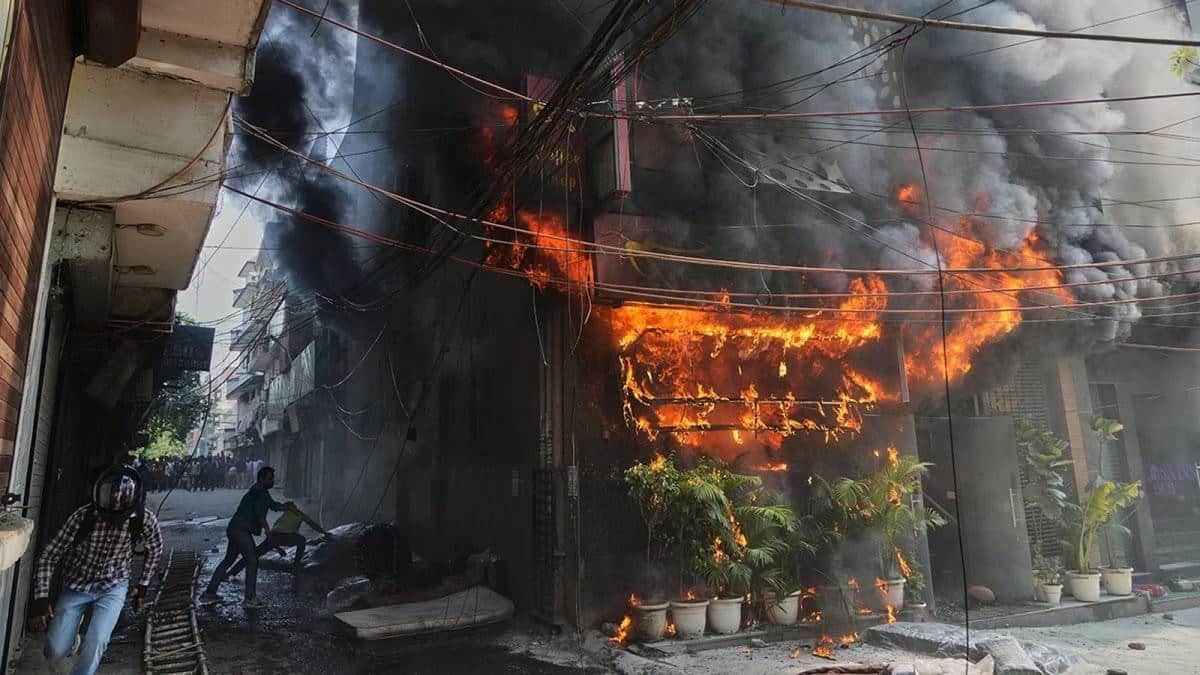
A day after a devastating fire killed 21 people, including 12 foreign nationals, at a guest house in South Delhi's Hauz Rani area, investigators are focusing on a series of alleged safety and regulatory violations that may have contributed to the scale of the tragedy. The owner of the establishment has been arrested, a magisterial inquiry has been ordered, and authorities have launched a city-wide inspection drive targeting guest houses and bed-and-breakfast (B&B) facilities operating in the capital.
Preliminary findings have raised troubling questions. Officials claim the property was operating 26 rooms despite permission for only six, lacked a mandatory Fire Department No-Objection Certificate (NOC), and had only a single entry-exit point. The revelations have shifted the conversation from an accidental fire to a possible case of systemic negligence, with multiple agencies now facing scrutiny over how the establishment continued functioning despite alleged violations.
As investigators piece together the sequence of events, the tragedy is also exposing a lesser-known reality - the vast network of guest houses surrounding Delhi's major hospitals, where thousands of patients and their families stay every year while seeking treatment in the capital.
A Search for Treatment Ended in Tragedy
Most of the victims were not tourists. They were patients, caregivers and relatives who had travelled to Delhi for medical treatment at nearby hospitals, particularly Max Hospital in Saket. Many had chosen the guest house because it was affordable and within walking distance of healthcare facilities.
Among the dead were citizens of Bangladesh, Nigeria, Liberia and Mozambique. Several families had crossed international borders hoping for medical care unavailable in their home countries.
One of the worst-hit families reportedly lost eight members after renting rooms near the hospital where an elderly relative was admitted to the Intensive Care Unit (ICU). What was meant to be a temporary stay close to medical care turned into an unimaginable tragedy.
How the Fire Spread
According to officials, the fire broke out in the basement area of the building at around 8:30 am and quickly spread through the structure. Thick smoke engulfed staircases and corridors, trapping residents on multiple floors.
Witnesses described scenes of panic as guests screamed for help from windows and balconies. Some attempted to escape through narrow openings while others remained trapped by dense smoke.
The rescue operation soon became a community effort. Local residents rushed to the scene, breaking windows and spreading mattresses and bedsheets below the building to help people jump to safety. More than 40 people were rescued and shifted to nearby hospitals.
The Questions Authorities Must Answer
While the immediate focus remains on determining the exact cause of the fire, the investigation is increasingly centered on alleged safety violations.
How did a property reportedly approved for six rooms operate with 26? Why was a building allegedly lacking key fire safety clearances allowed to continue functioning? Were inspections conducted, and if so, were violations overlooked?
These questions are now at the heart of the inquiry.
The arrest of the owner may address individual accountability, but investigators will also have to determine whether regulatory lapses played a role in enabling the conditions that led to the disaster.
Delhi's Invisible Healthcare Accommodation Network
Beyond the fire itself lies a larger issue that rarely receives public attention.
Neighborhoods surrounding Delhi's major hospitals have developed a parallel accommodation economy catering to patients and their families. Guest houses, budget lodges and B&Bs often provide affordable options for those who cannot afford extended hotel stays during treatment.
For many families, proximity to hospitals becomes the deciding factor. Safety standards, building permissions and emergency preparedness often remain questions that few are in a position to ask.
The Hauz Rani fire has highlighted the vulnerabilities within this ecosystem and raised concerns about whether enough oversight exists for establishments serving some of the most vulnerable people in the city.
A Familiar Pattern of Tragedy
Delhi has witnessed several major fire disasters over the past decades, from the Uphaar cinema tragedy to the Anaj Mandi and Mundka fires. Each incident triggered investigations, promises of reform and calls for stricter enforcement.
Yet the recurring appearance of overcrowding, alleged safety violations and regulatory failures suggests that lessons from previous disasters may not have been fully implemented.
As the city mourns 21 lives lost in Hauz Rani, the challenge for authorities extends beyond identifying how the fire started. The larger task is determining whether this tragedy becomes another forgotten headline or a turning point in how Delhi regulates the buildings that thousands depend on every day.
For now, grieving families continue searching for answers - and for accountability.
"A day after a devastating fire killed 21 people, including 12 foreign nationals, at a guest house in South Delhi's Hauz Rani area, investiga…"