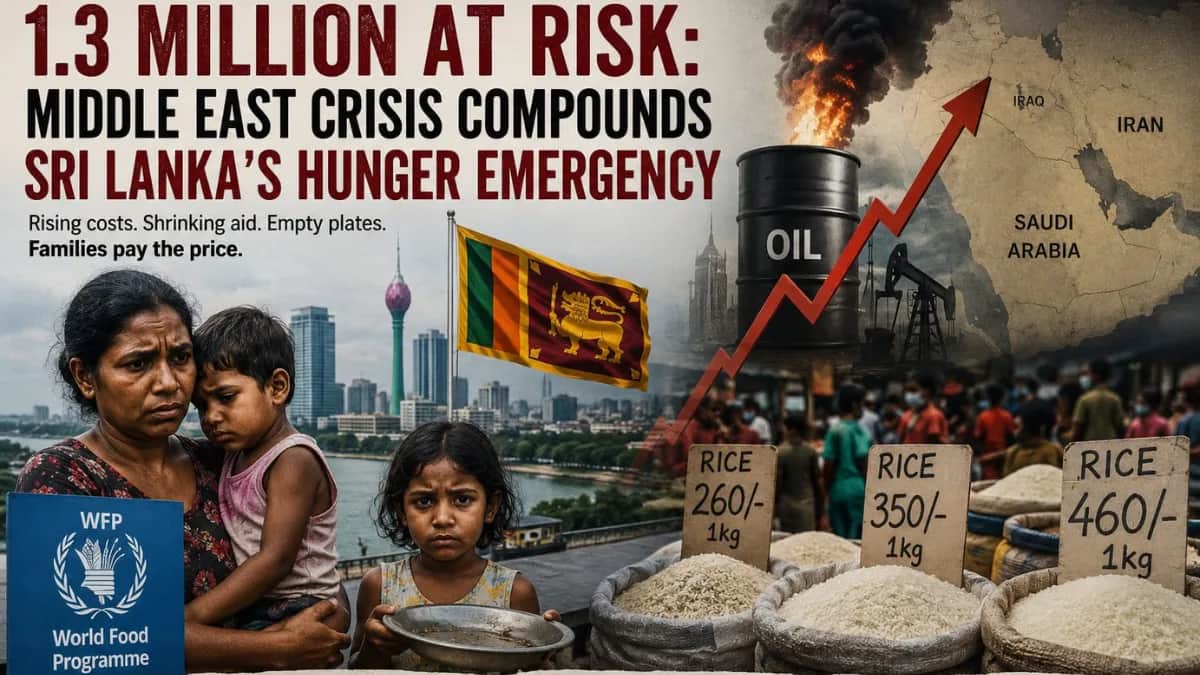
As the conflict in the Middle East continues to escalate, its economic ripple effects are reaching thousands of miles away and the people least responsible for the crisis are paying the steepest price.
Sri Lanka Faces Fresh Hunger Threat Amid Economic Recovery
In Sri Lanka, a new analysis by the United Nations World Food Programme warns that up to 1.3 million additional people could soon be unable to meet their most basic food needs. For a country still climbing out of one of the worst economic collapses in its history, the timing could not be worse.
The WFP had already flagged this possibility. Back in March, the agency projected that 45 million people globally could be pushed into acute food insecurity if oil prices held around $100 per barrel through the end of June. That scenario is now playing out.
Earlier Warnings Becoming Reality
"Early warnings only matter if the world acts on them," said Jean-Martin Bauer, Director of WFP's Food Security and Nutrition Analysis Service. He added that vulnerable families far removed from the conflict are bearing its heaviest burdens.
Sri Lanka's exposure runs deep. The country sources roughly 63 percent of its energy needs from the Middle East. Nearly half of its remittances flow in from Gulf countries, and 45 percent of its tea exports , A lifeline for rural workers go to Gulf markets. When the region is destabilized, so is the Sri Lankan household budget.
Food Insecurity Could Affect Millions More
The WFP estimates that on top of the 4.7 million Sri Lankans already facing food insecurity in 2026, another 1.3 million people are at risk of being unable to afford adequate food both in quantity and quality.
The agency also profiled Somalia and Afghanistan alongside Sri Lanka, painting a broader portrait of how nations with different vulnerabilities are all being squeezed by the same distant conflict.
What worries analysts most is that the worst may still be ahead. Farmers across parts of the world are currently planting crops amid fertilizer shortages and sky-high fuel costs. When those harvests come in lean, food prices will climb further, Even if a ceasefire is declared tomorrow.
"Even if the conflict were to end today, irreversible damage has been done," Bauer said, noting that the fallout for prices, livelihoods and humanitarian operations will persist long after any peace deal.
WFP Under Pressure From a Triple Squeeze
The WFP itself is under serious strain. The agency says it is now caught in what it describes as a triple squeeze: demand for food assistance is climbing, the cost of delivering that aid has surged, and donor funding is shrinking. As a result, WFP expects to reach 1.5 million fewer people in 2026 than originally planned. If the conflict drags on, more than 9 million people could lose access to assistance altogether.
Call for Urgent Global Action
The agency is calling on governments and donors to step up urgently, warning that without additional resources, the world is edging toward a catastrophic hunger emergency that one building not in a war zone, but in the kitchens of struggling families in Colombo, Mogadishu, and Kabul.
"As the conflict in the Middle East continues to escalate, its economic ripple effects are reaching thousands of miles away and the people le…"