
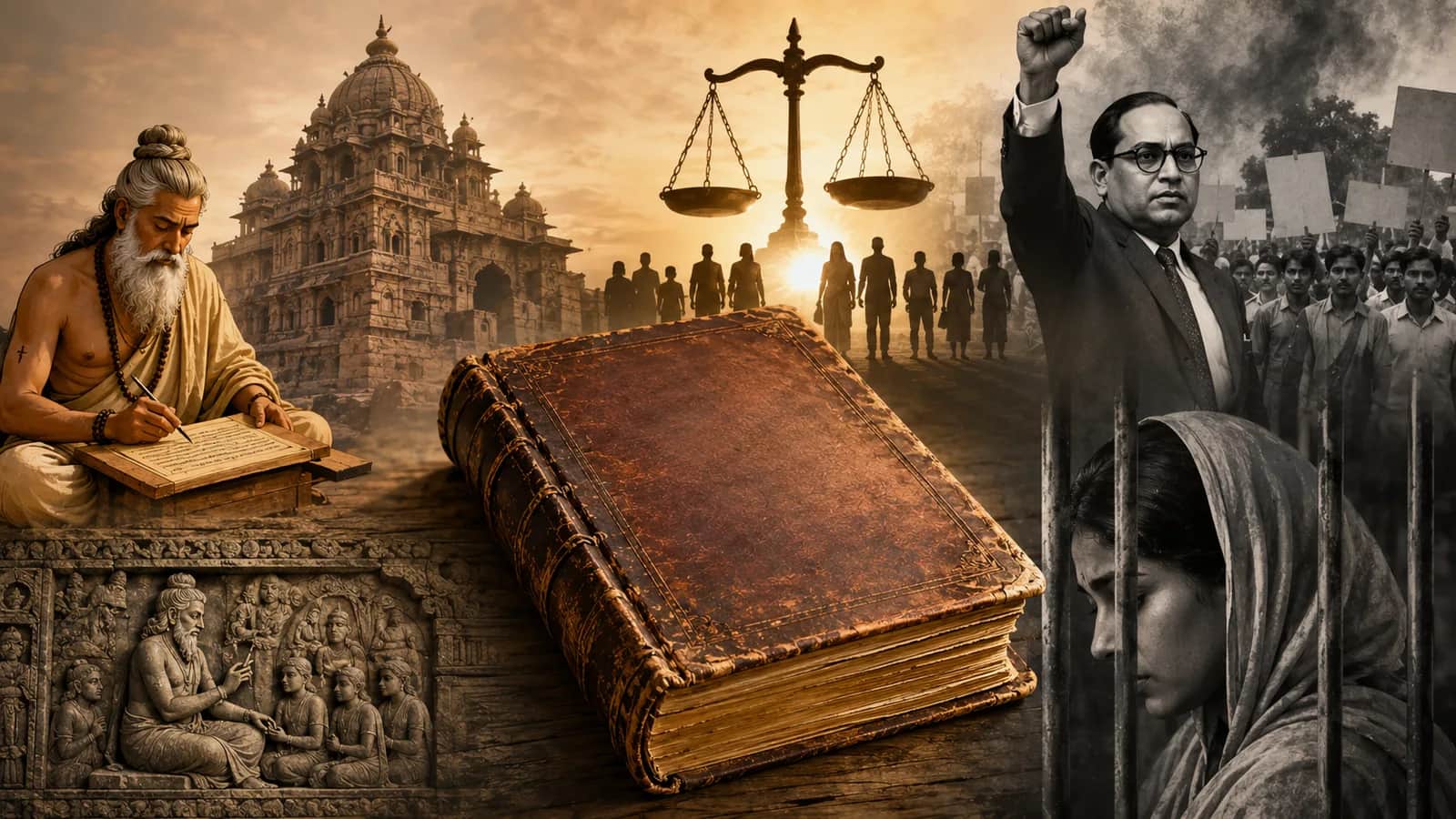
The Manusmriti is one of the most controversial writings in the history of India socially and religiously. To some people, it is an old writing about dharma, social responsibilities, and societal organization. However, to other people, some sections of the Manusmriti go against the concept of equality because of their ideas concerning caste and women’s emancipation. Now, what is it all about, and why is there still controversy surrounding the text?
What is the Manusmriti?
Manusmriti or the Laws of Manu is an old Sanskrit text. It covers a broad spectrum of issues such as behavior, family life, responsibilities, kingship, justice, religious practices, and societal categories.
It is broken down into 12 chapters ranging from education, household responsibilities, governance, punishment, inheritance, and religious conduct among others. The different versions of the Manusmriti have varying verse counts.
Why is its take on women controversial?
One of the most frequently mentioned verses is Manusmriti 5.148. According to this verse, there is an example of a woman being controlled by her father in the period of childhood, then by her husband when she gets married, and by her sons after the death of her husband.
It is especially controversial as the interpretation of this concept denies the woman the right to be free socially and personally.
There are also other verses of the text which contain information on the nature of women, their behavior and relations with men. There are also some guidelines on marriage according to which the features of the body of a woman, her origin and social status are considered.
Disagreement is not just about women
The issue of Manusmriti goes way beyond women. The discussion of varnas in this scripture has been severely criticized by anti-caste movements.
The most memorable action against this text happened on December 25, 1927. On that day Dr. B. R. Ambedkar publicly burnt the Manusmriti as a way of expressing his disapproval towards caste discrimination.
But why would someone defend it?
Advocates of this ancient scripture believe that it should be analyzed based on the time it was written in. They also highlight that the text talks about ethics, obligations, administration, and social responsibilities. So, in fact, Manusmriti controversy is much bigger than an old book.
What does it actually raise the question of?
Should we protect such controversial text as the history or should we openly oppose its content?
And maybe that is why, many years after it was written, Manusmriti still plays a role in one of the most complex issues in India.
"The Manusmriti is one of the most controversial writings in the history of India socially and religiously. To some people, it is an old writ…"