
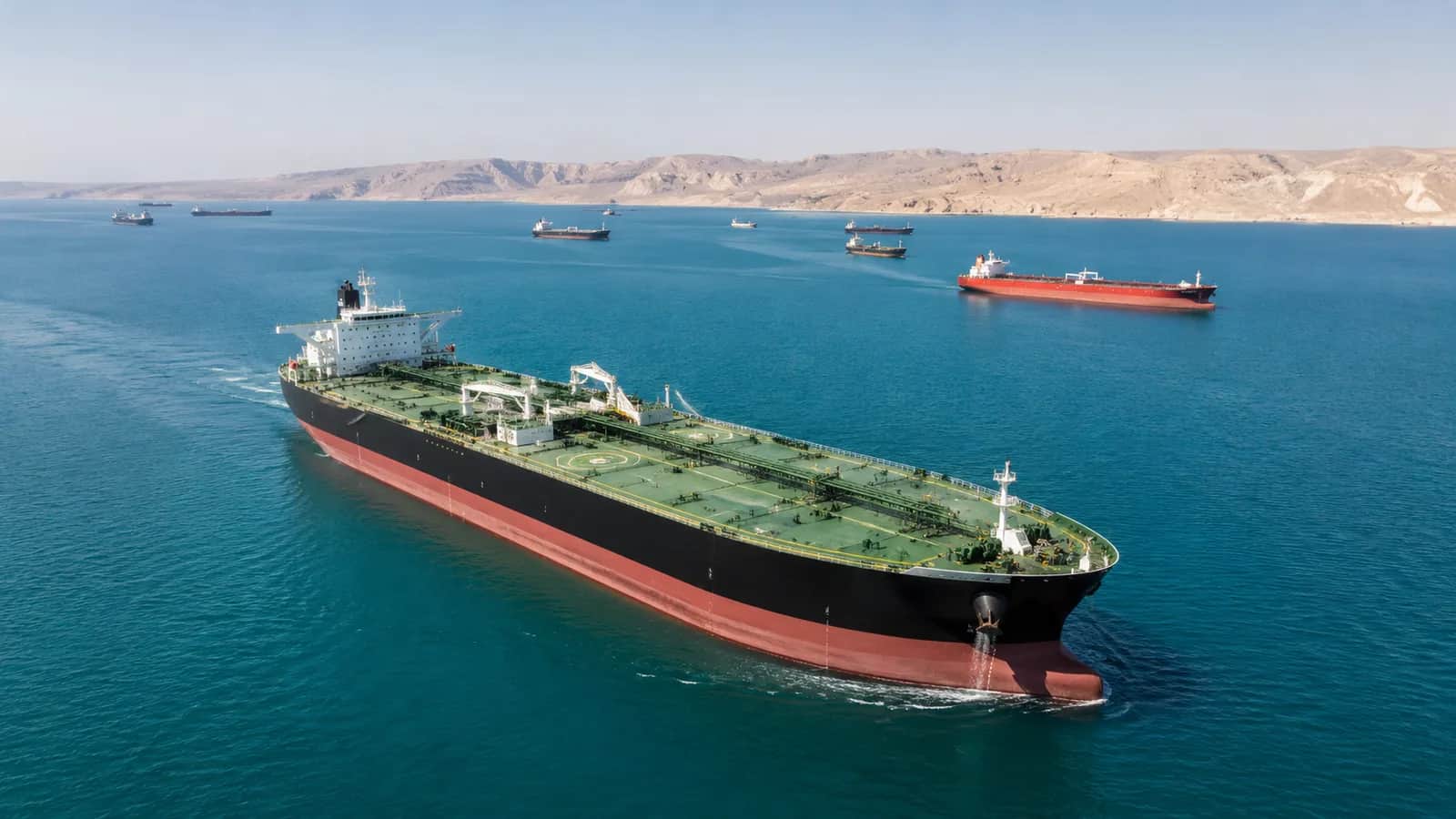
According to a senior government official, emergency measures implemented since early March to ensure sufficient fuel supply security for the most critical sectors and consumer segments are now likely to be reviewed and rolled back once the government feels the situation is stable and returning to normal.
This is because the US-Iran Memorandum of Understanding has raised hopes of normalising energy flows through the Strait of Hormuz.
Strait of Hormuz importance
According to industry reports, a fifth of the world's oil and liquefied natural gas (LNG) flows pass through the Strait of Hormuz, a crucial chokepoint. Concerns over disruptions intensified after the West Asia conflict, which began in February with the US and Israel attacking Iran.
The strait, a narrow waterway connecting the Persian Gulf to the Gulf of Oman and the Arabian Sea, serves as the main route for energy supplies from the Gulf region.
The government announced a number of measures in response to the natural gas shortage, including prioritising supplies to critical sectors while reducing allocations to others, cutting the amount of liquefied petroleum gas (LPG) available to commercial and industrial consumers to ensure household access to cooking gas, extending the waiting period for LPG refills and taking steps to prevent households from hoarding petrol and diesel.
“We have been reviewing the situation on a daily basis. All the measures we took during this crisis period will be reviewed and, once we feel confident that the situation has normalised, we will start rolling them back, the government official said.”
“To ensure supplies to some priority segments, we were forced to curtail supply to certain other sectors. We want to resume supplies at regular levels to those sectors as well, and that will happen once conditions normalise,” the official added.
According to government estimates, approximately 40% of India's crude oil imports, 60% of its LNG imports, and nearly 90% of its LPG imports come from West Asia through the Strait of Hormuz. These supplies could increase if the US-Iran agreement leads to the normalisation of energy flows through the Strait of Hormuz.
In the coming months, large volumes of oil and gas currently stranded in the Persian Gulf could reach international markets. If regular exports from the region resume, the resulting increase in supply could help bridge the global shortfall and may even create a surplus in the months ahead.
"According to a senior government official, emergency measures implemented since early March to ensure sufficient fuel supply security for th…"