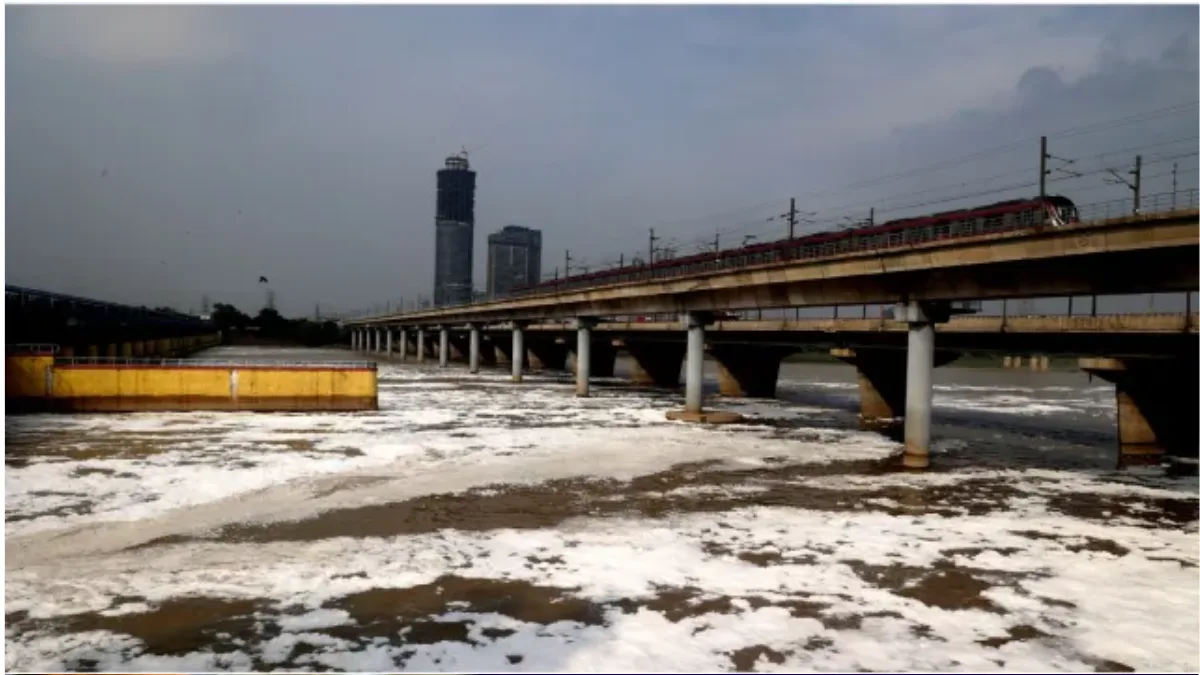
Despite the Supreme Court directing state pollution control boards to ensure real-time disclosure of data on effluent discharged from sewage treatment plants (STPs) and common effluent treatment plants (CETPs) into the Yamuna, the Delhi Pollution Control Committee (DPCC) has yet to finalise and release the river's October water quality report.
The delay comes even after the conclusion of Chhath Puja, during which thousands of devotees offer prayers and perform rituals along the riverbanks. The DPCC last released a monthly water quality analysis in September, based on samples collected on September 7.
The September report recorded high biochemical oxygen demand (BOD) and faecal coliform levels at several monitoring locations downstream of Wazirabad.
Yamuna records high BOD and faecal coliform levels at multiple monitoring points
At Palla, the BOD level was recorded at 2 mg/l, while at Wazirabad it stood at 4 mg/l, exceeding the prescribed limit of 3 mg/l for Class C water. This classification applies to water that can be used for drinking after conventional treatment and disinfection.
At ITO Bridge, Nizamuddin Bridge and Okhla Barrage, BOD levels stood at 18 mg/l, 14 mg/l and 10 mg/l, respectively. Faecal coliform levels at these locations were recorded at 17,000, 15,000 and 21,000 MPN/100 ml, respectively.
At Asgarpur in Haryana, the last monitoring point, BOD was recorded at 18 mg/l, while faecal coliform levels stood at 38,000 MPN/100 ml. Dissolved oxygen (DO) levels were recorded as nil.
Environmental activist Pankaj Kumar, founder of Earth Warrior and Avni Sanrakshak Foundation, has also raised concerns over the delay.
"Despite the Supreme Court directing state pollution control boards to ensure real-time disclosure of data on effluent discharged from sewage…"