
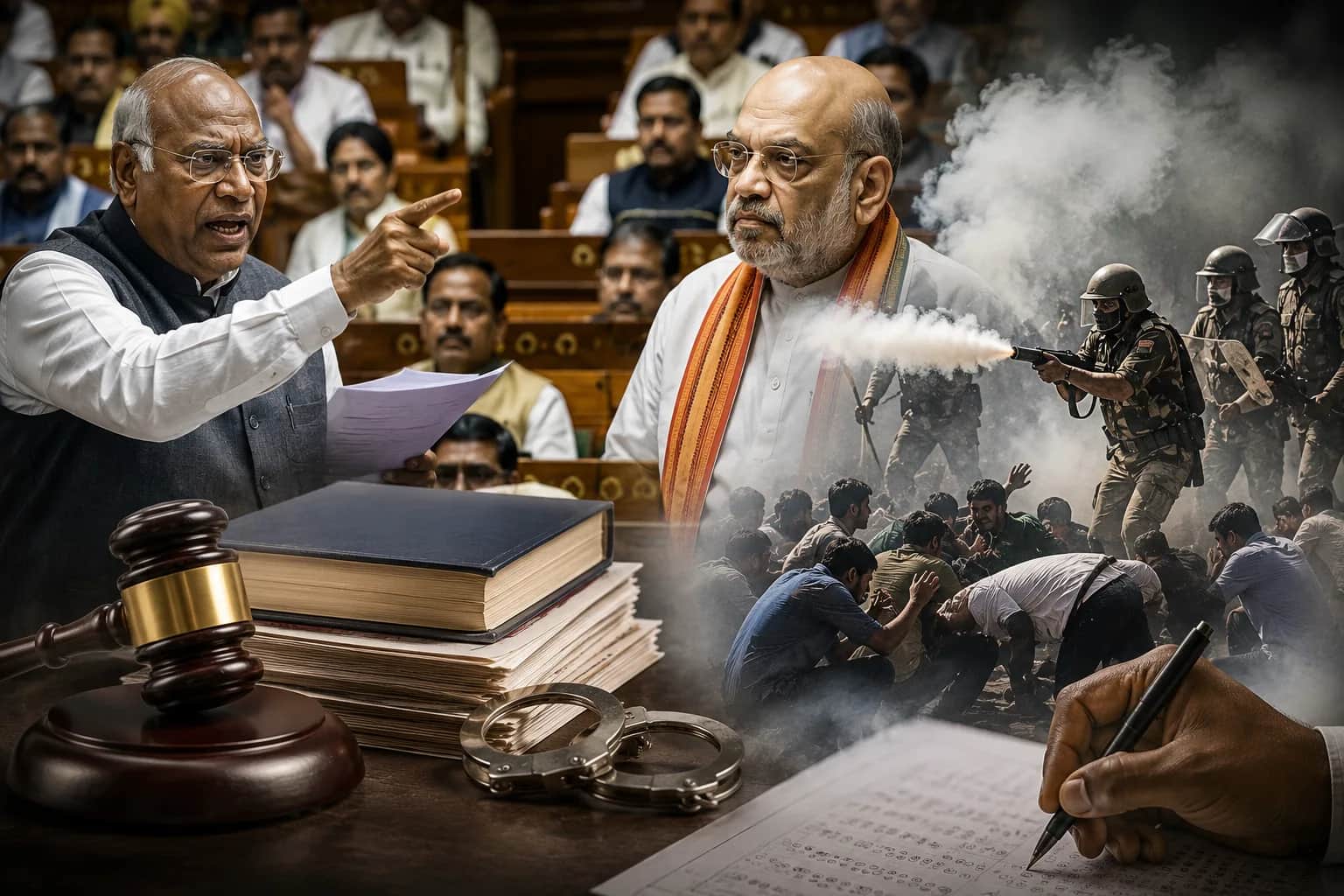
The debate regarding the Public Examinations (Prevention of Unfair Means) Amendment Bill, 2026 took a political turn on Thursday when Congress party President Mallikarjun Kharge demanded from Union Home Minister Amit Shah an explanation for the employment of tear gas and the police against protesting students alleging the leak of NEET papers in Delhi.
Questions Raised Against Government's Motive
Kharge held the Home Minister responsible for the incident and claimed that "If he cannot give us the reason, then he should quit, or the Prime Minister should dismiss him." According to Kharge, the amendment to the Bill did not ensure any protective measure against leakage of examination papers. Moreover, he alleged that the motive behind introducing the Bill was to calm down the public anger arising due to the student protests in the country.
Government Upholds Stricter Anti-Leak Bill
Dismissing the allegations, the Union minister, Jitendra Singh tabled the Bill in the Rajya Sabha saying that this Bill will enhance the law with provisions of investigations within timelines, fast-track trials, and severe punishment for organized paper leak syndicates, including a maximum punishment of 10 years and fines up to ₹10 crore.
The Bill received approval of the Lok Sabha after a stormy debate spanning two days and involving interruptions and protests from members from both the opposition and treasury benches.
Rajya Sabha to Consider Bill
While the Rajya Sabha will deliberate upon the bill, the Parliament has several other bills pending such as Supreme Court (Number of Judges) Amendment Bill, 2026 proposing increasing the sanctioned strength of the highest court from 34 to 38 judges.
"The debate regarding the Public Examinations (Prevention of Unfair Means) Amendment Bill, 2026 took a political turn on Thursday when Congre…"