
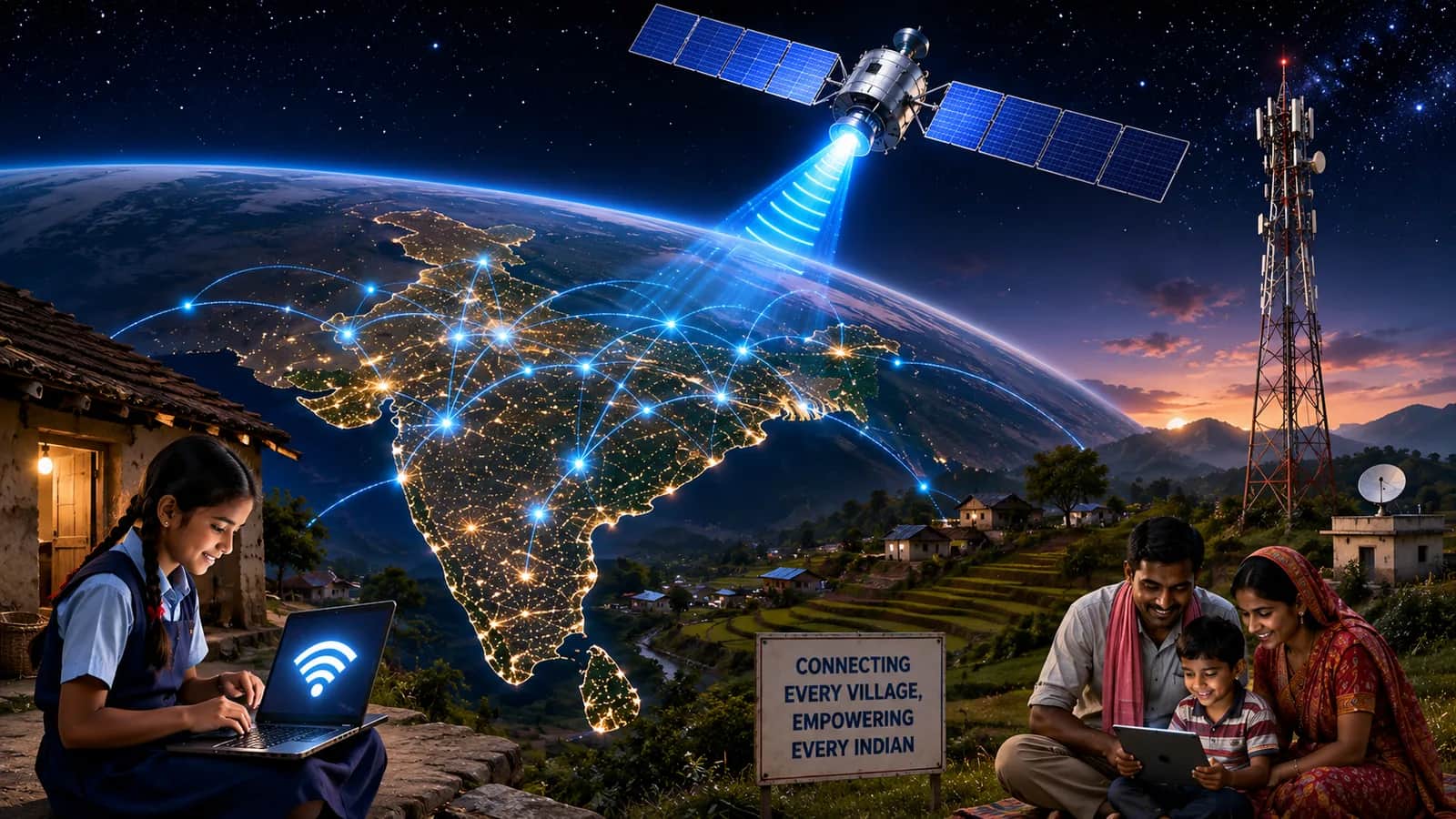
Reliance Jio has announced plans to explore the development of an indigenous Low Earth Orbit (LEO) satellite constellation, marking one of the company’s most ambitious steps in the telecommunications sector. Speaking at Reliance Industries’ Annual General Meeting, Jio Chairman Akash Ambani said the company aims to build a sovereign satellite network capable of delivering high-speed internet to every corner of the country, including remote villages, border regions, and geographically challenging areas where conventional telecom infrastructure struggles to reach.
Why the Announcement Matters
For millions of Indians, reliable internet access remains a challenge despite the country’s rapid digital transformation. While urban centres enjoy high-speed connectivity, many rural and remote communities continue to face network disruptions and limited broadband access. Jio’s proposed satellite network could help bridge this gap by providing internet directly from space, reducing dependence on mobile towers and fiber-optic cables.
The initiative comes at a time when the global race for satellite internet is accelerating. Companies such as Starlink and Amazon’s Project Kuiper are investing heavily in space-based broadband services, making satellite connectivity one of the most competitive areas in the technology sector.
Jio’s Journey into Satellite Communications
Although the latest announcement has generated significant attention, Jio’s interest in satellite communications is not new. In 2022, the company partnered with global satellite operator SES to launch Jio SpaceFiber, a venture aimed at bringing broadband services to remote parts of India. The company later conducted successful trials in rural and hard-to-reach regions, demonstrating how satellite technology could connect communities beyond the reach of traditional networks.
These efforts laid the foundation for Jio’s larger vision of developing a homegrown satellite ecosystem rather than relying entirely on international partners.
Looking Ahead
If successful, Jio’s satellite constellation could transform the lives of millions of Indians. Students in remote villages could access uninterrupted online education, patients could consult doctors through telemedicine services, and local businesses could connect with larger markets. Beyond connectivity, the project also supports India’s broader goal of technological self-reliance and a stronger presence in the global space economy.
For now, the announcement signals that India’s digital future may not just be built on the ground but also in space.
What Will It Mean for Ordinary Indians?
For most people, satellite internet may sound like a complex technology story, but its impact could be felt in everyday life. A student in a remote village could attend online classes without worrying about weak network signals. Farmers could access real-time weather updates, crop advisories, and market prices. Small business owners and artisans could sell their products online and reach customers across the country.
The technology could also improve healthcare access. Patients living far from cities could consult specialist doctors through telemedicine services, reducing the need for long and expensive journeys. During floods, landslides, or other natural disasters, when mobile towers are often damaged, satellite-based communication could help authorities coordinate rescue operations and keep affected communities connected.
For urban users, satellite internet may not immediately replace existing broadband services, but it could serve as a reliable backup network and help expand connectivity to previously underserved regions. Ultimately, the success of Jio's satellite initiative could mean that a person's location no longer determines their access to opportunities in the digital age.
"Reliance Jio has announced plans to explore the development of an indigenous Low Earth Orbit (LEO) satellite constellation, marking one of t…"